- Français
- |
- Booklist
- |
- Week of Prayer
- |
- Links
- Areopagus - a forum for dialogue
- Academic journals
- Acronyms
- Bible tools
- Bibliographies
- Booksellers and publishers
- Churches
- Canadian church headquarters
- Directory of Saskatchewan churches
- Retreat centres
- Saskatchewan church and non-profit agencies
- Ecumenism.net Denominational links
- Anabaptist & Mennonite
- Anglican
- Baptist
- Evangelical
- Independent episcopal
- Lutheran
- Methodist, Wesleyan, and Holiness
- Miscellaneous
- Mormon
- Orthodox (Eastern & Oriental)
- Para-church ministries
- Pentecostal / charismatic
- Presbyterian & Reformed
- Quaker (Society of Friends)
- Roman & Eastern Catholic
- United and uniting
- Documents of Ecumenical Interest
- Ecumenical agencies
- Ecumenical Booklist
- Ecumenical Dialogues
- Glossary
- Human rights
- Inter-religious links
- Justice & peace
- Lectionaries
- Religious news services
- Resource pages
- Search Ecumenism.Net
- |
- Documents
- Ancient & Medieval texts
- Ecumenical Dialogues
- Interreligious
- Anabaptist & Mennonite
- Anglican
- Evangelical
- Lutheran
- Orthodox
- Reformed & Presbyterian
- Roman & Eastern Catholic
- United & Uniting
- Miscellaneous churches
- Canadian Council of Churches (CCC)
- Conference of European Churches (CEC)
- Interchurch Families International Network (IFIN)
- National Council of Churches in Australia (NCCA)
- Lausanne Committee for World Evangelism (LCWE)
- World Council of Churches (WCC)
- Other ecumenical documents
Church traditions
Documents from ecumenical agencies
- |
- Dialogues
- Adventist-Reformed
- African Instituted Churches-Reformed
- Anglican-Lutheran
- Anglican-Orthodox
- Anglican-Reformed
- Anglican-Roman Catholic
- Anglican-United/Uniting
- Baptist-Reformed
- Disciples of Christ-Reformed
- Disciples of Christ-Roman Catholic
- Evangelical-Roman Catholic
- Lutheran-Mennonite
- Lutheran-Mennonite-Roman Catholic
- Lutheran-Reformed
- Lutheran-Roman Catholic
- Mennonite-Reformed
- Mennonite-Roman Catholic
- Methodist-Reformed
- Methodist-Roman Catholic
- Oriental Orthodox-Reformed
- Orthodox-Reformed
- Orthodox-Roman Catholic
- Pentecostal-Reformed
- Prague Consultations
- REC-WARC Consultations
- Roman Catholic-Lutheran-Reformed
- Roman Catholic-Reformed
- Roman Catholic-United Church of Canada
- |
- Quick links
- Canadian Centre for Ecumenism
- Canadian Council of Churches
- Ecumenical Shared Ministries
- Ecumenism in Canada
- Interchurch Families International Network
- International Anglican-Roman Catholic Commission for Unity and Mission
- Kairos: Canadian Ecumenical Justice Initiatives
- North American Academy of Ecumenists
- Prairie Centre for Ecumenism
- Réseau œcuménique justice et paix
- Week of Prayer for Christian Unity
- Women's Interchurch Council of Canada
- World Council of Churches
- |
- Archives
- |
- About us


Archive for category: Opinion
Archive pour catégorie : Opinion
 RSS feed for Opinion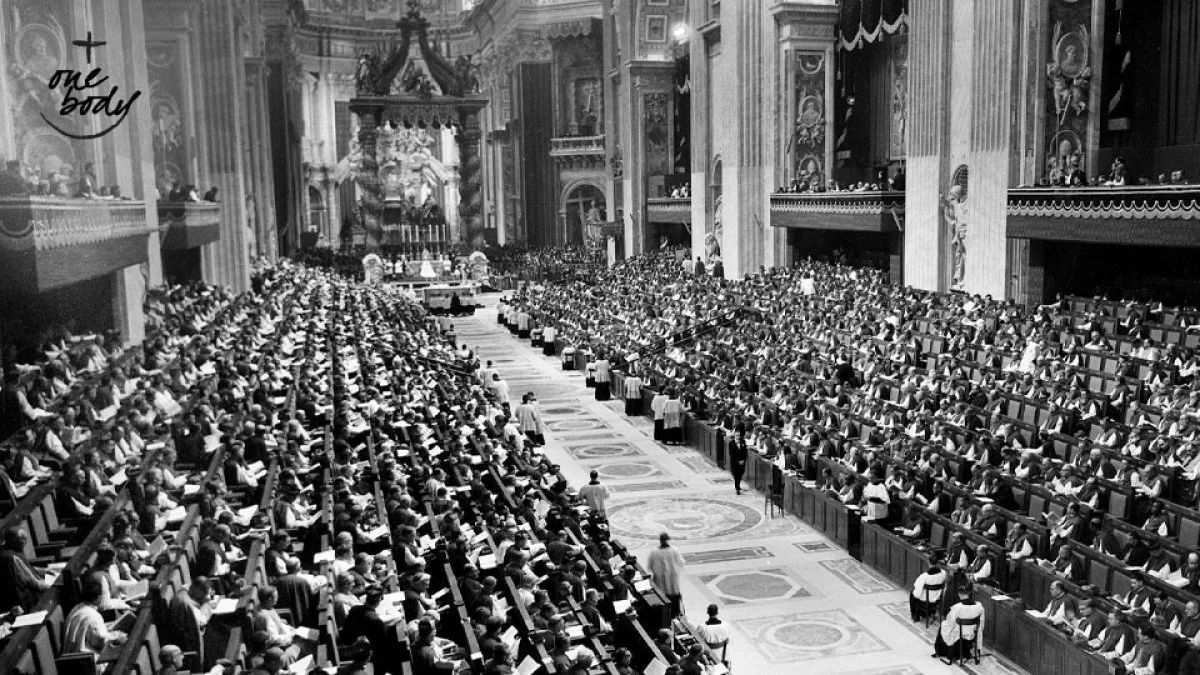
“May they all be one . . . that the world may believe that you sent me” (John 17:21). These words from Jesus’ prayer at the Last Supper define the goal of the ecumenical effort among Christians around the world. Insofar as unity among the followers of Jesus witnesses to the credibility of the Gospel, it is not surprising that the 1910 Missionary Conference in Edinburgh is usually identified as the beginning of the 20th century ecumenical movement. Although the Catholic Church did not take part in the 1910 conference, the ecumenical landscape has changed so much over the past 100 years that the Vatican’s Pontifical Council for Promoting Christian Unity (PCPCU) was actively involved with the World Council of Churches (WCC) in preparing to celebrate the anniversary and in exploring ways of undertaking mission together.
… Read more » … lire la suite »
 Posted: July 28, 2020 •
  Permanent link: ecumenism.net/?p=13579
Categories: One Body, Opinion • In this article: Catholic, Christian unity
Transmis : 28 juil. 2020 • Lien permanente : ecumenism.net/?p=13579
Catégorie : One Body, Opinion • Dans cet article : Catholic, Christian unity
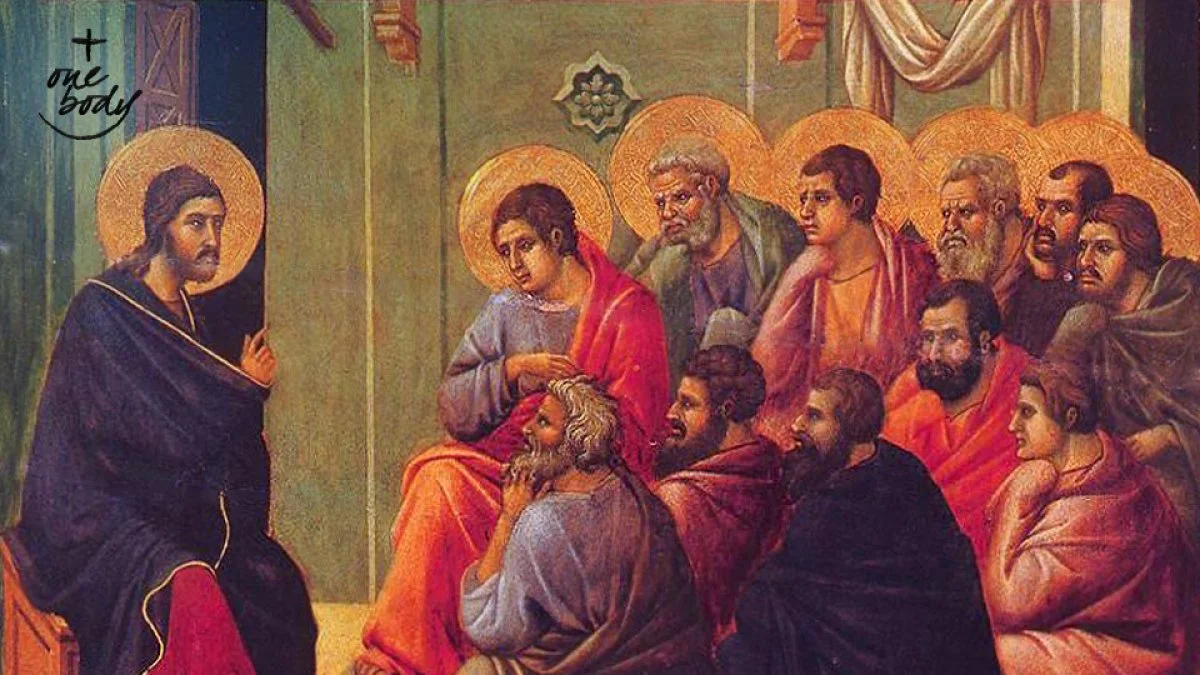
Quite often in the Gospel accounts of Jesus’ life and ministry, we are given glimpses into his prayer life. In many instances, we read simply that Jesus went away (by himself or with others) to pray. More rarely we discover the content of Jesus’ prayers, that is, the “what” of his prayers or the actual words that he used in prayer.
One place where the content of Jesus’ prayer is shared with us directly is in the 17th chapter of the Gospel of John. At the end of a rather lengthy section (typically called Jesus’ Farewell or Last Supper Discourse – beginning in chapter 14), Jesus turns his eyes toward heaven and offers his so-called “priestly prayer” for the protection, sanctification, and unity of his disciples. He prays first for those who are his followers at that time, and then he prays for those who will follow him in the future.
… Read more » … lire la suite »
Posted: June 30, 2020 • Permanent link: ecumenism.net/?p=13577
Categories: One Body, Opinion • In this article: Christian unity, ecumenism, John 17
Transmis : 30 juin 2020 • Lien permanente : ecumenism.net/?p=13577
Catégorie : One Body, Opinion • Dans cet article : Christian unity, ecumenism, John 17
I remember one year when the lectionary texts included 1 Corinthians 12, we sang a processional song by Canadian church composer Andrew Donaldson with the words: “the body is one with many parts, the parts are many the body is one.” The youth of the church had built huge papier-mâché bodies that danced on stilts at the front of the procession. The image of the whole church gathered to sing, worship, and even dance reflects the dynamic character of the church as a living body. This image of the church as a human body comes to us from the Apostle Paul writing to the Corinthians to help them overcome their own divisions. “Indeed, the body does not consist of one member but of many” (v. 14). We are one body because, in baptism, the Spirit has gathered us into the one body of Christ.
… Read more » … lire la suite »
Posted: May 26, 2020 • Permanent link: ecumenism.net/?p=13575
Categories: One Body, Opinion, Resources • In this article: Christian unity, ecumenism
Transmis : 26 mai 2020 • Lien permanente : ecumenism.net/?p=13575
Catégorie : One Body, Opinion, Resources • Dans cet article : Christian unity, ecumenism
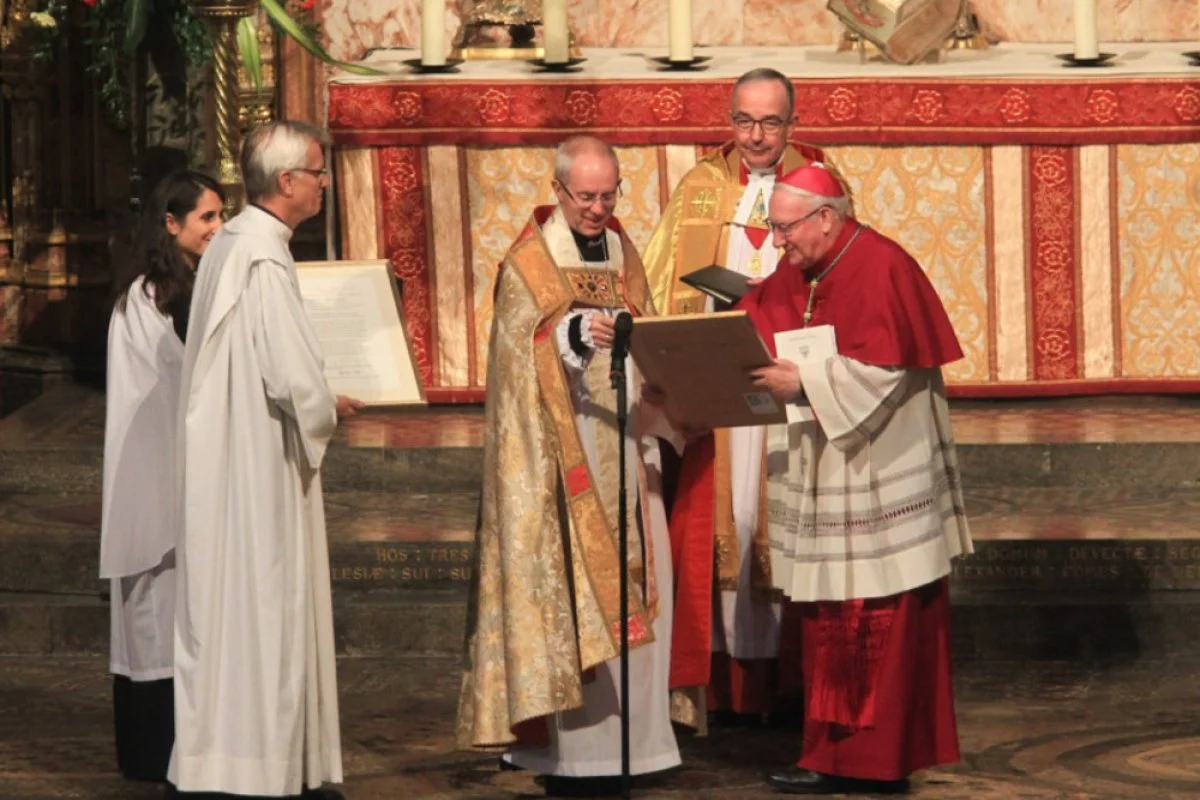
An address by Cardinal Kurt Koch, President of the Pontifical Council for Promoting Christian Unity, regarding relations between the Catholic Church and the World Council of Churches (WCC). At a press conference held Friday 2nd March in the Vatican, the WCC General Secretary, Rev. Olav Fykse Tveit and Cardinal Kurt Koch announced that Pope Francis will be travelling to Geneva on June 21st to mark the 70th anniversary of the World Council of Churches.
The visit of His Holiness Pope Francis to the Ecumenical Centre in Geneva during the year of the 70th Anniversary of the foundation of the World Council of Churches (WCC), will be a sign of recognition of a unique contribution of the WCC to the modern ecumenical movement. It will be an expression of the personal commitment of the Holy Father to the goal of Christian unity as expressed in many occasions. In visiting the Ecumenical Centre in Geneva, Pope Francis will follow the steps of his two predecessors Paul VI, who visited the WCC in 1969 (10 June), and John Paul II who did the same in 1984 (l2 June). The visit will be an occasion to give thanks to God for a longstanding and rich collaboration which the Catholic Church maintains with the WCC for more than half a century. Indeed, our relations began during the preparation of the Second Vatican Council. Vatican II committed the Catholic Church to the modern ecumenical movement and opened a new page in the history of our relations with the World Council of Churches generating a spirit of rapprochement and mutual understanding. Although the Catholic Church is not a member of the WCC, various dicasteries of the Roman Curia and different Catholic organizations or religious communities collaborate closely with its different programmatic areas. There is a sustained collaboration in the field of justice and peace, human rights, works of charity and humanitarian aid, especially regarding migrants and refugees, protection of creation, the youth, interreligious dialogue, mission and evangelism. The most developed is the collaboration between the WCC and the Pontifical Council for Promoting Christian Unity (PCPCU), which also takes place through various channels.
… Read more » … lire la suite »
Posted: Mar. 2, 2018 • Permanent link: ecumenism.net/?p=10216
Categories: News, Opinion • In this article: Kurt Koch, Pope Francis, WCC
Transmis : 2 mars 2018 • Lien permanente : ecumenism.net/?p=10216
Catégorie : News, Opinion • Dans cet article : Kurt Koch, Pope Francis, WCC
You might have heard the story about the German friar who nailed 95 provocative statements to a church door a long time ago, triggering something we now call the Reformation.
If you’re looking for a modern interpretation, 500 years ago next Tuesday, Martin Luther posted a particularly incendiary series of tweets. He wanted to provoke debate about corruption in the Roman Catholic Church. He certainly achieved that.
Sadly, Luther couldn’t take advantage of Twitter — and it’s generally accepted that he didn’t actually hammer his arguments to a church door. Instead he used the then cutting-edge technology of printing. But the impact was no less dramatic. What Luther wrote went around Europe incredibly quickly; it was the viral content of its day.
Within two decades Europe was split between Protestants and Catholics in a process called the Reformation. The conflict that generated (which began in England in the early 1530s) continued for hundreds of years. The first century or so was especially bloody and violent.
… Read more » … lire la suite »
Posted: Oct. 27, 2017 • Permanent link: ecumenism.net/?p=9801
Categories: Opinion • In this article: Archbishop of Canterbury, Justin Welby, Martin Luther, Reformation
Transmis : 27 oct. 2017 • Lien permanente : ecumenism.net/?p=9801
Catégorie : Opinion • Dans cet article : Archbishop of Canterbury, Justin Welby, Martin Luther, Reformation
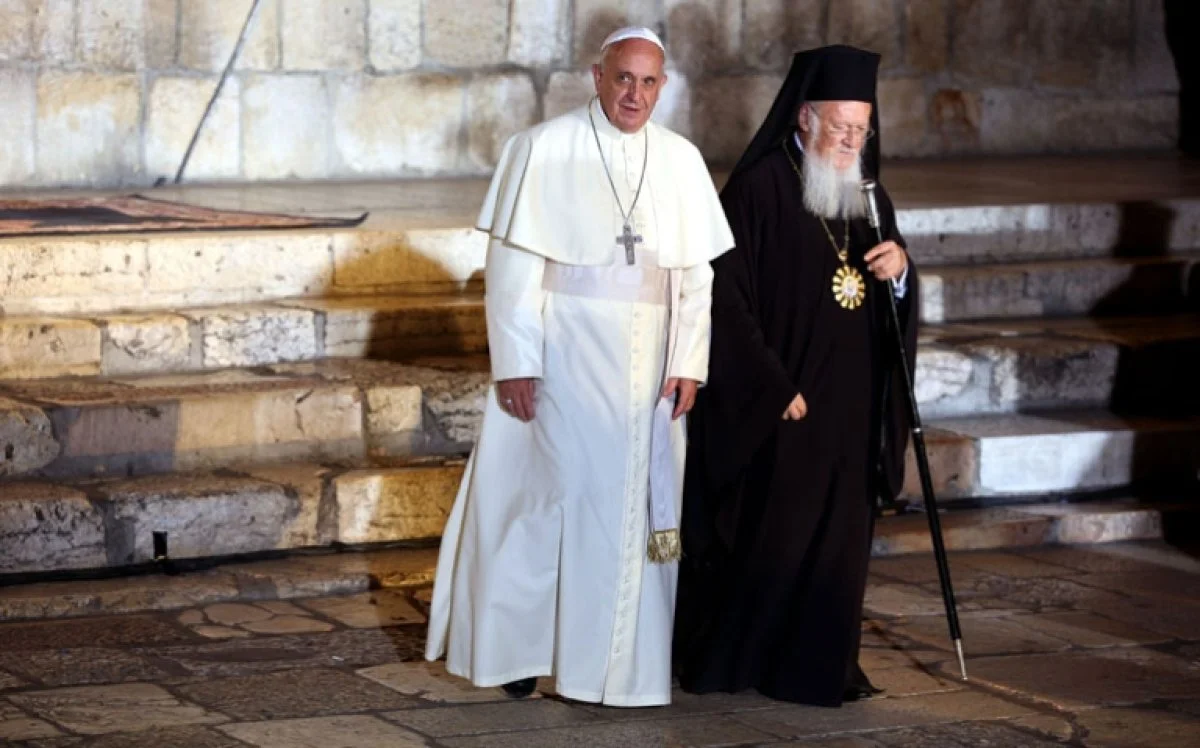
When we think of Church teachings that are uncomfortable to discuss and difficult to live up to these days our minds tend to go to controversial issues like that of contraception, homosexuality, gender and so forth. Yet, in many ways, the Church’s views on ecumenism are for many even more uncomfortable. On this topic, however, it is all too easy to say yes, yes with one’s lips, while denying and undermining this teaching in practice.
Ecumenism is the attempt to strengthen unity between the diverse Christian Churches through dialogue about doctrine, prayer in common, cooperation in good works and other means that deepen mutual understanding and growth. In the case of the Catholic Church, these endeavours are also motivated by a desire that our Churches may unite in full communion, however remote that hope may seem to our eyes here and now.
A key to the possibility of any ecumenism lies in a few basic realizations. The first is that we are all genuinely Christians, baptized into the body of Christ. This entails that there is always more that unites us than what divides us. The important essentials of the faith: the Trinity, the Incarnation, and the role that baptism plays in drawing us into the participation of the divine life are all unifying features of Christian life. In this respect, we should be grateful for the profound unity that already does exist among the majority of Christian communities (Unitatis Redintegratio, no. 3).
… Read more » … lire la suite »
Posted: Aug. 29, 2017 • Permanent link: ecumenism.net/?p=9742
Categories: Opinion • In this article: Catholic, ecumenism
Transmis : 29 aoüt 2017 • Lien permanente : ecumenism.net/?p=9742
Catégorie : Opinion • Dans cet article : Catholic, ecumenism
Our Lord and his apostles used many figures of speech to describe the Church. From our beloved St. Paul: “We are God’s fellow labourers; you are God’s field, God’s building” (1 Cor. 3:9). “You are the body of Christ and individually members of it” (1 Cor. 12:27). Or Jesus’ words: “Fear not, little flock” (Luke 12:32a). “I am the vine; you are the branches” (John 15:5a).
Many of us have admired a well-ordered cathedral, such as St. Paul’s, London, or All Saints, Nairobi. We recognise — almost unconsciously — the beauty of the human person, of a pastoral scene or vineyard. No wonder they make fitting images for the Church, the heavenly Jerusalem, a city “at unity with itself” (Ps. 122:3).
Our experience of the Church’s unity tends to fall short of these glorious figures. We see “hatred, discord, jealousy, fits of rage, selfish ambition, dissensions, factions” (see Gal. 5:19-21).
In recognition of this, Anglicans have turned to other images over the past 14 years: among them, “walking together in synodality,” “walking apart,” or even “walking at a distance.” This language proves useful, vividly illustrating different degrees or intensities of communion: some choose to be close; some go their own way; some wander onto the wrong path.
Through such images, we see how harmony, order, and unity are gifts received, but also unwrapped and used. A field must be cultivated, a building maintained, a vine pruned.
… Read more » … lire la suite »
Posted: Jan. 18, 2017 • Permanent link: ecumenism.net/?p=9621
Categories: ACNS, Opinion • In this article: Anglican, WPCU
Transmis : 18 janv. 2017 • Lien permanente : ecumenism.net/?p=9621
Catégorie : ACNS, Opinion • Dans cet article : Anglican, WPCU
In Jesus’ times, no one among the poor was poorer than a widow, a woman without a man, hence without either rights or protection. The world and the society in which Jesus lived and moved were basically structured on a patriarchal model; women were invisible in society with the kind of invisibility typical of a legal status of minority, indeed of exclusion. The originality of Christ’s behaviour must be integrated into this historical truth. In fact, Jesus saw, looked, noted and connected his life with the lives of the women who followed him, loved him and accompanied him even to his death.
Whereas the gaze of Simon the Pharisee (cf. Lk 7:36) – as Maria dell’Orto wrote – saw and judged, scrutinized and condemned, excluding people, Christ’s gaze set people on their feet, identified and recognized them. In so doing he invited all, both women and men, to discernment, to asking themselves questions and to communion. In this perspective a panoramic view of Christian history leads one to consider those prophetic and charismatic female figures who, by their personal authority, in turbulent centuries, contributed to evangelizing a still pagan world and/or a Church which was hostile and divided: Saints Genevieve, Clotilda, Joan of Arc, Hildegard of Bingen, Catherine of Siena…
… Read more » … lire la suite »
Posted: Mar. 1, 2016 • Permanent link: ecumenism.net/?p=9064
Categories: Opinion • In this article: Catholic, preaching, women
Transmis : 1 mars 2016 • Lien permanente : ecumenism.net/?p=9064
Catégorie : Opinion • Dans cet article : Catholic, preaching, women
It would help if we had a single, clear story we could believe about violence – it’s getting worse because of this or that factor in our world, so we know whom to blame; it’s getting better as we all become more educated and secular, so we don’t have to worry in the long term. But the evidence is profoundly confusing.
Richard Bessel begins his lucid and well-documented book with a round-up of contemporary views, from those who think first of the astronomical statistics of humanly devised injury and death in the 20th century to those (like Steven Pinker in a much-discussed recent book) for whom what matters is the gradual change in sensibility that has made us simply more sensitive to the suffering of others – as well as the relative absence of major international conflict in the past half-century or so. As Bessel observes, Pinker’s statistics will seem a little academic if you happen to live in South Sudan or Syria (or Baltimore or Johannesburg).
The paradox of our era in the modern North Atlantic world is that while we are probably objectively more secure against the casual daily risk of violence than our ancestors, we are more anxious and more outraged by the prospect as well as the reality of violence, and more prone to extend its meaning to forms of offensive or menacing speech and action that would not have registered for those ancestors. We are, in a word, more preoccupied with violence; hence the subtitle, A Modern Obsession.
… Read more » … lire la suite »
Posted: Aug. 6, 2015 • Permanent link: ecumenism.net/?p=8919
Categories: Opinion • In this article: Rowan Williams, violence
Transmis : 6 aoüt 2015 • Lien permanente : ecumenism.net/?p=8919
Catégorie : Opinion • Dans cet article : Rowan Williams, violence

On Thursday, Pope Francis issued a powerful and timely encyclical on the environment, urging humanity to come to its senses and cease its reckless onslaught against God’s creation. He addressed this letter not only to his fellow Catholics, but to all people of the world, asking people of different religious traditions to unite in common purpose to save our planet.
As religious figures, we too accept the overwhelming scientific consensus that global warming comes from human activity, as we see no conflict between faith and reason.
And, coming from the three great Abrahamic faiths – Judaism, Christianity and Islam – we stand together on the need to be good stewards of the earth. All of our traditions affirm the inherent goodness of all creation, and the binding obligation on human beings to protect our common home, the planet that sustains us. The Hebrew Scriptures state clearly that the Earth belongs to God alone, and that we are merely sojourners – we do not have ownership on a permanent basis: the fruits of the earth belong to all, including the poor. This ancient teaching is affirmed by both Christianity and Islam. Christians also view the world through a sacramental lenses, believing that the redemption of Christ has in turn redeemed all of creation. And Islam can be thought of as a religion of nature, with 750 verses in the holy Qur’an speaking about our responsibility to the environment and our relationship with all creatures. Islam too recognizes that everything in the heavens and the earth belong to God, and that we are mere trustees and vice-regents.
… Read more » … lire la suite »
Posted: June 18, 2015 • Permanent link: ecumenism.net/?p=8597
Categories: Opinion • In this article: climate change, ecology, encyclicals, environment, interfaith, Pope Francis
Transmis : 18 juin 2015 • Lien permanente : ecumenism.net/?p=8597
Catégorie : Opinion • Dans cet article : climate change, ecology, encyclicals, environment, interfaith, Pope Francis
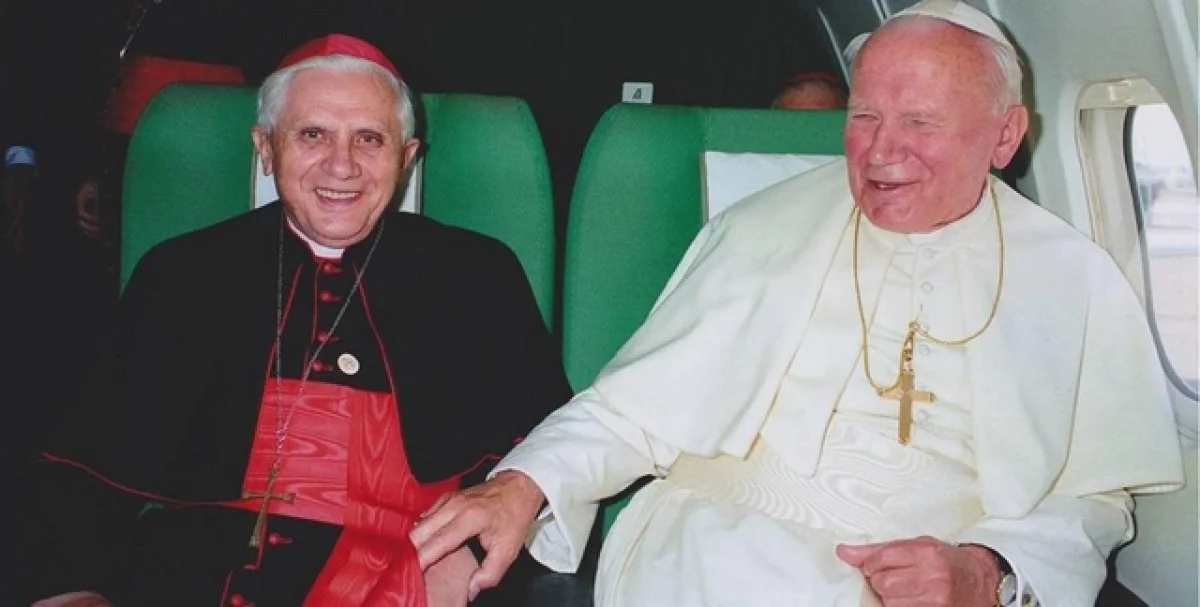
The “ultimate aim” of the ecumenical journey, “is obviously the unity of the churches in the one Church”. “This does not mean uniformity” but “unity in pluriformity”. The “Orthodox Churches should not change much in their internal structure, almost nothing in fact, if they unite themselves with Rome”. The then cardinal Joseph Ratzinger pronounced these words on 29 January 1993 during a public conversation with Waldesian professor Paolo Ricca held at the evangelical cultural centre.
Pope Francis took these considerations further during his visit to the Ecumenical Patriarchate of Constantinople last November, when he said that in its efforts to achieve full unity with Orthodox Christians, the Catholic Church “does not intend to impose any conditions except that of the shared profession of faith”.
Speaking about ecumenism during his meeting with the Waldesian community, Ratzinger wished to distinguish between “two phases”: the final aim and the “models” for the in-between waiting period before unity is achieved. The future Pope saw the former as “the real force and the main motivating factor behind our ecumenism”. He explained that “the unity of churches within the Church” does not imply “uniformity”, but “unity in pluriformity”. “It seems to me,” the then cardinal added, “that the ancient Church can be taken as something of a model. The ancient Church was united on three fundamental elements: Holy Scripture, regula fidei, the sacramental structure of the Church. But, for the rest, it was a Church of very many forms, as we all know. There were the churches of Semitic regions or language, the Egyptian Coptic Church, and here were the Greek Churches of the Byzantine empire, the other Greek Churches, the Latin Churches featuring great diversities between the Church in Ireland, for example, and the Church of Rome.”
… Read more » … lire la suite »
Posted: Feb. 23, 2015 • Permanent link: ecumenism.net/?p=8503
Categories: Opinion • In this article: Christian unity, ecumenism, Joseph Ratzinger, Pope John Paul II
Transmis : 23 févr. 2015 • Lien permanente : ecumenism.net/?p=8503
Catégorie : Opinion • Dans cet article : Christian unity, ecumenism, Joseph Ratzinger, Pope John Paul II

I am writing today as the spiritual leader of Canada’s largest Protestant denomination, The United Church of Canada. I am also writing as an openly gay man, married to another United Church minister. This introduction may come as a surprise, seeing that so often it is religious leaders who condemn homosexuality, quoting scripture to justify their prejudice.
And so, as we approach this year’s International Day against Homophobia and Transphobia, I want to deliver a different sort of message from a religious leader to all members of the LGBTQ community, whether they are people of faith or not.
It is a message that states unequivocally that not all Christians think the same way; that the hatred, condemnation, and judgment inflicted upon LGBTQ people by some within the Christian church is wrong and does not reflect the sum total of all Christian understanding of gender identity and sexual orientation.
For too long LGBTQ persons have been ostracized because of who they are, and the cost has been tremendous suffering, oppression, and diminishment of their humanity. For this I grieve.
I believe that we are all made in the image of God, wholly good and wholly loved by the Creator. This is why I feel such sadness when I see religious leaders and organizations failing to recognize that reality in every member of the LGBTQ community.
… Read more » … lire la suite »
Posted: May 12, 2014 • Permanent link: ecumenism.net/?p=7574
Categories: Opinion • In this article: human sexuality, United Church of Canada
Transmis : 12 mai 2014 • Lien permanente : ecumenism.net/?p=7574
Catégorie : Opinion • Dans cet article : human sexuality, United Church of Canada
My grandmother and my great-grandmother, both Quebecers, both died on Good Friday. They were Protestant anglophones in a majority Catholic francophone world. In my grandmother’s day, Catholics would cross the street to avoid passing in front of a Protestant church for fear of damnation. As for my great-grandmother, who lived in La Baie on the Saguenay, her Catholic maid was famously heard to say what a kind person my great-grandmother was, and what a pity she was going to hell.
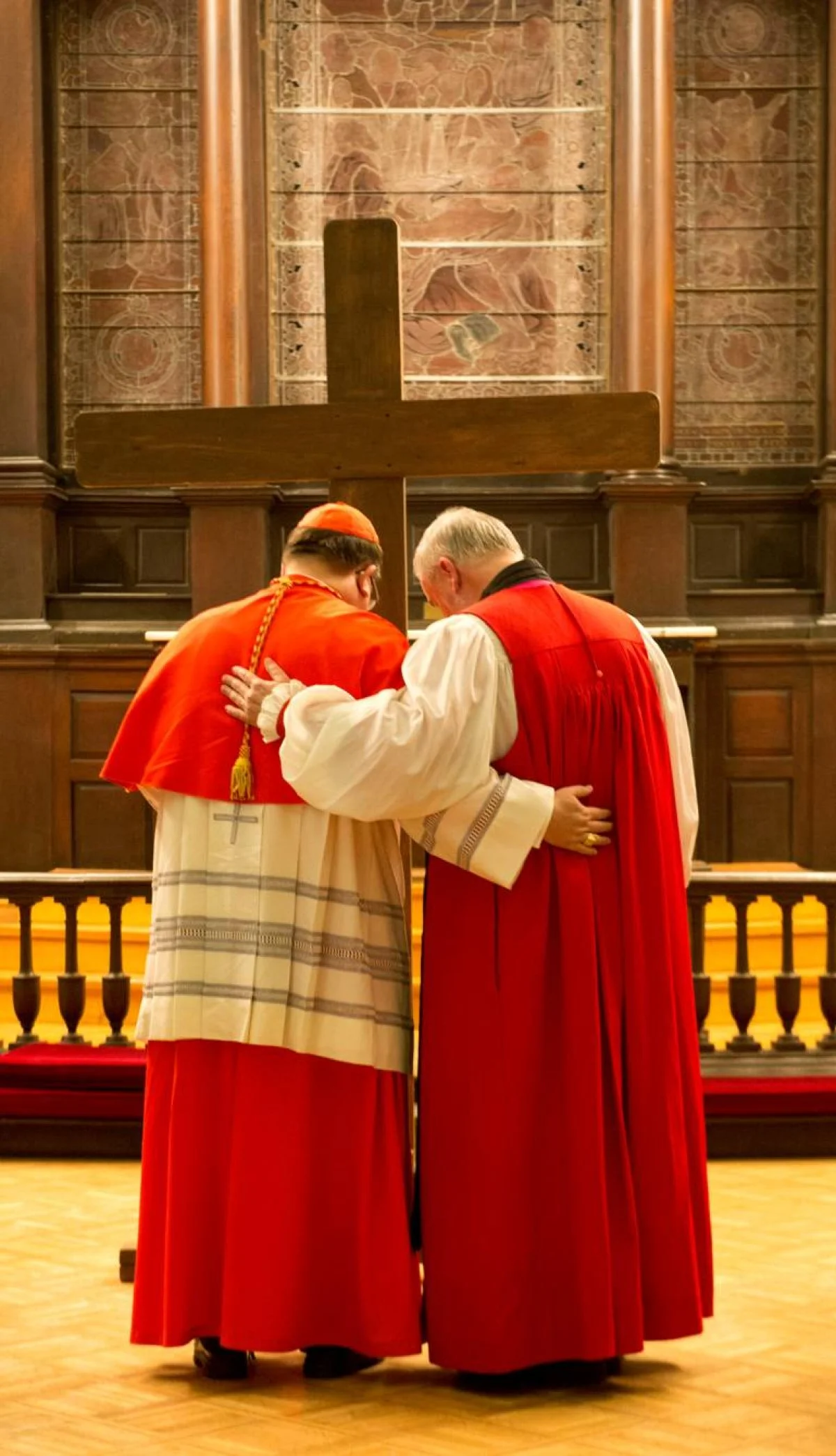
I hope all of them, including the maid, can see what their descendants were doing this Good Friday in Quebec. Four different Christian denominations in Quebec City got together to walk with a huge cross through the streets. In total silence we walked from church to church, United Church, Anglican, Presbyterian, and Catholic, stopping in each one to pray and sing and read some more of the Passion story.
It was a warm evening, and people stopped on the street to stare. Teenagers giggled together with embarrassment, militant atheists muttered with contempt, old women smiled happily. Some quietly joined us, mostly immigrants from countries where people still go to church. Would-be anthropologists took pictures of us, with our Catholic cardinal in red and our white-robed Anglican bishop, to put on their Facebook pages, the way they might post pictures of Amazonian tribes: “Didn’t know there were any left! Didn’t even have to take malaria pills to see this!”
… Read more » … lire la suite »
Posted: May 8, 2014 • Permanent link: ecumenism.net/?p=7549
Categories: Opinion • In this article: Anglican, Catholic, Québec, spiritual ecumenism
Transmis : 8 mai 2014 • Lien permanente : ecumenism.net/?p=7549
Catégorie : Opinion • Dans cet article : Anglican, Catholic, Québec, spiritual ecumenism

Ecumenism is the word that describes the historical movement for global church unity. I used to think of it as either a boring academic exercise in doctrinal compromise, or a winner-takes-all struggle to forge one monolithic superchurch.
After five years in the field (I work for a Lutheran ecumenical organization), I’m no longer dismissive. The quest for church unity is a wild, wondrous, and strange act of penitence for Christians’ often callous disregard of that little word one in John 17 and the Nicene Creed. We confess that the Holy Spirit has called one church into being. But almost all the evidence points in the opposite direction. What does this mean? And how should we respond to it?
… Read more » … lire la suite »
Posted: Mar. 17, 2014 • Permanent link: ecumenism.net/?p=7450
Categories: Opinion • In this article: Christian unity, schism
Transmis : 17 mars 2014 • Lien permanente : ecumenism.net/?p=7450
Catégorie : Opinion • Dans cet article : Christian unity, schism
KAIROS, the Canadian Ecumenical Justice Initiative, is celebrating a 40th anniversary. KAIROS itself isn’t that old, but its predecessor groups, the Canadian ecumenical coalitions are. Those of us engaged in ecumenical work, whether in theological dialogues, ecumenical education, or collaborating in advocacy for social justice are rooted in the same call to witness to Christ and to engage in common mission. We give thanks for the work of the Canadian social justice coalitions and for KAIROS that continues to give witness to this legacy. Congratulations KAIROS on 40 years of witness!
The executive director of KAIROS, Jennifer Henry, gave a long sermon January 19th at St. Matthew’s Anglican Church in Etobicoke. She reflects on ‘40 Years of Bold Witness’ framing her thoughts with four characteristics of the “natural habitat’ of prophetic voices” outlined by Walter Brueggemann in “The Prophetic Imagination.” It is well worth a read for Jennifer’s strong knowledge of history and inspirational passion for justice.
… Read more » … lire la suite »
Posted: Jan. 27, 2014 • Permanent link: ecumenism.net/?p=7344
Categories: Opinion • In this article: Canada, KAIROS Canada, social justice
Transmis : 27 janv. 2014 • Lien permanente : ecumenism.net/?p=7344
Catégorie : Opinion • Dans cet article : Canada, KAIROS Canada, social justice
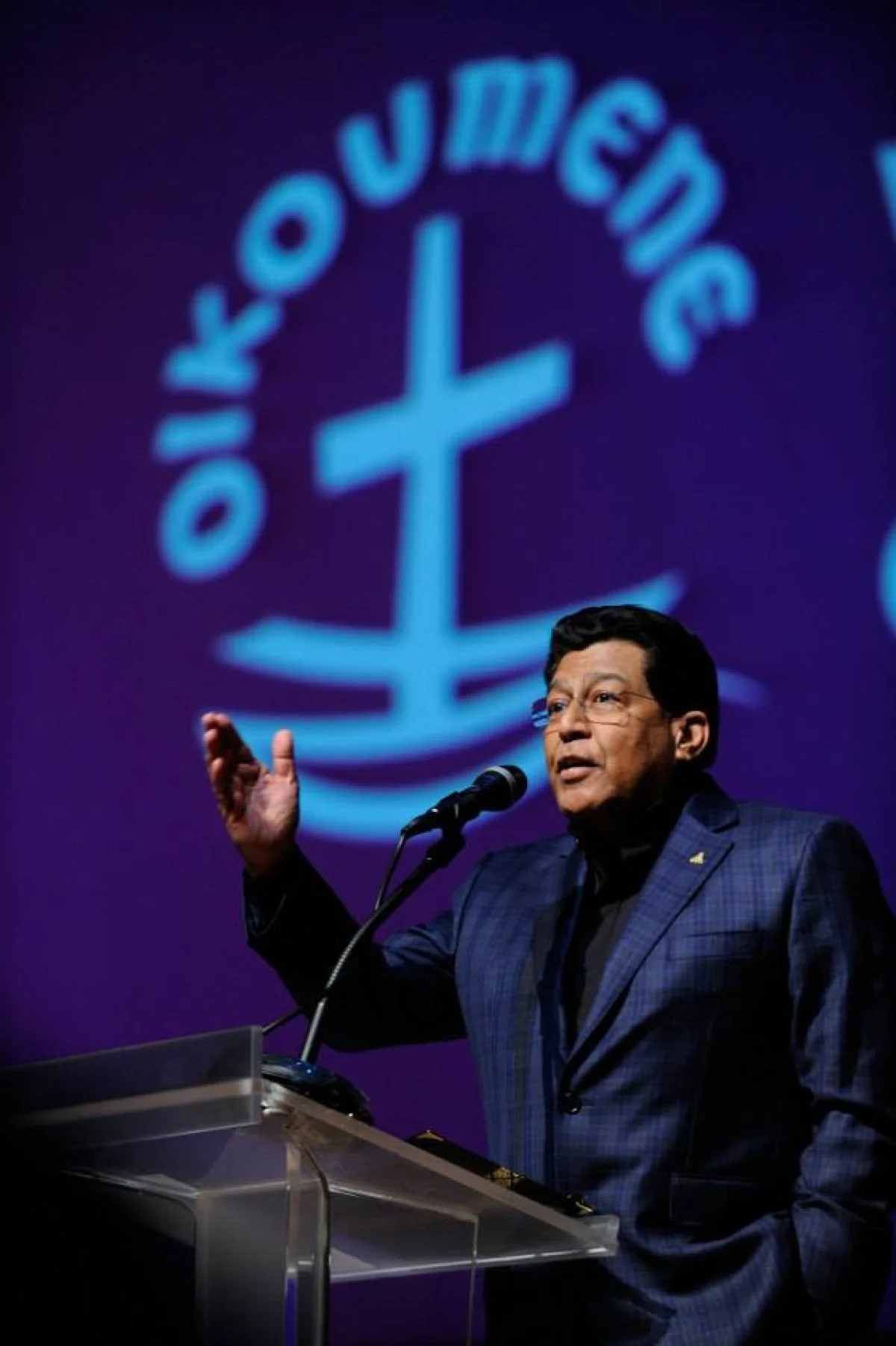
The new Calvary Convention Center in Kuala Lumpur, Malaysia, was filled nearly to capacity as 3,710 Pentecostals gathered from 73 countries around the world. They came to this mostly Muslim country for the 23rd Pentecostal World Conference, a global gathering which takes place every three years. The host was Calvary Church, a Pentecostal megachurch in Kuala Lumpur whose lead pastor, Prince Guneratnam, is currently chair of the Pentecostal World Fellowship.
Many participants at the August meeting were young and reflected the enthusiasm of the fastest-growing segment of the Christian world. In 1970 Pentecostals accounted for only 5 percent of all Christians, but today Pentecostals and charismatics—including those in other denominations who exercise Pentecostal or charismatic gifts—constitute 25 percent of all the world’s Christians. In Asia, 80 percent of all Christian conversions are to Pentecostal forms of Christianity. Or think of it this way: one out of 12 people alive today is Pentecostal.
… Read more » … lire la suite »
Posted: Jan. 21, 2014 • Permanent link: ecumenism.net/?p=7197
Categories: Opinion • In this article: Christian unity, Pentecostal World Fellowship, WCC
Transmis : 21 janv. 2014 • Lien permanente : ecumenism.net/?p=7197
Catégorie : Opinion • Dans cet article : Christian unity, Pentecostal World Fellowship, WCC
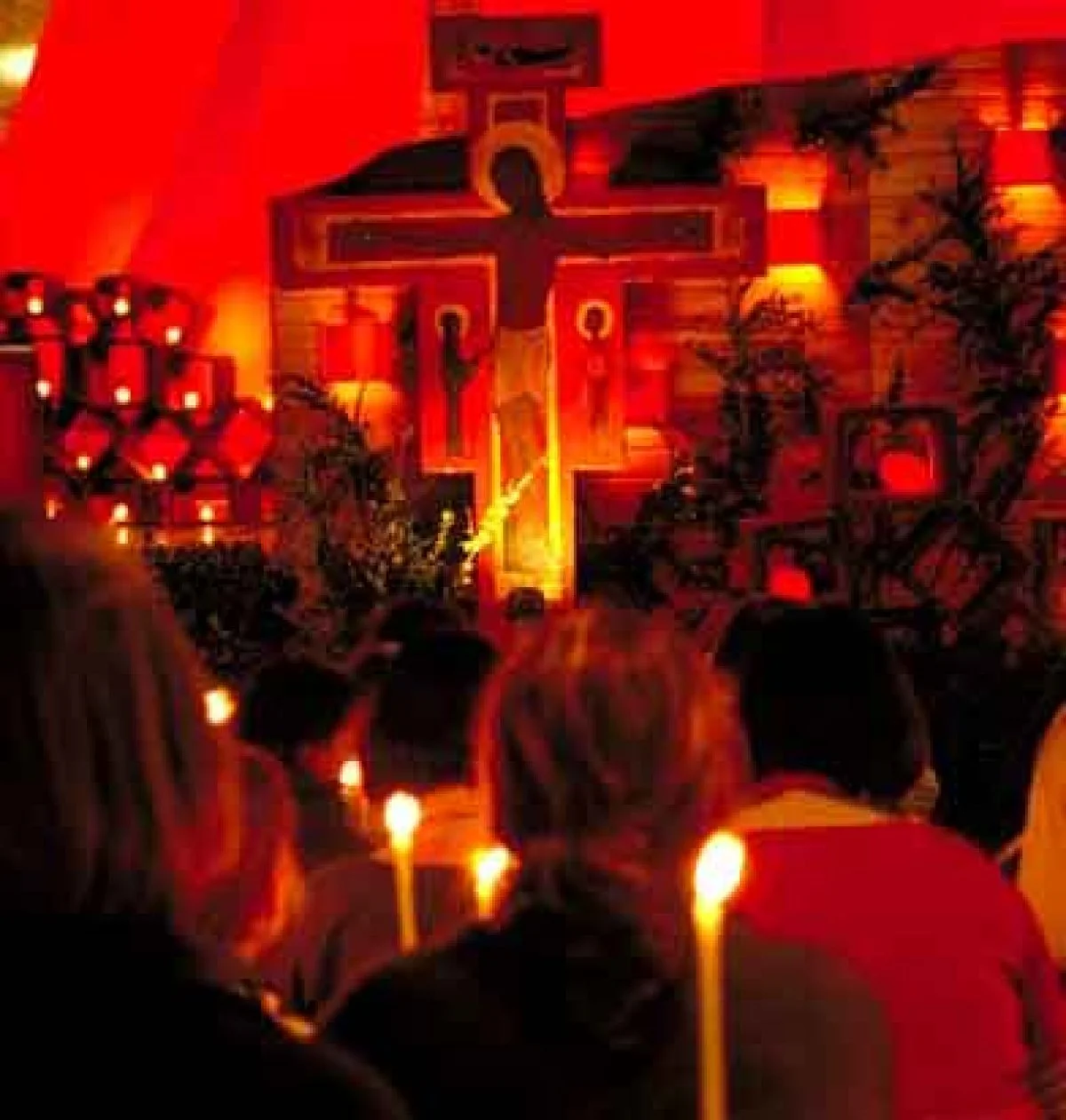
Recently 30,000 young adults from all over Europe came together in Strasbourg, France. This gathering was the 36th European Meeting, an annual event prepared by our Taizé Community and held each time in a different European city.
By giving young people the opportunity to make personal contacts across borders, we want to help them acquire a true European awareness. The work of international institutions is essential, but unless there is a meeting of persons, Europe cannot be built.
If there is no longer a wall between East and West, there are still walls between our perceptions. The young people who came to Strasbourg want an open and inclusive Europe. They want solidarity between all European countries and solidarity with the poorest peoples of other continents.
They ask that a globalised economy be closely linked to a globalisation of solidarity. They expect rich nations to show greater generosity, both through investments in developing nations that truly offer justice and by a worthy and responsible welcome given to immigrants from these countries.
… Read more » … lire la suite »
Posted: Jan. 21, 2014 • Permanent link: ecumenism.net/?p=7200
Categories: Opinion • In this article: Christian unity, ecumenism, Taizé, WPCU, youth
Transmis : 21 janv. 2014 • Lien permanente : ecumenism.net/?p=7200
Catégorie : Opinion • Dans cet article : Christian unity, ecumenism, Taizé, WPCU, youth
“We have come a long way since the 1920s! There was no World Council of Churches back then and the important ecumenical energy of the Second Vatican Council was still forty years to come. And yet the ground breaking initiatives of the Malines Conversations continue to give us much to reflect upon. As I have moved about in ecumenical circles over the past year, talking to lay people and church leaders from all denominations, I have heard not a few of them worry that ecumenism really means absorption. There is an anxiety that traditions will be lost and identities erased in a ‘melting pot’ style of Christianity. This fear and the assumptions which fuel it is likely behind a noticeable movement away from the ecumenical project in favour of focusing on denominational identities. After all, it is said, in this Christian world of shrinking churches and diminishing returns it is necessary to focus on one’s own tradition and save what one can!
… Read more » … lire la suite »
Posted: Aug. 13, 2013 • Permanent link: ecumenism.net/?p=6767
Categories: Opinion • In this article: Darren Dahl, ecumenism
Transmis : 13 aoüt 2013 • Lien permanente : ecumenism.net/?p=6767
Catégorie : Opinion • Dans cet article : Darren Dahl, ecumenism
The Anti-Defamation League commends the International Council of Christians and Jews (ICCJ) for its comprehensive statement about the Israel-Palestinian conflict, which calls on religious institutions and groups to refrain from issuing one-sided declarations in attempting to promote a resolution to the dispute.
The statement by ICCJ, one of the world’s oldest and most respected international Christian-Jewish organizations, urges religious bodies and leaders to recommit themselves to promote understanding and reconciliation, and pursue the hard work of authentic interfaith dialogue.
… Read more » … lire la suite »
Posted: July 15, 2013 • Permanent link: ecumenism.net/?p=6499
Categories: Opinion • In this article: antisemitism, Christian, Christianity, ICCJ, Israel, Judaism, Palestine
Transmis : 15 juil. 2013 • Lien permanente : ecumenism.net/?p=6499
Catégorie : Opinion • Dans cet article : antisemitism, Christian, Christianity, ICCJ, Israel, Judaism, Palestine

The new encyclical, issued by Pope Francis, Lumen fidei, is a splendid document that deserves to be pondered prayerfully. Its clarity and depth will repay multiple readings by all in the Church – indeed, by all who are seeking the meaning and truth of human existence.
However, one section will prove of particular interest to theologians. Number thirty-six of the encyclical sets forth briefly, but in a remarkably rich way, an understanding of the task of theology. From one perspective, of course, it is a traditional view (as the footnote reference to Bonaventure and Aquinas shows). But it places that traditional understanding into an intersubjective context that brings out, in a new and deeper way, its significance and implications.
The Pope writes: “God is a subject who makes himself known and perceived in an interpersonal relationship.” Thus the theologian cannot approach the theological task in a distant, neutral manner, as would a scientist or a mere observer. Theology flourishes through participatory knowledge in which reason, will, and affections are all engaged. The encyclical appeals to the biblical notion of the “heart” and insists that, as Blessed John Henry Newman expresses it: cor ad cor loquitur — heart speaks to heart. Theology reflects upon the Word of God, fully revealed, in the death and resurrection of Jesus, as abiding Love. The heart of God speaks to our heart his Word of Love in interpersonal encounter.
… Read more » … lire la suite »
Posted: July 13, 2013 • Permanent link: ecumenism.net/?p=6602
Categories: Opinion • In this article: encyclicals, Pope Francis, theology
Transmis : 13 juil. 2013 • Lien permanente : ecumenism.net/?p=6602
Catégorie : Opinion • Dans cet article : encyclicals, Pope Francis, theology
Recently, Jonathan Dudley has argued that Creationists have “abandoned a central commitment of orthodox Christianity.” Dudley’s argument is simple. Until the modern controversy among Fundamentalist Evangelicals over creation and evolution, Christianity has always held to a belief that the natural world is a revelation of God. Implicit in the doctrine of creation is the understanding that God is revealed by God’s works. Good science is that which seeks knowledge from the natural world encountered by humanity. As Dudley reminds us: “Augustine castigated those who made the Bible teach bad science, John Calvin argued that Genesis reflects a commoner’s view of the physical world, and the Belgic confession likened scripture and nature to two books written by the same author.”
… Read more » … lire la suite »
Posted: May 21, 2013 • Permanent link: ecumenism.net/?p=4579
Categories: Opinion • In this article: creation, evolution, science
Transmis : 21 mai 2013 • Lien permanente : ecumenism.net/?p=4579
Catégorie : Opinion • Dans cet article : creation, evolution, science
Interfaith is going global. For a long time it had been primarily about Christian-Jewish relations in western countries with occasional attempts to include Muslims and local representatives of other religions.
Eighty per cent of all Christians once lived in Europe and North America. Today, two-thirds live in Latin America, Africa and Asia where they only rarely encounter Jews but interact with many other faiths. And some 600 million Muslims live nowadays in non-Muslim countries.
This demographic transformation — complicated by pockets of Muslim militancy on the one hand and, especially after Sept. 11, western Islamophobia on the other — has shifted the focus of interreligious dialogue. The conflict between Israel and the Palestinians has also become a factor.
… Read more » … lire la suite »
Posted: May 13, 2013 • Permanent link: ecumenism.net/?p=6496
Categories: Opinion • In this article: Christian, Christianity, dialogue, interfaith, Islam, Judaism
Transmis : 13 mai 2013 • Lien permanente : ecumenism.net/?p=6496
Catégorie : Opinion • Dans cet article : Christian, Christianity, dialogue, interfaith, Islam, Judaism
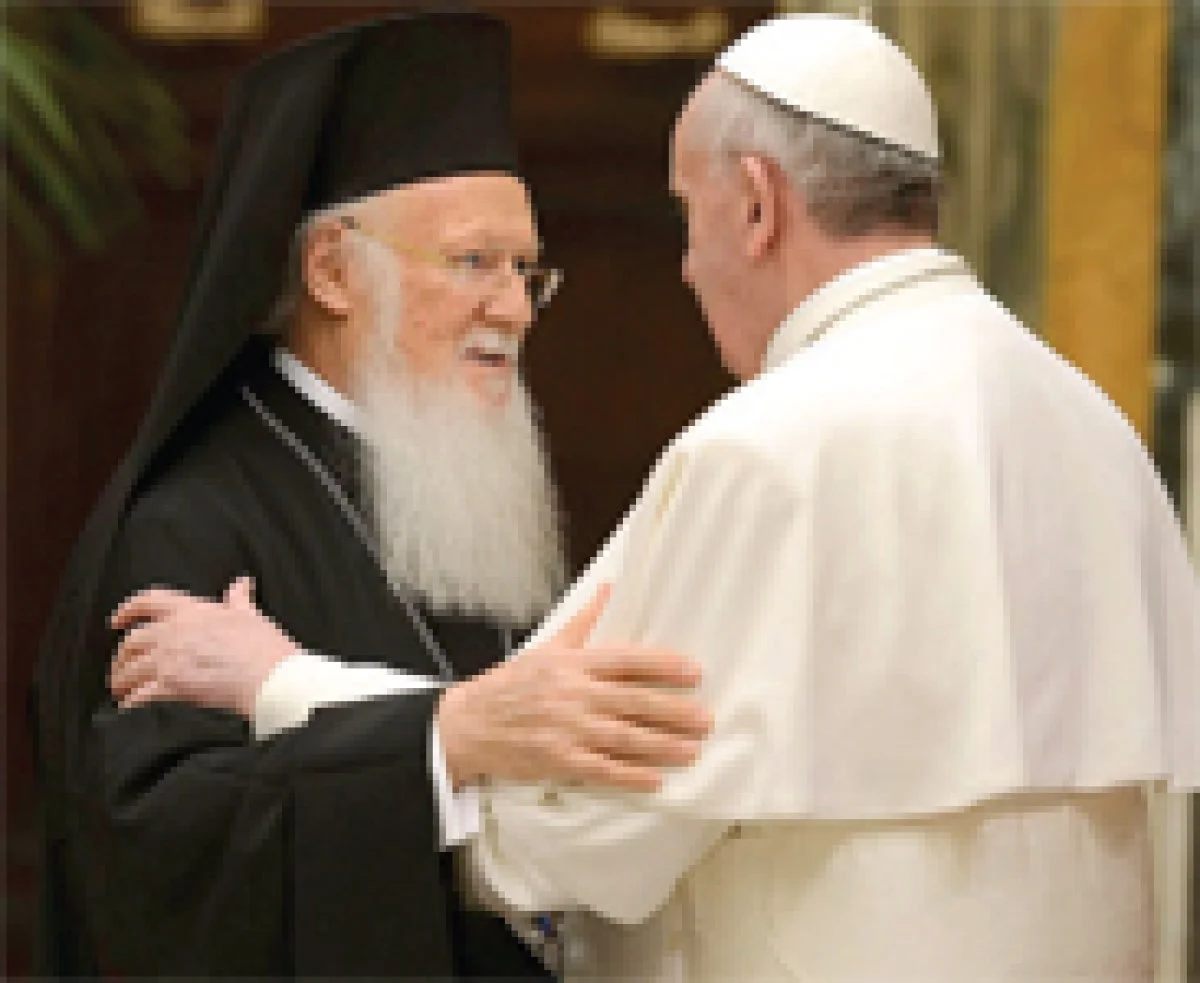
Pope Francis’ reference to himself as the ‘Bishop of Rome’ was music to the ears of Orthodox leaders for whom the question of papal primacy has long been a problem for reunion. Their attendance at the new Pope’s inaugural Mass was a sign of their hopes for closer communion. A statement from the patriarchate explained Bartholomew’s decision to attend Pope Francis’ inauguration personally: the need for “a profoundly bold step … that could have lasting significance”. It is the first time the Bishop of Constantinople has attended the inauguration of the Bishop of Rome ever, let alone since the great schism of 1054. According to the patriarchate website: “after such a long division … authentic reunion will require courage, leadership and humility. Given Pope Francis’ well-documented work for social justice and his insistence that globalisation is detrimental to the poor … the Orthodox and the Roman Catholic traditions have a renewed opportunity to work collectively on issues of mutual concern … But such work requires a first step and it would appear as though Ecumenical Patriarch Bartholomew is willing to take such a step.” In one of those seemingly informal but resonant gestures that we are beginning to expect from Francis, the response was immediate and commensurate. The successor of Peter greeted the successor of the other Galilean fisherman as “my brother Andrew”.
… Read more » … lire la suite »
Posted: Mar. 30, 2013 • Permanent link: ecumenism.net/?p=3515
Categories: Opinion, Tablet • In this article: Bartholomew I, Christian unity, dialogue, Eastern Orthodox, Ecumenical Patriarch of Constantinople, ecumenism, patriarch
Transmis : 30 mars 2013 • Lien permanente : ecumenism.net/?p=3515
Catégorie : Opinion, Tablet • Dans cet article : Bartholomew I, Christian unity, dialogue, Eastern Orthodox, Ecumenical Patriarch of Constantinople, ecumenism, patriarch
When the new pope is consecrated, he will inherit a troubled global church. Internal scandal and unaddressed external problems pose great risks to the vitality of Catholicism. But the consequences of success or failure are huge for the church universal, the world’s 2.1 billion Christians of every denomination. This is more than a butterfly effect. Rome is not Las Vegas—what happens in Rome will not stay within the borders of Vatican City. One consequence of globalization is that the walls that have long divided Catholics from Orthodox, mainline Protestants, evangelicals, and Pentecostals are eroding.
Brian Stiller, a global ambassador for the World Evangelical Alliance, commenting about Catholic and evangelical relations, wrote on his blog recently, “Not in 500 years have the two sides been so close and friendly.”
… Read more » … lire la suite »
Posted: Mar. 13, 2013 • Permanent link: ecumenism.net/?p=6552
Categories: Evangelical-Roman Catholic Dialogue, Opinion • In this article: Catholic, ecumenism, Evangelicals, papacy
Transmis : 13 mars 2013 • Lien permanente : ecumenism.net/?p=6552
Catégorie : Evangelical-Roman Catholic Dialogue, Opinion • Dans cet article : Catholic, ecumenism, Evangelicals, papacy
Last week I invited reflections from the readers of Ecumenism in Canada on the ecumenical significance of the papal resignation. Here are the first of the reflections received:
John H. Armstrong, ACT3 Network, Carol Stream, IL (USA) — While the media discusses what they think about a pope resigning office ecumenical Christians should ask deeper questions rooted in faith, hope and love. I believe Pope Benedict XVI made a courageous decision that demonstrates deep humility. In this decision he has opened the door to deeper conversations about the unity of the whole church. The fuller implications of his decision will not be understood for decades. Historians will likely see this as a significant step into a new world shaped by global realities. Will the papacy be the same in 2050? I doubt it. I have no idea what this means but I do believe history was made by the decision of this humble man, a decision that showed us what serving Christ looks like in a time when true peacemaking and humility could not be more important.
… Read more » … lire la suite »
Posted: Feb. 28, 2013 • Permanent link: ecumenism.net/?p=3036
Categories: Opinion • In this article: Christian unity, dialogue, ecumenism, papacy, petrine ministry, Pope Benedict XVI, Ut Unum Sint
Transmis : 28 févr. 2013 • Lien permanente : ecumenism.net/?p=3036
Catégorie : Opinion • Dans cet article : Christian unity, dialogue, ecumenism, papacy, petrine ministry, Pope Benedict XVI, Ut Unum Sint
I invite you to contribute your own reflections to the ‘Ecumenism in Canada” website. A little more than a week has passed since the surprising news that Pope Benedict XVI has decided to resign at the end of February. Now that the initial flurry of news reports have reported the details of his resignation and the expected process of the conclave in March, I invite you to join in a more reflective moment to consider the ecumenical significance of the papal resignation.
In 1995, Pope John Paul II issued his encyclical on commitment to ecumenism, Ut Unum Sint, in which he invited discussion and dialogue about ways in which the petrine ministry might be reformed to more effectively serve as a universal ministry of unity. The resignation of Pope Benedict is one of the most visible reforms of the papacy in recent memory. What is it’s ecumenical significance?
I invite you to write short reflections, 100-300 words, and send them to me at editor@ecumenism.net. I will select appropriate reflections to publish on the “Ecumenism in Canada” website. I cannot promise to publish every response, but I will endeavour to publish responses that are focused on the question at hand: What is the ecumenical significance of the papal resignation? I reserve the right to edit responses. Please include your full name, address, and occupation.
Please send your responses by February 28.
… Read more » … lire la suite »
Posted: Feb. 19, 2013 • Permanent link: ecumenism.net/?p=3042
Categories: Opinion • In this article: Christian unity, dialogue, ecumenism, papacy, petrine ministry, Pope Benedict XVI, Ut Unum Sint
Transmis : 19 févr. 2013 • Lien permanente : ecumenism.net/?p=3042
Catégorie : Opinion • Dans cet article : Christian unity, dialogue, ecumenism, papacy, petrine ministry, Pope Benedict XVI, Ut Unum Sint
by Julia Smucker
For about the past five years, I have been a participant in the Mennonite/Catholic ecumenical movement known as Bridgefolk – first as a Mennonite drawn toward communion with the Catholic Church but also strongly connected to my ecclesial heritage, and now as a Catholic seeking to maintain that connection with the church that formed me. I had agonized over the choice I was presented with in the unavoidable reality that joining with one communion would mean breaking with another, and wondered whether I could do so without it being tantamount to a rejection, a cutting off of my roots. And then I discovered a group of people who had been agonizing over this division for years before me. In the many honest and in-depth discussions I’ve been a part of since, it’s been clear that these people who are doing their best to bridge two Christian traditions share a deep longing for a fuller communion than we are as yet able to have, as well as an acute awareness that what we long for cannot be attained quickly or easily.
… Read more » … lire la suite »
Posted: July 16, 2012 • Permanent link: ecumenism.net/?p=2212
Categories: Opinion • In this article: eucharist, sacramental sharing
Transmis : 16 juil. 2012 • Lien permanente : ecumenism.net/?p=2212
Catégorie : Opinion • Dans cet article : eucharist, sacramental sharing
“Unity” belongs to the concepts that should be constantly discussed. Life is changing, also the life of the churches and their life together. So are their understanding of unity, their challenges to unity and their contributions to it.
Images can stimulate our reflections, without saying everything or being exclusive, they can nurture our imagination and our ability to be creative. Images from nature can give us a sense of reality, and a deeper sense of how we are a part of a living reality. I have been reflecting on an image, actually a photo, that give me some new insights, deepening my reflections on this topic that I have been discussing and striving for during the last 20 years of study and work. The photo is of some lichen, growing in a circle, across the deep crevice in the rock on which they grow. It seems to be challenged by the split in the rock, but nevertheless grows across it. This striking image has encouraged me to look at unity as something of a double reality. It is growing life, yet still making a structure. It belongs to the essential nature of this lichen to grow in circles, to become part of a unity. I am told by my dear colleague from Tanzania that the same is true for banana trees, they also grow like families in circles. The photo taken just outside our small summer house at the coast of Norway last summer, is from a bare rock next to the sea on a small island, out in the big sea that unites Norway with the continent of Europe and further more with the whole globe. I wonder what images in Canadian nature might inspire you to these kinds of reflections.
Thus, I believe that «Unity» is a concept that requires complementary perspectives. I have brought my reflections together in 10 pairs of perspectives, describing unity, to offer you here for your consideration today.
… Read more » … lire la suite »
Posted: Mar. 14, 2012 • Permanent link: ecumenism.net/?p=9702
Categories: Opinion • In this article: Olav Fykse Tveit, WCC
Transmis : 14 mars 2012 • Lien permanente : ecumenism.net/?p=9702
Catégorie : Opinion • Dans cet article : Olav Fykse Tveit, WCC
Here is a translation of the homily Benedict XVI gave Wednesday evening at Vespers on the feast of the Conversion of St. Paul. The celebration closed the annual Week of Prayer for Christian Unity.
… Read more » … lire la suite »
Posted: Jan. 26, 2012 • Permanent link: ecumenism.net/?p=2223
Categories: Opinion • In this article: 2012, communion ecclesiology, Pope Benedict XVI, WPCU
Transmis : 26 janv. 2012 • Lien permanente : ecumenism.net/?p=2223
Catégorie : Opinion • Dans cet article : 2012, communion ecclesiology, Pope Benedict XVI, WPCU

In the first century, when the Apostle Paul wrote to the Corinthian Christians about the Church as “one body with many members,” he had no idea of the differences and divisions that would come to fragment the Church so many centuries later. Paul wrote to address the particular concerns that were plaguing the early Christian communities. He pointed out that “there are varieties of gifts, but the same Spirit.”
It’s not difficult for us to apply the metaphor of the Church as the body to our congregations. We recognize the different gifts that are shared within our church communities – preaching, teaching, administration, music, hospitality, prayer, evangelism, and more – and we learn to value the different gifts and to acknowledge their importance for the healthy functioning of the church as a whole, as one body.
But what if this metaphor is meant to apply not only to the local congregation, but to the whole Church throughout the world? John’s Gospel indicates that it was Jesus himself who first prayed for the unity of the Church: “I ask … on behalf of those who will believe in me … that they may all be one … so that the world may believe that you have sent me.” (John 17:20-21)
… Read more » … lire la suite »
Posted: Dec. 1, 2011 • Permanent link: ecumenism.net/?p=2187
Categories: Opinion • In this article: Christian unity, ecumenism, Presbyterian Church in Canada
Transmis : 1 déc. 2011 • Lien permanente : ecumenism.net/?p=2187
Catégorie : Opinion • Dans cet article : Christian unity, ecumenism, Presbyterian Church in Canada
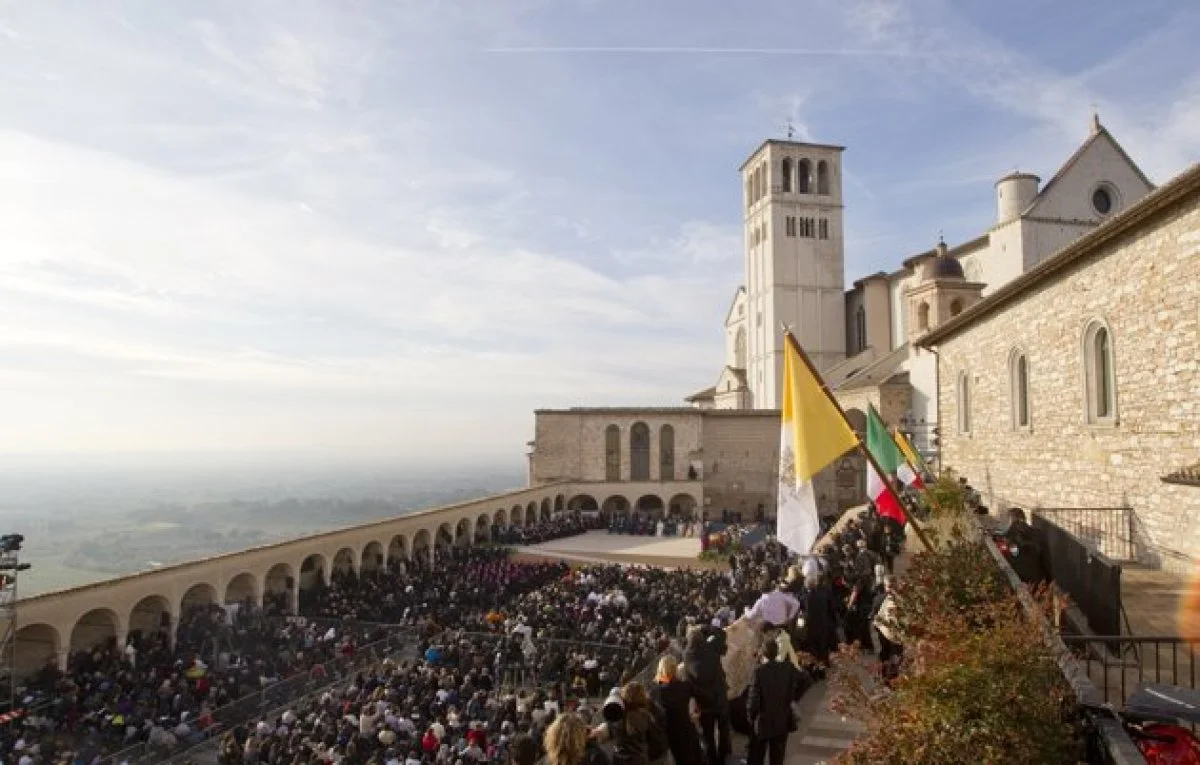
Of all the challenges faced by the Vatican in organizing the 25th anniversary of the historic interreligious gathering in Assisi in 1986, the hardest was how to make it newsworthy. The 176 delegates–representing, said the Vatican, “not only the world’s religions, but all people of good will, everyone seeking the truth”–whom Pope Benedict XVI led by train from Rome to the town of St Francis were comprehensive in their diversity. But if the Christian delegations on October 27 included the top men–Pope Benedict himself, the Archbishop of Canterbury and the Ecumenical Patriarch, Bartholomew I–the delegates from Judaism, Islam, Hinduism, Buddhism and others included no obvious celebrities, or even organizations whose presence might have raised an eyebrow. Even the inclusion of four non-believers failed to create a stir, for it was not Richard Dawkins or Christopher Hitchens standing with the pope but little-known academic philosophers.
… Read more » … lire la suite »
Posted: Nov. 14, 2011 • Permanent link: ecumenism.net/?p=1821
Categories: Opinion • In this article: Assisi, interfaith
Transmis : 14 nov. 2011 • Lien permanente : ecumenism.net/?p=1821
Catégorie : Opinion • Dans cet article : Assisi, interfaith

It’s sometimes been said in recent years that the Church of England is still used by British society as a sort of stage on which to conduct by proxy the arguments that society itself doesn’t know how to handle. It certainly helps to explain the obsessional interest in what the Church has to say about issues of sex and gender. It may help to explain just what has been going on around St Paul’s Cathedral in the last couple of weeks.
… Read more » … lire la suite »
Posted: Nov. 1, 2011 • Permanent link: ecumenism.net/?p=1818
Categories: News, Opinion • In this article: Anglican, economic ethics, Rowan Williams
Transmis : 1 nov. 2011 • Lien permanente : ecumenism.net/?p=1818
Catégorie : News, Opinion • Dans cet article : Anglican, economic ethics, Rowan Williams
The accepted axiom is, as the climate changes so the world, too, will change in dramatic and sometimes undesirable ways. What does this often rapid change mean to Christians whose faith is intertwined with the glory and beauty of God’s creation, but challenged when that creation is corrupted and irreversibly altered?
… Read more » … lire la suite »
Posted: Mar. 30, 2011 • Permanent link: ecumenism.net/?p=1813
Categories: Opinion, WCC News • In this article: climate change, ecology, environment
Transmis : 30 mars 2011 • Lien permanente : ecumenism.net/?p=1813
Catégorie : Opinion, WCC News • Dans cet article : climate change, ecology, environment
When I moved to Saskatoon sixteen years ago, I was surprised by the ecumenical interest that I encountered in the churches. I probably shouldn’t have been surprised. After all, Saskatoon has the only ecumenical centre in Canada which focuses on parish ecumenism. This diocese has a history of ecumenical cooperation and experimentation that goes back to our earliest settlements. Over the years I have discovered that at the core of the prairie ecumenical experience there are some basic principles that provide guidance and insight to the search for Christian unity here, just as they do throughout the church. These principles are found in our own experience, but they are rooted in our biblical and doctrinal convictions about Christian faith and life. I think we experience these in a particularly unique way in Saskatchewan.
… Read more » … lire la suite »
Posted: Feb. 8, 2011 • Permanent link: ecumenism.net/?p=6324
Categories: Opinion • In this article: Christian unity, spiritual ecumenism
Transmis : 8 févr. 2011 • Lien permanente : ecumenism.net/?p=6324
Catégorie : Opinion • Dans cet article : Christian unity, spiritual ecumenism
By Nicholas Jesson On April 24th next year, we will celebrate Easter together in the Eastern and Western calendars. This happens occasionally, and it can always be a moment of great ecumenical opportunity. However, it also reflects one of the deepest divisions in the Body of Christ. Easter, as the celebration of the passion, death,
… Read more » … lire la suite »
Posted: Oct. 27, 2010 • Permanent link: ecumenism.net/?p=6263
Categories: Opinion • In this article: Christian unity, Date of Easter, dialogue, ecumenism, WCC
Transmis : 27 oct. 2010 • Lien permanente : ecumenism.net/?p=6263
Catégorie : Opinion • Dans cet article : Christian unity, Date of Easter, dialogue, ecumenism, WCC
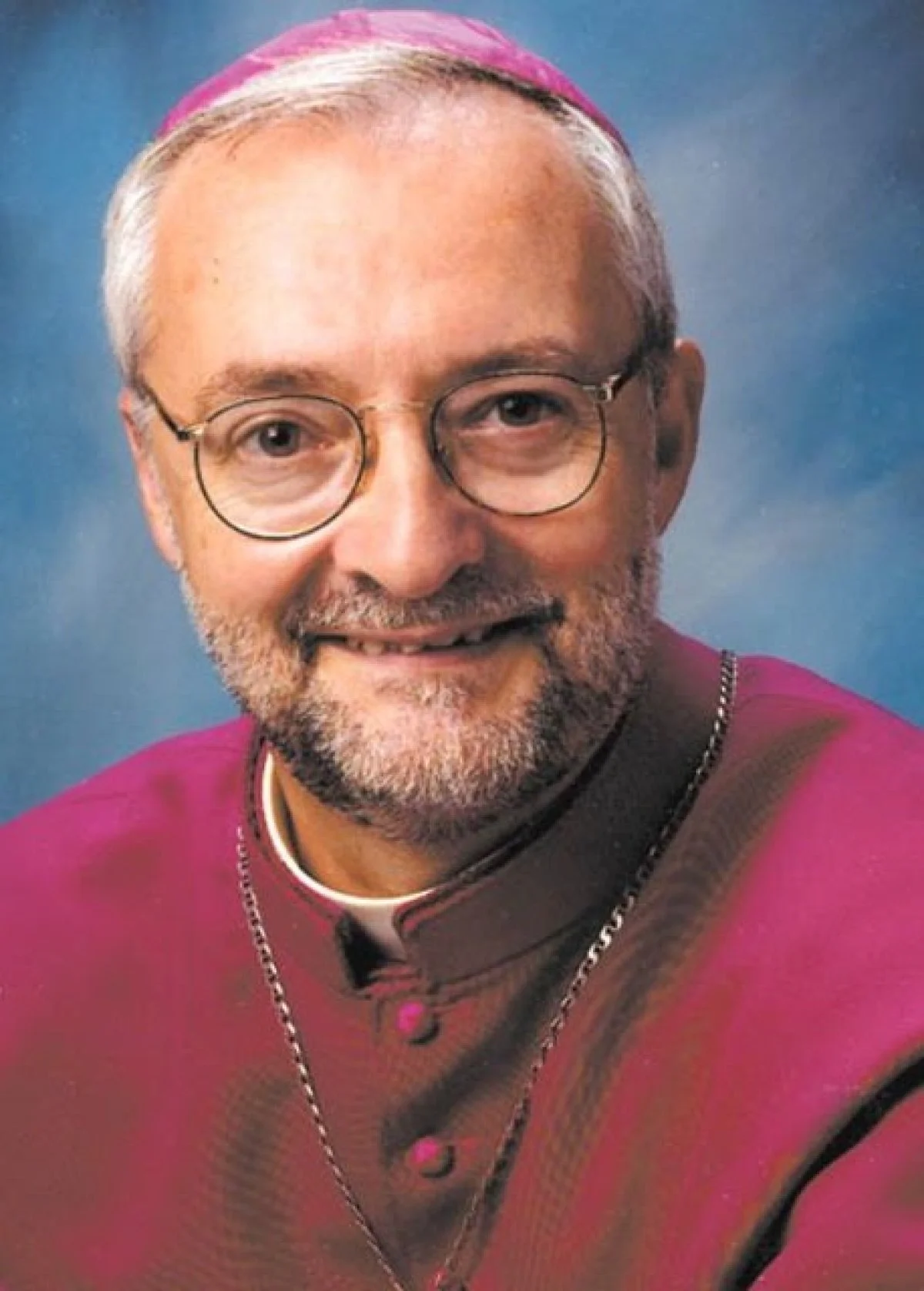
Dear faithful of the Diocese of St. Paul, the ecological crisis, described above by Pope Benedict XVI and Pope John Paul II, is evident in many parts of Canada. Our wasteful consumerist lifestyle, combined with political and industrial short-sightedness and neglect, are damaging our air, land, and water. Personal, social, and political change will be necessary to meet this national challenge.
As the Bishop of the Diocese of St. Paul in north-eastern Alberta, it is my responsibility to provide moral advice and leadership on questions that affect the faithful who live in my diocese. It is therefore impossible for me to ignore the moral problem created by the proposed one hundred and fifty billion dollars oil sands developments in the Municipality of Wood Buffalo because these projects are in “my own backyard,” and have aroused strong ethical criticism. In this pastoral letter I will consider this extraordinary and controversial industrial development from a Catholic perspective.
Whenever I drive to Fort McMurray and enter the city on highway 63, I appreciate reading the prominently displayed motto of the Municipality of Wood Buffalo: “We Have the Energy!” The energy is not only in the sands but is also, as the sign implies, in the very hard working people who live in this northern community. The general public has only recently become conscious of Fort McMurray. They do not know of its history as a trading and shipping center, of its connection to the early fur traders, missionaries, and voyageurs, of its First Nations and Metis communities, of the near fifty year old history of the development of the oil sands industry and the risks the pioneers of this industry undertook. It is not generally known that Suncor and Syncrude in the 1980’s had contingency plans to shut down, padlock, and mothball their plants due to the then very low price of oil, twelve dollars a barrel!
… Read more » … lire la suite »
Posted: Jan. 25, 2009 • Permanent link: ecumenism.net/?p=12028
Categories: Documents, Opinion • In this article: bishops, environment, Luc Bouchard
Transmis : 25 janv. 2009 • Lien permanente : ecumenism.net/?p=12028
Catégorie : Documents, Opinion • Dans cet article : bishops, environment, Luc Bouchard
As the Lambeth Conference of 2008 comes to an end, I want to offer some further reflections of my own on what the bishops gathered in Canterbury have learned and experienced. Those of you who have been present here will be able to share your own insights with your people, but it may be useful for me to add my own perspectives as to where we have been led. For the vast majority of bishops, it seems, this has been a time when they have felt God to have been at work. The Conference was not a time for making new laws or for binding decisions; in spite of the way some have expressed their expectations, Lambeth Conferences have never worked straightforwardly in this way. The Conference Design Group believed strongly that the chief need of our Communion at the moment was the rebuilding of relationships – the rebuilding of trust in one another – and of confidence in our Anglican identity. And it was with this in mind that they planned for a very different sort of Conference, determined to allow every bishop’s voice to be heard and to seek for a final outcome for which the bishops were genuinely able to recognize an authentic account of their own work.
… Read more » … lire la suite »
Posted: Aug. 26, 2008 • Permanent link: ecumenism.net/?p=487
Categories: ACNS, Opinion • In this article: Anglican Communion, Lambeth Conference, Rowan Williams
Transmis : 26 aoüt 2008 • Lien permanente : ecumenism.net/?p=487
Catégorie : ACNS, Opinion • Dans cet article : Anglican Communion, Lambeth Conference, Rowan Williams
Bishop Henry on Alberta’s Human Rights Act
The following letter from Bishop Frederick Henry, Roman Catholic bishop of Calgary (Alberta), to Ed Stelmach, Premier of the Province of Alberta, was recently published on the front page of the diocesan website. Bishop Henry is known for his willingness to speak publicly about controversial issues. The Human Rights Commission has been a particular concern of his in the past. This letter provides further insight into Bishop Henry’s concerns.
Dear Premier Stelmach:
I have raised the issue of the Alberta Human Rights Commission several times with you in the past eighteen months. On each of those occasions, you said that you understood the issues and shared my concerns. However, the situation is continuing to deteriorate across our country and the various levels of governments are seemingly non-responsive.
April 2008: The Ontario Human Rights Tribunal has ordered an evangelical Christian charity, Christian Horizons, to rescind its morality code and require employees to undergo anti-discriminatory training. In addition, Christian Horizons has been ordered to pay $23,000 plus lost wages for terminating Connie Heritz’s employment based on a morality code which she freely and knowingly signed as a condition of employment and which she failed to adhere to.
Every religious institution should have the jurisdictional independence to determine its own confessions, doctrines and ordinances, including conditions of employment.
May 2008: A Saskatchewan Human Rights Tribunal has fined a Regina marriage commissioner, Orville Nichols, $2,500 after finding he discriminated against a gay couple when he declined to perform their same-sex ceremony. Nichols, who has performed nearly 2,000 marriages since 1983, had referred the couple to another marriage commissioner because he said his religious beliefs (Baptist) kept him from performing the ceremony.
The conflict between social pressure and the demands of right conscience can lead to the dilemma either of abandoning a profession or of compromising one’s convictions. Faced with that tension, despite the ruling of the Commission, we must remember that there is a middle path which opens up before workers who are faithful to their conscience. It is the path of conscientious objection, which ought to be respected by all, especially legislators.
Every person has the right to have their religious beliefs reasonably accommodated.
Each judgment emanating out of our various Human Rights Commissions seems to be more brazen and bizarre than the one that preceded it. However, for inane stupidity and gross miscarriage of justice our own Alberta Human Rights Tribunal deserves to take first prize for its treatment of Stephen Boissoin.
June 2008: The Alberta Human Rights Tribunal fined Stephen Boissoin, $5,000.
Section 30 of the Alberta Human Rights Act states: “Evidence may be given before a human rights panel in any manner that the panel considers appropriate, and the panel is not bound by the rules of law respecting evidence in judicial proceedings.” It would also seem that this panel is also not bound by reasonable argument or the elementary rules of logic but is free to skewer anyone not espousing and proclaiming politically correct views. Darren Lund, the complainant, said that Boissoin’s words in his 2002 letter to the Red Deer Advocate were hateful, and furthermore, an assault on a gay teenager three weeks later could be connected to them. No proof of either was presented.
Lori Andreachuk, the chairperson of the Tribunal, agreed that his words were “likely” to expose gays, “a vulnerable” group, to hatred due to their sexual orientation. No court in the land would connect the letter and the assault but this silly tribunal did.
Andreachuk acknowledged that “In this case, there is no specific individual who can be compensated as there is no direct victim who has come forward…” However, she also wrote: “Dr. Lund, although not a direct victim, did expend considerable time and energy and suffered ridicule and harassment as a result of his complaint. The Panel finds therefore that he is entitled to some compensation.” One might ask on what grounds?
She concluded that Boissoin “… shall pay to Dr. Lund an award for damages, jointly and severally, in the amount of $5,000.00.” Lund wasn’t the victim of any kind of discrimination and yet he is handsomely paid, and subsequently, feted as Gay Pride Parade Marshall in Calgary.
The tribunal effectively stripped Boissoin of his right to freedom of speech. “Mr. Boissoin ….. shall cease publishing in newspapers, by email, on the radio, in public speeches, or on the Internet, in future, disparaging remarks about gays and homosexuals.” What is meant by “disparaging”? This is tantamount to ruling out honest debate and a plurality of views in the public sphere lest someone be offended by a differing viewpoint.
The tribunal decided to extract a further pound of flesh by way of public humiliation. “Mr. Boissoin and The Concerned Christian Coalition Inc. provide Dr. Lund with a written apology for the article in the Red Deer Advocate which was the subject of this complaint.” What happens if Lund is not satisfied with the apology?
Mr. Premier, we have talked enough about the inadequate provisions of and appointment to the Alberta Human Rights Tribunals, it is time to repeal Section 3(1)(b) of the Alberta Human Rights Act . (“No person shall publish, issue or display or cause to be published, issued or displayed before the public any statement, publication, notice, sign, symbol, emblem or other representation that is likely to expose a person or a class of persons to hatred or contempt because of the race, religious beliefs, colour, gender, physical disability, mental disability, age, ancestry, place of origin, marital status, source of income or family status of that person or class of persons.”) and to protect the rights of religious freedom. Every person has the right to make public statements and participate in public debate on religious grounds.
Sincerely yours,
F. B. Henry
Bishop of Calgary
July 6, 2008
… Read more » … lire la suite »
Posted: July 6, 2008 • Permanent link: ecumenism.net/?p=484
Categories: News, Opinion • In this article: bishops, Catholic
Transmis : 6 juil. 2008 • Lien permanente : ecumenism.net/?p=484
Catégorie : News, Opinion • Dans cet article : bishops, Catholic
The Rev. Dr. Michael Kinnamon is general secretary of the National Council of Churches of Christ in the USA. He was ordained in the Christian Church (Disciples of Christ) in 1976 and has served as a pastor, seminary professor and dean, and staff to such ecumenical bodies as the World Council of Churches and Churches
… Read more » … lire la suite »
Posted: Mar. 28, 2008 • Permanent link: ecumenism.net/?p=4870
Categories: Opinion
Transmis : 28 mars 2008 • Lien permanente : ecumenism.net/?p=4870
Catégorie : Opinion
Exodus. Numbers. Judges
Perhaps this is a sign of how long the struggles over human sexuality have monopolised our attention. The following note was posted on our blog in 2004. It is still a helpful contribution.
“Exodus. Numbers. Judges. As conservative parishes leave the liberal Episcopal Church, who shall inherit the real estate?”
This is an excellent article from LegalAffairs by Elizabeth Austin. It provides some insight into the role of bishops, hierarchy, and conciliar government in the Episcopal Church. It is a little different in every Anglican province, but Canada will have some similarities. The legal precedents will also be different. In Canada, many of the major legal precedents regarding church property were established following the 1925 church union that resulted in the United Church of Canada.
… Read more » … lire la suite »
Posted: Feb. 22, 2008 • Permanent link: ecumenism.net/?p=431
Categories: Opinion • In this article: Anglican, human sexuality, schism
Transmis : 22 févr. 2008 • Lien permanente : ecumenism.net/?p=431
Catégorie : Opinion • Dans cet article : Anglican, human sexuality, schism
We hear complaints these days decrying much that is wrong with the Presbyterian Church (U.S.A.): ministers with questionable theology, regrettable statements from denominational officials, and misguided decisions by judicatories at all levels. One effect of these recitations surely is to leave under a cloud Presbyterians who profess continuing loyalty to the denomination. We who remain affiliated with the denomination are often portrayed by separation-minded colleagues as sell-outs, as compromisers, as “lukewarm Laodiceans” who have sacrificed theological and biblical integrity for the sake of unity-at-any-price.
We reject these portrayals and intend now to declare the biblical and confessional faith that leads us to keep faith with our brothers and sisters within the PC(USA). We contend that the decision to remain within the fellowship involves neither a softening of confessional commitments nor a sentimental minimizing of the problems afflicting the denomination. Rather, our commitment to hold firm in common life with our fellow Presbyterians is grounded in the recognition that the hope of the church lies nowhere else than in the saving Lordship of Jesus Christ its Head.
The corollary to this affirmation is the recognition that the decision to leave is questionable as an act of Christian faithfulness. While we do not doubt the godly intentions of many who have left or are considering leaving, we suggest that the path of separation tends to reflect a certain kind of despairing unbelief regarding Christ’s presence in and with the church, an abandonment of hope in a living, acting, and reigning Lord Jesus. Such a position stands in contradiction to the Gospel.
… Read more » … lire la suite »
Posted: Oct. 29, 2007 • Permanent link: ecumenism.net/?p=7287
Categories: Opinion • In this article: Christian unity, ecumenism, Presbyterian Church USA
Transmis : 29 oct. 2007 • Lien permanente : ecumenism.net/?p=7287
Catégorie : Opinion • Dans cet article : Christian unity, ecumenism, Presbyterian Church USA

The United Church of Canada‘s 39th General Council has rejected a proposal calling for divestment from Israel, in favour of what is described as a “pro-peace” investment strategy. The proposal originally presented to the General Council called for the church and its congregations to selectively divest from corporations that support or contribute to the Israeli occupation of Palestinian territories.
The General Council is held every three years as the highest decision making body in the United Church of Canada (UCC). The meeting August 13 to 19 was in Thunder Bay, Ontario. Approximately 400 commissioners from across Canada participated in the General Council meeting.
… Read more » … lire la suite »
Posted: Aug. 18, 2006 • Permanent link: ecumenism.net/?p=258
Categories: Opinion • In this article: 2006, divestment, Israel, Middle East, Palestine, peace, Sabeel, United Church of Canada
Transmis : 18 aoüt 2006 • Lien permanente : ecumenism.net/?p=258
Catégorie : Opinion • Dans cet article : 2006, divestment, Israel, Middle East, Palestine, peace, Sabeel, United Church of Canada
We greatly valued the chance to hear Cardinal Kasper at the House of Bishops meeting (5 June 2006), and were enormously grateful that he made the time to accept the Archbishop of Canterbury’s invitation to come and address the Bishops’ Meeting, to which a number of senior women in the Church of England had also been invited. Cardinal Kasper wrote and delivered a paper especially for the occasion, and was ready to engage in discussion with us. He came in a spirit of intellectual and theological rigour and engaged with us robustly and frankly, speaking with the clarity that goes with deep friendship. Cardinal Kasper embodies in himself and in his work the openness and warm spirit of much current ecumenical dialogue, and as we thank God for him, we offer these reflections in the same spirit of frankness, friendship and, we hope, rigour.
… Read more » … lire la suite »
Posted: July 21, 2006 • Permanent link: ecumenism.net/?p=14618
Categories: News, Opinion • In this article: bishops, Church of England, NT Wright
Transmis : 21 juil. 2006 • Lien permanente : ecumenism.net/?p=14618
Catégorie : News, Opinion • Dans cet article : bishops, Church of England, NT Wright
Pope John Paul II has invited leaders and theologians of other Churches to help him in seeking new forms for the papal ministry. In this article the Bishop of Rochester makes a contribution from the Anglican Communion’s point of view. As I write, conversations are taking place in Rome on the future of Anglican-Roman Catholic
… Read more » … lire la suite »
Posted: June 12, 2006 • Permanent link: ecumenism.net/?p=6550
Categories: Opinion, Tablet • In this article: Anglican, Catholic, dialogue, ecumenism, papacy, petrine ministry
Transmis : 12 juin 2006 • Lien permanente : ecumenism.net/?p=6550
Catégorie : Opinion, Tablet • Dans cet article : Anglican, Catholic, dialogue, ecumenism, papacy, petrine ministry
“I want to transfer to the Presbyterian Church because in this denomination children matter.” I don’t remember the name of the speaker. It has been 20 years or so. But his words left their imprint.
We were proceeding through routine approvals of minister transfers in a stated presbytery meeting. Interest picked up when this longtime military chaplain, a Baptist, shared how his journey of faith had led him to the Reformed theological camp. “In my former tradition, we dedicated infants and educated children in the hope that they someday would profess faith in Jesus Christ. Upon their profession, they would get baptized and thereby be welcomed into the body of Christ. In the Reformed tradition you all baptize them into the body and educate them into personal faith. I think that’s the right sequence.”
As a fairly recent convert to Presbyterianism at the time, I found his words reassuring, especially so, since the one theological sticking point for me had been the practice of infant baptism. Exercising my office under the Presbyterian Church’s constitution, I had learned well how to present to parents the covenantal concept of baptism, rooted as it is in the practice of infant circumcision dating to the eighth day of Isaac’s life. But I still harbored some doubts about such a practice. This chaplain helped convert me into a passionate advocate of our denomination’s sacramental theology.
… Read more » … lire la suite »
Posted: Jan. 23, 2006 • Permanent link: ecumenism.net/?p=7285
Categories: Opinion • In this article: baptism, catechism, Presbyterian
Transmis : 23 janv. 2006 • Lien permanente : ecumenism.net/?p=7285
Catégorie : Opinion • Dans cet article : baptism, catechism, Presbyterian
Nous faisons partie de l’histoire de Dieu, comme vous faites partie d’une histoire qui
se déroule au jour le jour. Nous avons le privilège de partager les moments
significatifs de l’espoir et de la douleur d’être un foyer interconfessionnel. Un foyer
interconfessionnel est celui où deux époux croyants sont unis au-delà des frontières
confessionnelles. Tous deux gardent leur appartenance confessionnelle, mais ils s’engagent
également dans la vie, les célébrations et les activités de l’Église de leur
conjoint.
… Read more » … lire la suite »
Posted: Dec. 31, 2005 • Permanent link: ecumenism.net/?p=2159
Categories: Opinion • In this article: interchurch families
Transmis : 31 déc. 2005 • Lien permanente : ecumenism.net/?p=2159
Catégorie : Opinion • Dans cet article : interchurch families
We are part of God’s Story as you are part of The Story which unfolds daily. We are
privileged to share significant highlights of the hope and pain of being an Interchurch
family. Interchurch families are practising Christians married across denominational or
confessional frontiers. Each of us retains his/her original church membership and is also
committed to live, worship and participate in the other’s church.
… Read more » … lire la suite »
Posted: Dec. 31, 2005 • Permanent link: ecumenism.net/?p=2158
Categories: Opinion • In this article: interchurch families
Transmis : 31 déc. 2005 • Lien permanente : ecumenism.net/?p=2158
Catégorie : Opinion • Dans cet article : interchurch families
Small writ large, large writ small
When we lived in Cork I had someone come one day to install a Burglar Alarm System. With an intonation in his voice all of his own, which it would be both impertinent and impossible to imitate, he said to me: Twenty years ago, people wanted an Alarm installed because they were out of the house a lot; today they want one installed because they are in the house a lot. Not only had circumstances changed but perspectives had also changed, as indeed had priorities. We too are about such a shift in emphasis and expectation here in the CTBI Assembly. We seek a perspective on the past in order to help to illuminate the priorities of the future. If we are not to become rooted once again in present structures this will require some thinking on our part ‘outside of the box.’ This is all the more necessary as the Assembly seeks a sense of fresh direction.
… Read more » … lire la suite »
Posted: Feb. 28, 2005 • Permanent link: ecumenism.net/?p=10426
Categories: Opinion • In this article: ecumenism, Ireland
Transmis : 28 févr. 2005 • Lien permanente : ecumenism.net/?p=10426
Catégorie : Opinion • Dans cet article : ecumenism, Ireland
This Report could be a wonderfully helpful instrument for Mennonites and Roman Catholics on the local level. If, with proper guidance, small groups dare to tackle the Report, they will find it a treasury of new understanding and wisdom that will help them “grow together” as sisters and brothers in Christ.
… Read more » … lire la suite »
Posted: May 14, 2004 • Permanent link: ecumenism.net/?p=2219
Categories: Opinion • In this article: Catholic, Christian unity, dialogue, ecumenism, Mennonite, Mennonite World Conference, peace
Transmis : 14 mai 2004 • Lien permanente : ecumenism.net/?p=2219
Catégorie : Opinion • Dans cet article : Catholic, Christian unity, dialogue, ecumenism, Mennonite, Mennonite World Conference, peace
By Nicholas Jesson In today’s Vatican Information Service (VIS), a report of the ad limina visit of some U.S. bishops to Rome can be found. The pope will be speaking to each group of U.S. bishops as they visit over the coming months, and it has been announced that he will be speaking to them
… Read more » … lire la suite »
Posted: Apr. 29, 2004 • Permanent link: ecumenism.net/?p=105
Categories: Opinion • In this article: church, holiness, Pope John Paul II
Transmis : 29 avril 2004 • Lien permanente : ecumenism.net/?p=105
Catégorie : Opinion • Dans cet article : church, holiness, Pope John Paul II