- Français
- |
- Booklist
- |
- Week of Prayer
- |
- Links
- Areopagus - a forum for dialogue
- Academic journals
- Acronyms
- Bible tools
- Bibliographies
- Booksellers and publishers
- Churches
- Canadian church headquarters
- Directory of Saskatchewan churches
- Retreat centres
- Saskatchewan church and non-profit agencies
- Ecumenism.net Denominational links
- Anabaptist & Mennonite
- Anglican
- Baptist
- Evangelical
- Independent episcopal
- Lutheran
- Methodist, Wesleyan, and Holiness
- Miscellaneous
- Mormon
- Orthodox (Eastern & Oriental)
- Para-church ministries
- Pentecostal / charismatic
- Presbyterian & Reformed
- Quaker (Society of Friends)
- Roman & Eastern Catholic
- United and uniting
- Documents of Ecumenical Interest
- Ecumenical agencies
- Ecumenical Booklist
- Ecumenical Dialogues
- Glossary
- Human rights
- Inter-religious links
- Justice & peace
- Lectionaries
- Religious news services
- Resource pages
- Search Ecumenism.Net
- |
- Documents
- Ancient & Medieval texts
- Ecumenical Dialogues
- Interreligious
- Anabaptist & Mennonite
- Anglican
- Evangelical
- Lutheran
- Orthodox
- Reformed & Presbyterian
- Roman & Eastern Catholic
- United & Uniting
- Miscellaneous churches
- Canadian Council of Churches (CCC)
- Conference of European Churches (CEC)
- Interchurch Families International Network (IFIN)
- National Council of Churches in Australia (NCCA)
- Lausanne Committee for World Evangelism (LCWE)
- World Council of Churches (WCC)
- Other ecumenical documents
Church traditions
Documents from ecumenical agencies
- |
- Dialogues
- Adventist-Reformed
- African Instituted Churches-Reformed
- Anglican-Lutheran
- Anglican-Orthodox
- Anglican-Reformed
- Anglican-Roman Catholic
- Anglican-United/Uniting
- Baptist-Reformed
- Disciples of Christ-Reformed
- Disciples of Christ-Roman Catholic
- Evangelical-Roman Catholic
- Lutheran-Mennonite
- Lutheran-Mennonite-Roman Catholic
- Lutheran-Reformed
- Lutheran-Roman Catholic
- Mennonite-Reformed
- Mennonite-Roman Catholic
- Methodist-Reformed
- Methodist-Roman Catholic
- Oriental Orthodox-Reformed
- Orthodox-Reformed
- Orthodox-Roman Catholic
- Pentecostal-Reformed
- Prague Consultations
- REC-WARC Consultations
- Roman Catholic-Lutheran-Reformed
- Roman Catholic-Reformed
- Roman Catholic-United Church of Canada
- |
- Quick links
- Canadian Centre for Ecumenism
- Canadian Council of Churches
- Ecumenical Shared Ministries
- Ecumenism in Canada
- Interchurch Families International Network
- International Anglican-Roman Catholic Commission for Unity and Mission
- Kairos: Canadian Ecumenical Justice Initiatives
- North American Academy of Ecumenists
- Prairie Centre for Ecumenism
- Réseau œcuménique justice et paix
- Week of Prayer for Christian Unity
- Women's Interchurch Council of Canada
- World Council of Churches
- |
- Archives
- |
- About us


Archive for tag: Catholic
Archive pour tag : Catholic
We are gathered here today in the spirit of peace for the good of all human beings and for the care of creation. At this moment in history, at the beginning of the third millennium, we are saddened to see the daily suffering of a great number of people from violence, starvation, poverty and disease. We are also concerned about the negative consequences for humanity and for all creation resulting from the degradation of some basic natural resources such as water, air and land, brought about by an economic and technological progress which does not recognize and take into account its limits.
… Read more » … lire la suite »
 Posted: June 10, 2002 •
  Permanent link: ecumenism.net/?p=3473
Categories: Documents • In this article: Bartholomew I, Catholic, Christian unity, climate change, dialogue, Eastern Orthodox, ecology, Ecumenical Patriarch of Constantinople, ecumenism, environment, patriarch, Pope John Paul II, science, statements
Transmis : 10 juin 2002 • Lien permanente : ecumenism.net/?p=3473
Catégorie : Documents • Dans cet article : Bartholomew I, Catholic, Christian unity, climate change, dialogue, Eastern Orthodox, ecology, Ecumenical Patriarch of Constantinople, ecumenism, environment, patriarch, Pope John Paul II, science, statements
Man on a Mission: Incoming bishop encourages frank talk on future of Catholicism by Jason Warick, Saskatoon Star Phoenix The man who will take over this fall as Roman Catholic bishop of the Diocese of Saskatoon isn’t saying where he stands on controversial issues such as birth control or the ordination of women, but he
… Read more » … lire la suite »
Posted: Aug. 2, 2001 • Permanent link: ecumenism.net/?p=6100
Categories: News • In this article: Albert LeGatt, bishops, Catholic, Saskatoon
Transmis : 2 aoüt 2001 • Lien permanente : ecumenism.net/?p=6100
Catégorie : News • Dans cet article : Albert LeGatt, bishops, Catholic, Saskatoon
Pope John Paul is to make a brief visit to Athens in May. Many of the Greek Orthodox clergy and the monks of Athos are up in arms. Could this nevertheless turn out to be a breaking of the ice which has lasted since the Western and Eastern Church split in 1054? An Assumptionist priest who was formerly stationed in Athens looks at the tensions.
… Read more » … lire la suite »
Posted: Mar. 24, 2001 • Permanent link: ecumenism.net/?p=6730
Categories: Tablet • In this article: Catholic, Eastern Orthodox, Pope John Paul II
Transmis : 24 mars 2001 • Lien permanente : ecumenism.net/?p=6730
Catégorie : Tablet • Dans cet article : Catholic, Eastern Orthodox, Pope John Paul II
On 7 January, Russia’s Orthodox Church celebrated the two-thousandth anniversary of the birth of Christ. Thousands attended the Christmas liturgy in Moscow’s Cathedral of Christ the Saviour, triumphantly, and, many have averred, tastelessly, restored to the city’s skyline more than 60 years after Stalin ordered its obliteration from it. Live coverage of the event was marred, however, when Patriarch Alexis II arrived more than an hour late, delayed by his participation in the day’s informal meetings between President Putin and the German Chancellor, Gerhard Schröder.
As the television cameras panned in on the massed faithful awaiting their Patriarch, they picked out the emerald robes of seemingly the most senior cleric in attendance — Mufti Talgat Tadzhuddin, head of Russia’s Central Spiritual Directorate of Muslims. For the third year running, the chief representative of Russia’s Roman Catholics, Tadeusz Kondrusiewicz, had not been invited.
… Read more » … lire la suite »
Posted: Jan. 27, 2001 • Permanent link: ecumenism.net/?p=6557
Categories: Opinion, Tablet • In this article: Catholic, Eastern Orthodox, Russian, Ukraine
Transmis : 27 janv. 2001 • Lien permanente : ecumenism.net/?p=6557
Catégorie : Opinion, Tablet • Dans cet article : Catholic, Eastern Orthodox, Russian, Ukraine
[ACNS 2357] A new high-level working group has been announced by the Anglican Communion and the Catholic Church. Comprising prominent Church leaders from a variety of countries, assisted by specialists, the Anglican-Roman Catholic Working Group will have the task of reviewing the relationship between Catholics and Anglicans worldwide, consolidating the results of more than thirty
… Read more » … lire la suite »
Posted: Jan. 25, 2001 • Permanent link: ecumenism.net/?p=22
Categories: ACNS • In this article: Anglican, Catholic
Transmis : 25 janv. 2001 • Lien permanente : ecumenism.net/?p=22
Catégorie : ACNS • Dans cet article : Anglican, Catholic
Facing an unprecedented shortage of priests, Roman Catholic officials in Saskatchewan have begun a massive restructuring that will lead to radical changes in the church. Shortages have affected rural areas for several years, but now the church can’t supply a priest to every parish in the city of Saskatoon. “I am very concerned about the diminishing number of priests. It’s challenging our identity (as a church),” said Rev. Ronald Beechinor, the administrator for the Diocese of Saskatoon, who is performing the duties of bishop until a new one is named. “We’ve got to make substantial changes.”
Many of the area’s 95,000 Roman Catholics from more than 100 parishes attended meetings this fall to suggest ways to deal with the loss of as many as 10 priests by next June. The reports from the seven deaneries in the area were discussed last weekend and a final plan should be ready by February.
… Read more » … lire la suite »
Posted: Dec. 17, 2000 • Permanent link: ecumenism.net/?p=6184
Categories: News • In this article: Catholic, clergy, Saskatoon
Transmis : 17 déc. 2000 • Lien permanente : ecumenism.net/?p=6184
Catégorie : News • Dans cet article : Catholic, clergy, Saskatoon
In an address that emphasized the personal, heart-felt dimensions of the movement for Christian unity, the Rev. John T. Ford, C.S.C., Professor of Theology and Coordinator of Hispanic/Latino Studies at The Catholic University of America, Washington D.C., offered the image of a “family reunion” as “a possible model for expanding the relationship of the Roman Catholic Church and the National Council of Churches.”
A renowned Catholic theologian, Ford has, for 20 years, been a member of the NCC’s Faith and Order Commission, a body that focuses on the theological underpinnings of the ecumenical movement. “Faith and Order here in the United States provides a venue where Christians can meet and share their faith: both their commonalities and their differences,” he said. Where else can one participate in a theological conversation that includes Quakers and Orthodox, Pentecostals and mainline Protestants, Evangelicals and Roman Catholics?”
“Faith and Order has been like a family reunion where long-lost cousins finally meet,” he said.
… Read more » … lire la suite »
Posted: Nov. 16, 2000 • Permanent link: ecumenism.net/?p=6525
Categories: News • In this article: Catholic, ecumenism, National Council of Churches of Christ (USA)
Transmis : 16 nov. 2000 • Lien permanente : ecumenism.net/?p=6525
Catégorie : News • Dans cet article : Catholic, ecumenism, National Council of Churches of Christ (USA)
Pope John Paul II has never made it a secret: As the first Slavic pope, as a church leader from eastern Europe, he dreamed of being God’s instrument to bridge the millennium-old schism between East and West.
Over the years, out of sensitivity to the Orthodox patriarch of Moscow, he has declined repeated invitations from the eastern Catholics in Ukraine and from the Ukrainian government to visit them.
The pope is aging quickly and the rhetoric between the Orthodox and Rome is heating up rather than calming down — the Orthodox have moved beyond complaints of proselytizing; they now speak of outright “persecution” of their people by the Latin Church. All this has led the pope to change his mind and visit the millions of Eastern-rite Christians who have paid a martyr’s price for their loyalty to the Chair of Peter.
John Paul recognizes that this is a dangerous move in terms of his long-term dream of reuniting Constantinople/Moscow and Rome. To offset, as much as possible, any ecumenically negative consequences, the Vatican is continually talking about this visit as a reaching out to full brothers and sisters (see page 4).
The Slavic pope has even made a substantial donation ($150,000) toward the building of a new Orthodox cathedral in Bucharest. His generosity, however, is not limited to this sensitive trip to the East. Back in January 1995, the pope helped build the Orthodox cathedral in Ulyanovsk, the birthplace of Vladimir Lenin.
The people of Ulyanovsk, who were sorely strapped for funds, could not have been more gracious in accepting the gift: they named the pope “an honorary member of their communion in Christ.”
… Read more » … lire la suite »
Posted: Nov. 15, 2000 • Permanent link: ecumenism.net/?p=19
Categories: News • In this article: Catholic, Eastern Orthodox
Transmis : 15 nov. 2000 • Lien permanente : ecumenism.net/?p=19
Catégorie : News • Dans cet article : Catholic, Eastern Orthodox
The declaration entitled Dominus Iesus released on Sept. 5 by the Vatican’s Congregation for the Doctrine of the Faith has given rise to a firestorm of mixed reaction. Its context is the relatively new situation of religious pluralism that now marks the western world.
A lively debate has been under way among Christian theologians; it was inevitable that Christians in general, and not just theologians, stop and reflect on what this new awareness of religious diversity means for their own religion.
The Vatican declaration has provided that occasion. At issue in this debate is nothing less than what we as Christian believers should think about other world religions and their adherents, our new neighbours. The question at the bottom of it is an old one: “Who do you say that I am?”
… Read more » … lire la suite »
Posted: Sept. 20, 2000 • Permanent link: ecumenism.net/?p=18
Categories: News • In this article: Catholic, Dominus Iesus, ecumenism, interfaith, salvation, Tom Ryan
Transmis : 20 sept. 2000 • Lien permanente : ecumenism.net/?p=18
Catégorie : News • Dans cet article : Catholic, Dominus Iesus, ecumenism, interfaith, salvation, Tom Ryan
The joint commission, appointed by the Pontifical Council for Promoting Christian Unity of the Roman Catholic Church and by the World Alliance of Reformed Churches, held its annual session at Mondo Migliore in Castel Gandolfo, near Rome, Italy, from September 13 to 19, 2000. This was the third session of the third round of this international bilateral dialogue. The report of the first round, 1970-1977, was entitled The Presence of Christ in Church and World, and that of the second, 1984-1989, Towards a Common Understanding of the Church.
… Read more » … lire la suite »
Posted: Sept. 19, 2000 • Permanent link: ecumenism.net/?p=2249
Categories: Communiqué • In this article: Catholic
Transmis : 19 sept. 2000 • Lien permanente : ecumenism.net/?p=2249
Catégorie : Communiqué • Dans cet article : Catholic
The United Church has dropped an attempt to substitute gender-neutral language for “Father, Son and Holy Spirit” in the baptism rite — a proposed change that caused concern among the church’s ecumenical partners, including the Anglican Church. About 100 groups and congregations last fall were asked their opinions of various new forms of the rite, said Fred Graham, liturgical officer for the United Church. The church is developing a new worship book, Celebrate God’s Presence. Conservatives, however, did not care for the changes — as Mr. Graham put it, “that sector in our church rose up” against alternate wording. Others felt, he said, that inclusive language was to be encouraged. At the same time, the United Church’s General Council Executive, which rules on matters of doctrine and faith, decided that such a fundamental change would need to be put to a church-wide vote.
… Read more » … lire la suite »
Posted: Sept. 15, 2000 • Permanent link: ecumenism.net/?p=6467
Categories: Anglican Journal • In this article: baptism, Catholic, Christian unity, dialogue, ecumenism, Trinity, United Church of Canada
Transmis : 15 sept. 2000 • Lien permanente : ecumenism.net/?p=6467
Catégorie : Anglican Journal • Dans cet article : baptism, Catholic, Christian unity, dialogue, ecumenism, Trinity, United Church of Canada
Statement by the Archbishop of Canterbury concerning the Roman Catholic document ‘Dominus Iesus’ [ACNS 2219 – Lambeth Palace, 5 September 2000] By restating the long-held view of the Roman Catholic Church on the position of other Christian churches, this document breaks no new ground. But neither does it fully reflect the deeper understanding that has
… Read more » … lire la suite »
Posted: Sept. 5, 2000 • Permanent link: ecumenism.net/?p=17
Categories: News • In this article: Anglican, Catholic, Dominus Iesus, ecumenism, interfaith, salvation
Transmis : 5 sept. 2000 • Lien permanente : ecumenism.net/?p=17
Catégorie : News • Dans cet article : Anglican, Catholic, Dominus Iesus, ecumenism, interfaith, salvation
‘Bitter differences’ lead to dead-end, Polish ecumenist says by Jonathan Luxmoore, Ecumenical News International [WARSAW] High-level talks between the Roman Catholic and Orthodox churches which ended in the United States recently were marred by “methodological deficiencies” and a “polemical atmosphere,” leaving relations between the two Christian communions at a dead-end, according to an expert on
… Read more » … lire la suite »
Posted: Aug. 9, 2000 • Permanent link: ecumenism.net/?p=4962
Categories: ENI • In this article: Catholic, dialogue, Eastern Orthodox
Transmis : 9 aoüt 2000 • Lien permanente : ecumenism.net/?p=4962
Catégorie : ENI • Dans cet article : Catholic, dialogue, Eastern Orthodox
The face of ecumenism in the United States may be changing. Recently, the National Council of Churches (NCC) has taken a first step to broaden its reach to include conservative Protestants, Roman Catholics, and charismatics.
… Read more » … lire la suite »
Posted: July 18, 2000 • Permanent link: ecumenism.net/?p=12753
Categories: News • In this article: Catholic, Evangelicals, National Council of Churches of Christ (USA)
Transmis : 18 juil. 2000 • Lien permanente : ecumenism.net/?p=12753
Catégorie : News • Dans cet article : Catholic, Evangelicals, National Council of Churches of Christ (USA)
The Pope, His Holiness John Paul II sent a message of greeting to the historic May 2000 gathering of Anglican and Roman Catholic bishops in Mississauga, Toronto, Canada. On the eve of his 80th birthday, the Pope expressed his hope that the meeting would “bear lasting fruit” and hasten unity of the two churches.
“For more than 30 years the Anglican and the Catholic Church have been on a journey towards the restoration of unity,” said the Pope in a statement read by Cardinal Edward Cassidy to 2,000 worshippers in St Michael’s Roman Catholic Cathedral in Toronto. “In some places there have been very positive developments … in other places we are not so far along the road [and] new and serious obstacles have slowed our progress. I pray that the spiritual bonds that have always lifted Catholics and Anglicans will be strengthened and deepened even further.”
… Read more » … lire la suite »
Posted: May 30, 2000 • Permanent link: ecumenism.net/?p=10380
Categories: News • In this article: Anglican, bishops, Catholic, IARCCUM
Transmis : 30 mai 2000 • Lien permanente : ecumenism.net/?p=10380
Catégorie : News • Dans cet article : Anglican, bishops, Catholic, IARCCUM
“Evangelization” was the major focus of a May 18-24 meeting of the 16-member Disciples of Christ-Roman Catholic International Dialogue Commission which gathered at the Atlantic School of Theology in Halifax, Nova Scotia.
… Read more » … lire la suite »
Posted: May 30, 2000 • Permanent link: ecumenism.net/?p=13
Categories: News • In this article: Catholic, Christian unity, dialogue, Disciples of Christ, ecumenism, evangelism/evangelization
Transmis : 30 mai 2000 • Lien permanente : ecumenism.net/?p=13
Catégorie : News • Dans cet article : Catholic, Christian unity, dialogue, Disciples of Christ, ecumenism, evangelism/evangelization
The “Joint Declaration on the Doctrine of Justification,” signed by representatives of the Lutheran World Federation (LWF) and the Vatican on Oct. 31, 1999, in Augsburg, Germany, did more than declare that certain 16th century condemnations between Lutherans and Catholics no longer apply. The formula used to reach that conclusion will influence talks between the Evangelical Lutheran Church in America (ELCA) and the U.S. Conference of Catholic Bishops (USCCB).
… Read more » … lire la suite »
Posted: May 19, 2000 • Permanent link: ecumenism.net/?p=11
Categories: ELCA News • In this article: Catholic, Lutheran
Transmis : 19 mai 2000 • Lien permanente : ecumenism.net/?p=11
Catégorie : ELCA News • Dans cet article : Catholic, Lutheran
Together with Cardinal Cassidy and our colleagues at our ecumenical forum, I want to say how pleased we are to be here this evening and to share in this act of worship. As you will be aware, for the first time, Anglican and Roman Catholic Leaders from around the world are meeting together in order to discuss the problems and challenges that lie before us on the road to the full visible unity of our two Churches. Of course, our two Churches have travelled a long way together during the last forty or so years and we have much in common. This evening gives us an opportunity to celebrate that fact.
Nevertheless we know that some Protestant Christians object to this theological dialogue. They fear that Reformation principles are being abandoned and gospel faith is being traduced. I reply that the journey the Roman Catholic Church and the Anglican Communion have taken since the Second Vatican Council has not been a journey away from the Christian faith but a pilgrimage together into its heart. Polemics lead to hatred and division. Partnership leads to the promise of mutual service and eventual union.
… Read more » … lire la suite »
Posted: May 17, 2000 • Permanent link: ecumenism.net/?p=10376
Categories: ACNS • In this article: Anglican Communion, Archbishop of Canterbury, Catholic, George Carey, IARCCUM
Transmis : 17 mai 2000 • Lien permanente : ecumenism.net/?p=10376
Catégorie : ACNS • Dans cet article : Anglican Communion, Archbishop of Canterbury, Catholic, George Carey, IARCCUM
Roman Catholic and Anglican bishops, paired from thirteen regions around the world, have begun their meeting in Canada in which they are reviewing and evaluating the accomplishment of thirty years of ecumenical relationship between Anglicans and Catholics in their areas. The pairs of bishops come from New Zealand, Canada, England, United States, Ireland, India, Nigeria, Papua New Guinea, Southern Africa, Uganda, Australia, Brazil and the West Indies.
The bishops are gathered in private session at the Queen of Apostles Renewal Centre near Toronto, Ontario, under the joint chairmanship of Archbishop of Canterbury George Carey and Cardinal Edward Idris Cassidy, President of the Vatican’s Pontifical Council for Promoting Christian Unity. Their first day has begun with a morning of prayer and scriptural reflection. The following days will begin and end with common prayer.
… Read more » … lire la suite »
Posted: May 17, 2000 • Permanent link: ecumenism.net/?p=10378
Categories: ACNS • In this article: Anglican, bishops, Catholic, IARCCUM
Transmis : 17 mai 2000 • Lien permanente : ecumenism.net/?p=10378
Catégorie : ACNS • Dans cet article : Anglican, bishops, Catholic, IARCCUM
Roman Catholic and Anglican bishops from thirteen regions around the world are to gather in Canada May 14-20 to review and evaluate the accomplishment of thirty years of ecumenical dialogue between the two traditions and to reflect on how the special relationship between them has been developing in different parts of the world.
This high level meeting is happening at a time when Anglicans and Roman Catholics around the world are exploring the possibilities for further steps toward visible unity.
… Read more » … lire la suite »
Posted: Apr. 14, 2000 • Permanent link: ecumenism.net/?p=10374
Categories: ACNS • In this article: Anglican, Catholic, IARCCUM
Transmis : 14 avril 2000 • Lien permanente : ecumenism.net/?p=10374
Catégorie : ACNS • Dans cet article : Anglican, Catholic, IARCCUM
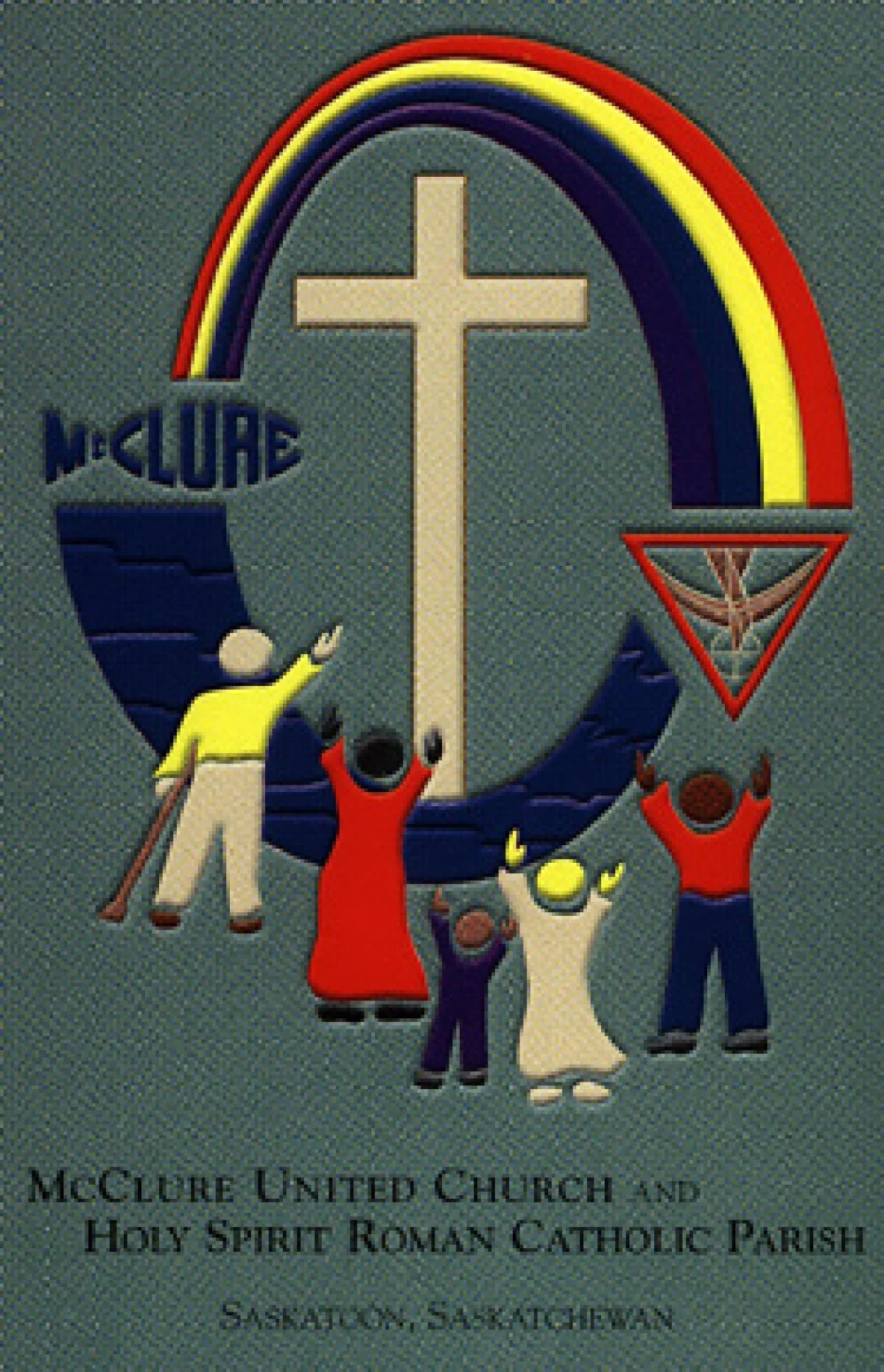
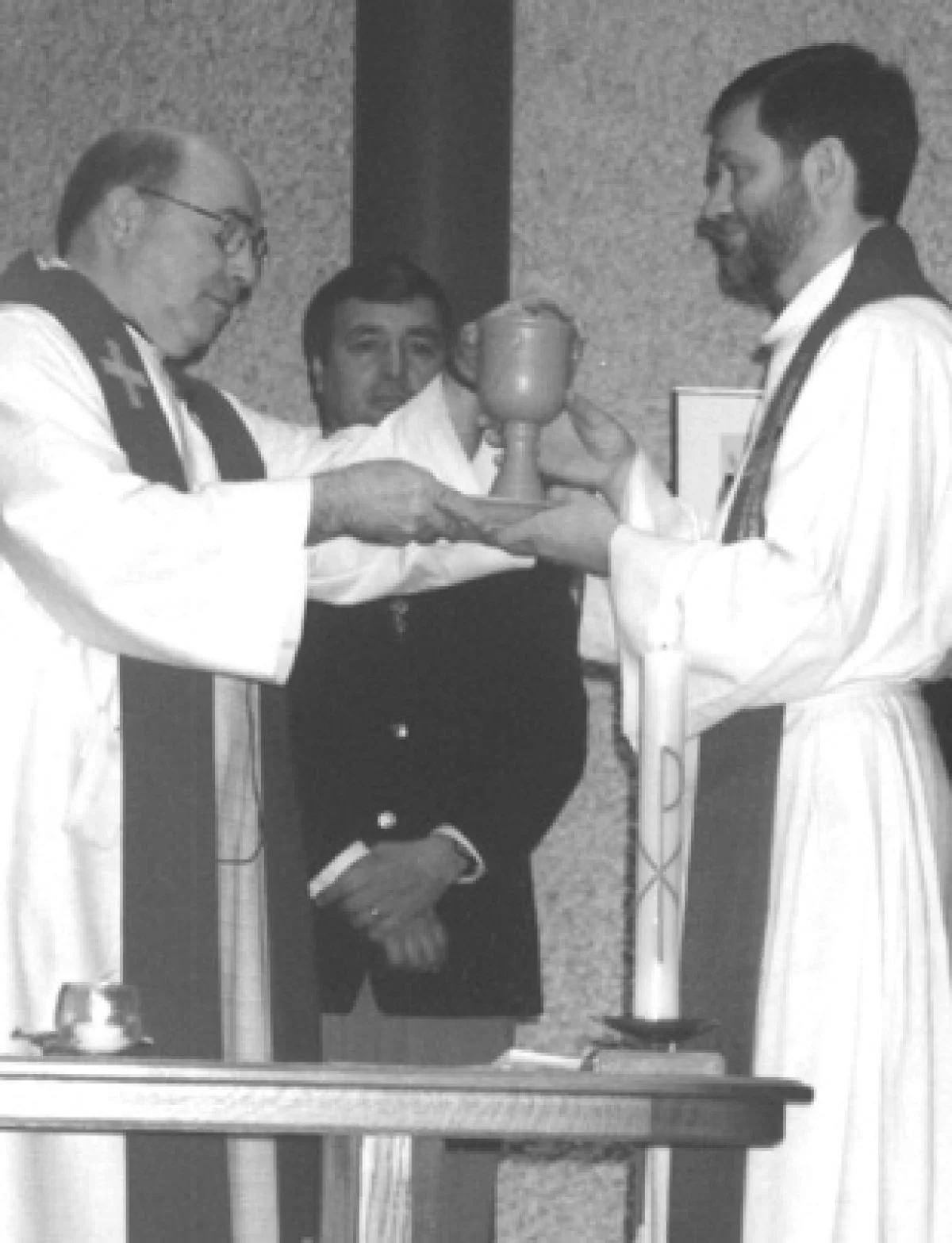
It was a Valentine in the form of a covenant signed by a Roman Catholic bishop, a United Church Presbytery chair, two local pastors and members of their congregations on the eve of Feb. 14.
The covenant was the formalization of a long friendship between McClure United Church and Holy Spirit Roman Catholic Parish. The covenant was written, according to the document itself “in response to the call of Jesus, “that they may all be one and that the world may believe that you have sent me” (Jn 17:21-23).
“You must have been listening to the Spirit,” said Sister Anne Keffer, director of Saskatoon’s Centre for Ecumenism, where the official document signing took place.
“On behalf of the whole church, I thank you. I thank God.”
In total, some 40 members from the two congregations were present for the signing ceremony which involved joint prayer and reflections on healing and reconciliation.
Rev. Bernard de Margerie of Holy Spirit Parish, a past director of the Centre for Ecumenism, said the stages of the relationship between the churches were like any other. It first involved a courtship, which built into a relationship. The covenant itself was a gesture of solidarity, followed by the joint celebration of the formal covenant on Sunday. The last step will be ongoing faithfulness.
… Read more » … lire la suite »
Posted: Mar. 8, 2000 • Permanent link: ecumenism.net/?p=9
Categories: News • In this article: Catholic, Christian unity, covenant, ecumenism, Saskatoon, United Church of Canada
Transmis : 8 mars 2000 • Lien permanente : ecumenism.net/?p=9
Catégorie : News • Dans cet article : Catholic, Christian unity, covenant, ecumenism, Saskatoon, United Church of Canada
It was more than 30 years in the making but on Sunday, parishioners from Holy Spirit Roman Catholic and McClure United parishes stood side by side.
Old and young sang beautifully together. They taught their children together, hugged, prayed and worshipped as brothers and sisters in Christ at Holy Spirit Parish. Afterward, they walked together through the streets of Saskatoon to break bread together at a community lunch at McClure United.
This was done to mark the signing of a new covenant between the parishes which has been discussed since 1966 and which both pastors hope will mark the beginning of an even better relationship.
“I believe this to be the will and the work of the Holy Spirit that has brought us to this moment. It is not merely our efforts or our decisions,” said McClure’s Rev. Ron McConnell.
Holy Spirit pastor, Rev. Bernard de Margerie, agreed. He said the covenant means that the two congregations pledge to grow together to “help create a more stable relationship that is more worthy of life within the Body of Christ.”
In his portion of the joint sermon, McConnell compared the covenant relationship to a marriage.
“The questions people most often ask about the covenant include: ‘Does this mean you’re exactly the same now? Do you now see everything the same way? There are no more differences?” The answer is — are you kidding? Does that sound like any marriage you have ever known?’ ” he said.
… Read more » … lire la suite »
Posted: Mar. 8, 2000 • Permanent link: ecumenism.net/?p=8
Categories: News • In this article: Catholic, Christian unity, covenant, ecumenism, Saskatoon, United Church of Canada
Transmis : 8 mars 2000 • Lien permanente : ecumenism.net/?p=8
Catégorie : News • Dans cet article : Catholic, Christian unity, covenant, ecumenism, Saskatoon, United Church of Canada
Good neighbours: McClure United and Holy Spirit congregations have always been close; now they’ve put it in writing If Covenant 2000 were a play, Holy Spirit Roman Catholic Church and McClure United Church would be well into the second act. The two churches recently signed a formal ecumenical covenant, committing themselves to breaking down barriers
… Read more » … lire la suite »
Posted: Feb. 26, 2000 • Permanent link: ecumenism.net/?p=6037
Categories: News • In this article: Catholic, Christian unity, covenant, ecumenism, Saskatoon, United Church of Canada
Transmis : 26 févr. 2000 • Lien permanente : ecumenism.net/?p=6037
Catégorie : News • Dans cet article : Catholic, Christian unity, covenant, ecumenism, Saskatoon, United Church of Canada
U.S. theology professors discuss its implications [HANOVER, Germany/GENEVA | LWI] Reformed, Anglican, Roman-Catholic and Lutheran church leaders and professors of theology in the United States have acknowledged the Joint Declaration on the Doctrine of Justification as a “groundbreaking document.” The theological implications of Joint Declaration was one of the major points discussed at a symposium
… Read more » … lire la suite »
Posted: Feb. 22, 2000 • Permanent link: ecumenism.net/?p=4967
Categories: Lutheran World Information • In this article: Catholic, dialogue, JDDJ, Lutheran
Transmis : 22 févr. 2000 • Lien permanente : ecumenism.net/?p=4967
Catégorie : Lutheran World Information • Dans cet article : Catholic, dialogue, JDDJ, Lutheran
With our short ecclesiastical memories, we have almost forgotten that in the run-up to its dogmatic definition in 1854, Mary’s Immaculate Conception was often justified on the grounds of her being a priest. Tradition frequently applied the words found in Hebrews 7:26 to her: “It is fitting that we should have such a high priest, holy, blameless, unstained, separated from sinners, exalted above the heavens.” The Benedictine prior Jacques Biroat wrote in 1666 that “Paul’s reasoning” in Hebrews 7:26 “is relevant to Christ’s mother. She shares in the priesthood of her son and is the origin of our reconciliation to God. Therefore, she had to be entirely innocent and separate from sinners. She had to be preserved from original sin.” Mary was immaculately conceived because she had to be a priest without stain. Mary has captured the Catholic imagination more than any other person except Jesus. Generation after generation has seen in her the highest reflection of saintliness and love. Catholics have been fond of Mary because she is Jesus’ own mother. They also respected her as his closest associate in redemption, as his first “priest”.
… Read more » … lire la suite »
Posted: Dec. 4, 1999 • Permanent link: ecumenism.net/?p=6697
Categories: Tablet • In this article: Catholic, Mary, ordination, women
Transmis : 4 déc. 1999 • Lien permanente : ecumenism.net/?p=6697
Catégorie : Tablet • Dans cet article : Catholic, Mary, ordination, women
1. A theological consultation between Evangelicals and Catholics took place from 7-13 November 1999. Jointly sponsored by the World Evangelical Fellowship‘s Theological Commission and the Vatican’s Pontifical Council for Promoting Christian Unity, the meeting took place at the George Williams Campus of Aurora University, Williams Bay, Wisconsin, USA. It followed on from two previous consultations between WEF and Catholic Church representatives, held in 1993 in Venice, Italy and in 1997 at the Tantur Ecumenical Institute near Jerusalem. [Note: The World Evangelical Fellowship (WEF) changed its name to World Evangelical Alliance (WEA) in 2000.]
2. The Williams Bay meeting sought to deepen mutual understanding and respect between Evangelicals and Catholics, using the occasion to hear how each understood one another’s traditions, convictions and concerns. More particularly its aim was to face misunderstandings that put stumbling blocks in the way of the Good News being proclaimed and heard.
Four papers were prepared for the consultation. On the theme of koinonia (fellowship or communion) two papers were discussed: “An Evangelical Perspective on Church Koinonia” by Henri Blocher and “The Church as Communion: A Catholic Perspective,” by Avery Dulles. Later discussion of evangelization and common witness and their difficulties began on the basis of a paper by M. Daniel Carroll R., “The Evangelical-Roman Catholic Dialogue: Issues Revolving around Evangelization. A View from Latin America” and one by Thomas Stransky, “Religious Freedom, Christian Witness and Proselytism.”
… Read more » … lire la suite »
Posted: Nov. 13, 1999 • Permanent link: ecumenism.net/?p=2193
Categories: Communiqué, Evangelical-Roman Catholic Dialogue • In this article: Catholic, dialogue, World Evangelical Alliance
Transmis : 13 nov. 1999 • Lien permanente : ecumenism.net/?p=2193
Catégorie : Communiqué, Evangelical-Roman Catholic Dialogue • Dans cet article : Catholic, dialogue, World Evangelical Alliance
“How are we saved?” This was the central question of the Protestant Reformation. Or, as Martin Luther phrased it: “How are we, as sinners, found righteous in the sight of a just God?” This is a question that has challenged Christians throughout our history, and has challenged our Hebrew brothers and sisters for even longer. The fact that we believe we will be saved is evident in our decision to come here today, for we all believe that God has offered us salvation. But why are we saved? Because we come here? Because we do our homework, say our prayers and try not to pick on our little brother?
… Read more » … lire la suite »
Posted: Oct. 31, 1999 • Permanent link: ecumenism.net/?p=6258
Categories: Opinion • In this article: Catholic, Christian unity, dialogue, Dicastery for Promoting Christian Unity, ecumenism, JDDJ, Lutheran World Federation
Transmis : 31 oct. 1999 • Lien permanente : ecumenism.net/?p=6258
Catégorie : Opinion • Dans cet article : Catholic, Christian unity, dialogue, Dicastery for Promoting Christian Unity, ecumenism, JDDJ, Lutheran World Federation
The World Council of Churches (WCC) warmly welcomes the forthcoming signing of the Joint Declaration on the doctrine of justification by the Lutheran World Federation and the Roman Catholic Church. The signing will take place on 31 October, in Augsburg, Germany. According to the Rev. Dr Dagmar Heller, WCC Faith and Order, bilateral relations and
… Read more » … lire la suite »
Posted: Oct. 28, 1999 • Permanent link: ecumenism.net/?p=7
Categories: News • In this article: Catholic, dialogue, ecumenism, JDDJ, Lutheran
Transmis : 28 oct. 1999 • Lien permanente : ecumenism.net/?p=7
Catégorie : News • Dans cet article : Catholic, dialogue, ecumenism, JDDJ, Lutheran
Dear Cardinal Cassidy and Dr Noko,
The signing of the Joint Declaration on the Doctrine Of Justification between the Lutheran World Federation and the Roman Catholic Church is an event which encourages Christians of all traditions and is a cause of rejoicing for all who pray and work for the unity of Christ’s Church.
The significance of this agreement cannot be underestimated, dealing as it does with a question right at the heart of Christian faith and theology, the question of how we are saved. As we all are aware, this was a primary point of conflict during the Reformation period, which led not only to bitter theological disputes but even wars and Persecutions and created divisions that were exported beyond the shores of Europe through the missionary expansion of the Church.
… Read more » … lire la suite »
Posted: Oct. 25, 1999 • Permanent link: ecumenism.net/?p=6
Categories: ACNS, News • In this article: Catholic, dialogue, ecumenism, JDDJ, Lutheran
Transmis : 25 oct. 1999 • Lien permanente : ecumenism.net/?p=6
Catégorie : ACNS, News • Dans cet article : Catholic, dialogue, ecumenism, JDDJ, Lutheran
The Rev. H. George Anderson, 67, was appointed a Vice-President of the Lutheran Federation (LWF) in 1997. He has been the Presiding Bishop of the Evangelical Lutheran Church in America since 1995. A Phi Beta Kappa graduate from Yale, Anderson earned graduate degrees from the University of Pennsylvania and the Lutheran Theological Seminary at Philadelphia,
… Read more » … lire la suite »
Posted: Oct. 23, 1999 • Permanent link: ecumenism.net/?p=4977
Categories: Lutheran World Information • In this article: Catholic, dialogue, JDDJ, Lutheran
Transmis : 23 oct. 1999 • Lien permanente : ecumenism.net/?p=4977
Catégorie : Lutheran World Information • Dans cet article : Catholic, dialogue, JDDJ, Lutheran
An effort to make an existing Protestant-Roman Catholic committee the top ecumenical body for Ireland has been stymied by a vote of the Presbyterian Church in Ireland (PCI).
The plan, which had been approved by the three other major denominations in both the Republic and in Northern Ireland – the Anglicans, the Methodists and the Roman Catholics – went down by a 224-144 vote during the Belfast General Assembly in June. Its opponents say it was defeated by the fact that an institutional identification with the Roman Catholic Church would imply approval of its doctrine.
And that is, in a word, apostasy.
If this all sounds like theological separatism, it is. But this is Northern Ireland, where politics and religion stay unintelligibly and painfully entangled – no matter how much distance Catholics and Protestants put between themselves, and no matter how many centuries go by.
The political stalemate isn’t so dissimilar.
Ulster’s major unionist (and largely Protestant) party is refusing to form a four-party administration to govern Northern Ireland – including Sinn Fein, the radical republican party – because the Provisional Irish Republican Army (IRA) has refused to disarm, and because of apparent breaches of the outlawed group’s 1997 cease-fire.
… Read more » … lire la suite »
Posted: Sept. 15, 1999 • Permanent link: ecumenism.net/?p=4874
Categories: Evangelical-Roman Catholic Dialogue, PCUSA News • In this article: Catholic, Ireland, Presbyterian, religious hatred
Transmis : 15 sept. 1999 • Lien permanente : ecumenism.net/?p=4874
Catégorie : Evangelical-Roman Catholic Dialogue, PCUSA News • Dans cet article : Catholic, Ireland, Presbyterian, religious hatred
Catholics are permitted to support attempts to limit the evil aspects of an abortion law, says Pope John Paul in his encyclical Evangelium Vitae. In Germany, however, the moral complexities have made the Church draw back, which threatens to reduce its influence in society. A journalist on the weekly Rheinischer Merkur highlights the German bishops’ dilemma.
… Read more » … lire la suite »
Posted: Aug. 21, 1999 • Permanent link: ecumenism.net/?p=6689
Categories: Tablet • In this article: abortion, Catholic, ethics, social policy, theology
Transmis : 21 aoüt 1999 • Lien permanente : ecumenism.net/?p=6689
Catégorie : Tablet • Dans cet article : abortion, Catholic, ethics, social policy, theology
Protestants and Catholics are working together more and more these days in Canada. Each believes it is the best expression of Christian faith, and each has often condemned the other’s teachings. Now some are trying to move beyond these criticisms and to forge limited new forms of cooperation, according to a series of articles in the May/June issue of Faith Today.
Gary Walsh, president of the Evangelical Fellowship of Canada (EFC), visited the offices of the Catholic Bishops in Ottawa and found himself “thanking the Lord for the things we share in common.” Despite doctrinal differences between the two organizations, EFC is having regular contact and working closely with Catholics on public policy issues such as abortion, family life and euthanasia, according to the lead article by Harold Jantz, a consultant and project manager of church-related projects in Winnipeg.
Sr. Donna Geernaert, who speaks for the Canadian Conference of Catholic Bishops in Ottawa, observes that not only have Catholics and the EFC joined with one another for presentations to government, they’ve also coordinated their efforts so they could prepare complementary briefs.
George Vandervelde of Toronto, convener of the World Evangelical Fellowship‘s task force on ecumenical issues, believes that dialogue between evangelicals and Catholics is important “simply to understand one another and clarify how we are different and how we are similar.” He says we shouldn’t be bearing false witness against each other. “If in evangelicalism we say this or that against Roman Catholicism, we should know that we are speaking truth, and you can find that out only by speaking to one another.”
… Read more » … lire la suite »
Posted: May 1, 1999 • Permanent link: ecumenism.net/?p=4
Categories: Evangelical-Roman Catholic Dialogue, News • In this article: Catholic, Christian unity, ecumenism, Evangelicals
Transmis : 1 mai 1999 • Lien permanente : ecumenism.net/?p=4
Catégorie : Evangelical-Roman Catholic Dialogue, News • Dans cet article : Catholic, Christian unity, ecumenism, Evangelicals
In 1954, four years after the solemn definition of the doctrine of the Assumption of the Blessed Virgin Mary into heaven, Pope Pius XII declared a Marian Year. With greater or lesser enthusiasm, Catholic Europe responded, and in my home town, on the east coast of Ireland, the response took spectacular form. The women were invited to donate jewellery, the men money, towards the creation of a solid-gold crown for the statue of the Blessed Virgin in our parish church. It was a poor community, yet the response to the appeal for the Virgin’s crown was remarkable, many of the women even donating their wedding rings. The statue, an insipid, life-sized plaster replica of Our Lady of Lourdes, white-robed, blue-sashed, smallbusted, neither a recognisably maternal nor even a very convincingly human image, was duly decorated with a crown which would have paid several times over for any one of the houses in which most of the donors lived.
… Read more » … lire la suite »
Posted: Feb. 6, 1999 • Permanent link: ecumenism.net/?p=6691
Categories: Tablet • In this article: Catholic, doctrine, Mary
Transmis : 6 févr. 1999 • Lien permanente : ecumenism.net/?p=6691
Catégorie : Tablet • Dans cet article : Catholic, doctrine, Mary
[ACNS 1843] At a press briefing in Westminster Abbey, London, today, the co-chairmen of the Anglican Roman Catholic International Commission (ARCIC), the Rt Revd Mark Santer (Anglican) and the Rt Revd Cormac Murphy-O’Connor (Roman Catholic), launched the document “The Gift of Authority,” the latest in study documents issued by 18 members of the Commission. This
… Read more » … lire la suite »
Posted: Jan. 12, 1999 • Permanent link: ecumenism.net/?p=3
Categories: News • In this article: Anglican, ARCIC, Catholic, dialogue
Transmis : 12 janv. 1999 • Lien permanente : ecumenism.net/?p=3
Catégorie : News • Dans cet article : Anglican, ARCIC, Catholic, dialogue
For five days in October, seven Mennonites sat face-to-face with six Roman Catholics to discuss reasons for the centuries-long separation between the two churches. The meeting here on October 14-18 was held to promote better understanding of each others’ faith and to overcome long-standing prejudices.
This international consultation was sponsored by the Mennonite World Conference (MWC) and the Pontifical Council for Promoting Christian Unity (Vatican City). Helmut Harder (Canada) and Joseph Martino (United States) chaired the meeting.
… Read more » … lire la suite »
Posted: Dec. 7, 1998 • Permanent link: ecumenism.net/?p=6476
Categories: News • In this article: Catholic, Christian unity, dialogue, ecumenism, Mennonite, Mennonite World Conference
Transmis : 7 déc. 1998 • Lien permanente : ecumenism.net/?p=6476
Catégorie : News • Dans cet article : Catholic, Christian unity, dialogue, ecumenism, Mennonite, Mennonite World Conference
As a child, a friend of mine used to be told by his nanny: Before you say anything, ask yourself: Is it true? Is it kind? Is it necessary? The same three questions may well be asked about the current proposal to define Mary as Co-Redeemer.
Is it true? The answer to that question depends on the way in which we interpret the title Co-Redeemer, along with the related titles Mediator of All Graces and Advocate of the People of God. As a member of the Orthodox Church I have no objection to these three titles in themselves — provided that they are rightly understood.
Indeed, closely similar language occurs in the prayers and hymns used in the Christian East. With the greatest frequency in Orthodox worship we say to the Virgin Mary, Most Holy Mother of God, save us. In our invocations to other members of the Communion of Saints, including St John the Baptist, except on very rare occasions we never say more than … pray for us.
… Read more » … lire la suite »
Posted: Jan. 17, 1998 • Permanent link: ecumenism.net/?p=6670
Categories: Tablet • In this article: Catholic, doctrine, Eastern Orthodox, ecumenism, Mary
Transmis : 17 janv. 1998 • Lien permanente : ecumenism.net/?p=6670
Catégorie : Tablet • Dans cet article : Catholic, doctrine, Eastern Orthodox, ecumenism, Mary
When Patriarch Bartholomew I of Constantinople made a month-long tour of 16 cities in the United States in October and November, he was feted with honours at Washington’s Jesuit-run Georgetown University and greeted with splendour in Baltimore’s Catholic cathedral. As so often in inter-Church relations, however, the conciliatory declarations belied bitter realities.
Ironically, the sharp downturn in Catholic-Orthodox relations during the past six months came into the open after one of the Pope’s most impassioned appeals for Christian unity. The occasion John Paul II picked was a Eucharistic Congress held in May at Wroclaw in Poland. “In this our second millennium, when the unity of Christ’s disciples has suffered tragic divisions between East and West, prayer for the rediscovery of full unity is a special obligation”, the Pope said. “Can we bear joint and effective witness to Christ if we are not reconciled with one another? Can we be reconciled with one another without forgiving one another?”
… Read more » … lire la suite »
Posted: Dec. 6, 1997 • Permanent link: ecumenism.net/?p=6598
Categories: Tablet • In this article: Catholic, dialogue, Eastern Orthodox, ecumenism
Transmis : 6 déc. 1997 • Lien permanente : ecumenism.net/?p=6598
Catégorie : Tablet • Dans cet article : Catholic, dialogue, Eastern Orthodox, ecumenism
For many Anglicans, the eleventh day of the eleventh month stirs memories of present as well as past conflicts: last Tuesday was the fifth anniversary of the General Synod’s vote in favour of women priests. By common consent the decision presaged the biggest upheaval in the Church of England since the Reformation, prompting 300 clergymen to resign their orders in protest at what they saw as a fracturing of the apostolic ministry. But in ordaining its women deacons in 1994 the Church gained nearly seven times as many new priests as it lost, and the new recruits are now serving at all levels of the hierarchy up to the rank of archdeacon. There appears to be ready agreement among most church people that the ordained ministry has been refreshed by “more open and collaborative styles of leadership”, and that women priests are accepted with enthusiasm by an evergrowing majority of congregations in consequence. “It’s an incarnational thing”, said one erstwhile sceptic. “When you see someone doing the job effectively, you’re quickly won over.”
… Read more » … lire la suite »
Posted: Nov. 15, 1997 • Permanent link: ecumenism.net/?p=6595
Categories: Tablet • In this article: Catholic, ordination, women
Transmis : 15 nov. 1997 • Lien permanente : ecumenism.net/?p=6595
Catégorie : Tablet • Dans cet article : Catholic, ordination, women
In 1993 there was a first meeting in Venice (Italy) for conversations between Evangelical and Roman Catholic representatives, co-sponsored by the World Evangelical Fellowship and the Pontifical Council for Promoting Christian Unity. The themes were Justification, Scripture and Tradition. As a follow up to it, a second meeting for conversations was held in the Ecumenical Institute of Tantur (Jerusalem), October 12-19, 1997. Participants represented different regions of the world and a variety of Christian ministries.
The main themes for these conversations — agreed upon during the Venice meeting — were issues related to the nature and mission of the Church. Representatives of each tradition presented a paper on each theme. The discussion that followed evidenced a spirit of mutual acceptance and disposition to listen to one another and pray together.
From the discussions, some points of agreement emerged, as well as areas that demand more reflection and theological work. It was felt that it is still too early to present an elaborate document. We therefore limit ourselves to list the main points on which we have come to a common understanding as well as the points that we would suggest as an agenda for the future conversations between the World Evangelical Fellowship and the Pontifical Council for Promoting Christian Unity, if both partners agree to do so.
… Read more » … lire la suite »
Posted: Oct. 19, 1997 • Permanent link: ecumenism.net/?p=2192
Categories: Communiqué, Evangelical-Roman Catholic Dialogue • In this article: Catholic, Dicastery for Promoting Christian Unity, World Evangelical Alliance
Transmis : 19 oct. 1997 • Lien permanente : ecumenism.net/?p=2192
Catégorie : Communiqué, Evangelical-Roman Catholic Dialogue • Dans cet article : Catholic, Dicastery for Promoting Christian Unity, World Evangelical Alliance
Rome — and Poland — are buzzing with rumour, counter-rumour and denial: will Pope John Paul and Patriarch Alexis of the Russian Orthodox Church meet in Vienna on 21 June or won’t they? Perhaps by the time this article is published there will have been an announcement that puts paid to the rumours, but even an eventual negative provides a timely stimulus to consider relations between the Catholic and Orthodox Churches.
One argument against the likelihood of a meeting between the Pope and the Russian Patriarch is obvious: there has been no preparation. The Patriarch will be in Vienna on his way to the European Ecumenical Assembly in Graz and the Pope wants to meet him. The Pope has spoken prophetically about his desire to see the reunion of East and West, to reverse the basic division in Christendom of nearly a millennium, before the year 2000. Yet his health and the ticking of the clock make this an unattainable goal, at least in human terms.
… Read more » … lire la suite »
Posted: June 14, 1997 • Permanent link: ecumenism.net/?p=6590
Categories: Tablet • In this article: Catholic, Eastern Orthodox, ecumenism, Moscow Patriarchate, Pope John Paul II
Transmis : 14 juin 1997 • Lien permanente : ecumenism.net/?p=6590
Catégorie : Tablet • Dans cet article : Catholic, Eastern Orthodox, ecumenism, Moscow Patriarchate, Pope John Paul II
In the furore surrounding the ex-communication of Fr Tissa Balasuriya, very little has been said about the overall project of his book, Mary and Human Liberation. Beyond specific theological questions, Fr Balasuriya’s treatment of Mary touches on issues which go to the heart of the conflict between traditionalists and reformists which is dividing the Catholic Church today.
As in so many of Christianity’s decisive theological moments, the role of Mary is pivotal. The saying, “As Mary goes, so goes the Church,” is as true today as it was of the fifth century when the Council of Ephesus affirmed Christ’s divinity by declaring Mary Theotokos, or Godbearer.
… Read more » … lire la suite »
Posted: Mar. 8, 1997 • Permanent link: ecumenism.net/?p=6554
Categories: Opinion, Tablet • In this article: Catholic, feminist, liberation, Mary, theology
Transmis : 8 mars 1997 • Lien permanente : ecumenism.net/?p=6554
Catégorie : Opinion, Tablet • Dans cet article : Catholic, feminist, liberation, Mary, theology
The Catechism of the Catholic Church is the authoritative reference or baseline for understanding Catholic faith, sacramental practice, moral doctrine, and prayer. As the title suggests, the chief purpose is catechetical, to provide a doctrinal framework from which the Church in various parts of the world might develop regional catechisms and other educational materials. Much to almost everybody’s surprise, however, the Catechism itself became an immediate best-seller, with more than forty million copies sold to date, and thus it has established itself as the text consulted by clergy and laity alike for a reliable word on questions of Catholic faith and life.
… Read more » … lire la suite »
Posted: July 1, 1996 • Permanent link: ecumenism.net/?p=6340
Categories: Opinion • In this article: catechism, Catholic, Christian unity, ecumenism
Transmis : 1 juil. 1996 • Lien permanente : ecumenism.net/?p=6340
Catégorie : Opinion • Dans cet article : catechism, Catholic, Christian unity, ecumenism
The Commission for dialogue between the Catholic Church and the Malankara Syrian Orthodox Church met at the Spirituality Center of the Syro-Malabar Church at Kottayam (Kerala, South India) December 9, 1994. All Commission members were present.
1. In the course of this fourth meeting, the Commission spent the greater part of its time on the issue of the reception, in each Church, of the agreement on mixed marriages published January 25, 1994. On each side it has been welcomed in a very positive way. The faithful have experienced the new attitudes as a liberation because they respect and enlarge the freedom of choice of these minorities in regard to marriage and family life. If some difficulties have arisen on certain points, it has been because of of the lack of awareness among the clergy more of the Agreement itself than of the Pastoral Directives which accompanied it. It seems indispensable to foresee in each diocese a small committee or a diocesan delegate with the responsibility to resolve the more urgent problems.
… Read more » … lire la suite »
Posted: Dec. 9, 1994 • Permanent link: ecumenism.net/?p=8546
Categories: Communiqué • In this article: Catholic, dialogue, Malankara Syrian Orthodox Church
Transmis : 9 déc. 1994 • Lien permanente : ecumenism.net/?p=8546
Catégorie : Communiqué • Dans cet article : Catholic, dialogue, Malankara Syrian Orthodox Church
The Commission for dialogue between the Catholic Church and the Malankara Orthodox Syrian Church met at the Spirituality Center of the Syro-Malabar Church at Kottayam (Kerala, South India) December 5-8, 1994. All Commission members were present.
1. The principal subject was the study on the role of the Episcopate in guaranteeing the Unity of the Church. After taking up again the text on “Synodal Structure and Practice” (P.M.O. John) two other documents were presented: “Koinonia in the Church” (Mar Severios) and “Ecclesial Communion: A biblical-theological perspective” (P.M. Vellanickal). The sub-commission has begun to draft a first synthesis on “the Church as Communion (Koinonia)” which has been discussed by the assembly.
These progressive studies, which have not led immediately to concrete decisions, have engaged the commission in a process of successive approaches to the mystery of the Church and more precisely of its sacramental structure which is common to the two Churches. These approaches also permit us to perceive the links between this structure and the exercise of authority in the Church. It has therefore asked a sub-commission to explore more deeply the notions of authority (exousia) and of service (diakonia in the Church understood as communion (koinonia).
… Read more » … lire la suite »
Posted: Dec. 8, 1994 • Permanent link: ecumenism.net/?p=8540
Categories: Communiqué • In this article: Catholic, dialogue, India, Malankara Orthodox Syrian Church
Transmis : 8 déc. 1994 • Lien permanente : ecumenism.net/?p=8540
Catégorie : Communiqué • Dans cet article : Catholic, dialogue, India, Malankara Orthodox Syrian Church
The challenge of mixed marriage in American life—and how the communities are responding to its problems andpossibilities both for the couples and for the raising of children—was the major topic of discussion at the semi-annual meeting of the U.S. Catholic-Jewish Consultation Committee. With the mixed marriage rate rising to around 50 percent in the Jewish
… Read more » … lire la suite »
Posted: Nov. 29, 1994 • Permanent link: ecumenism.net/?p=13242
Categories: CNS, Dialogue • In this article: Catholic, Jewish, Jewish-Christian relations, marriage
Transmis : 29 nov. 1994 • Lien permanente : ecumenism.net/?p=13242
Catégorie : CNS, Dialogue • Dans cet article : Catholic, Jewish, Jewish-Christian relations, marriage
[Los Angeles Times] Pope John Paul II reiterated this week that the ordination of women in the Anglican Church poses “serious obstacles” to relations with the Roman Catholic Church. In a year-end address to cardinals, the Pope, speaking with “sincere pain,” deplored a resolution adopted by the world’s Anglican bishops in August. The Anglican bishops
… Read more » … lire la suite »
Posted: Dec. 24, 1988 • Permanent link: ecumenism.net/?p=6410
Categories: News • In this article: Anglican Church of Canada, Catholic, ordination, Pope John Paul II, women
Transmis : 24 déc. 1988 • Lien permanente : ecumenism.net/?p=6410
Catégorie : News • Dans cet article : Anglican Church of Canada, Catholic, ordination, Pope John Paul II, women
Rev. Thomas Ryan, director of the Canadian Centre for Ecumenism in Montreal, has been appointed a Roman Catholic staff representative to a world meeting of Anglican bishops that begins today.
Two Vatican agencies have named the U.S.-born Paulist priest as a representative to the communications team of the Lambeth Conference. The conference is a gathering of the bishops of the 450 dioceses in Anglican churches around the world, including Bishop Reginald Hollis of Montreal.
Representatives have also been appointed by the world Lutheran church and by the World Council of Churches, a grouping mainly of Protestant and Orthodox Churches.
Ryan said in a conversation that it is the first time such staff representatives from other churches have been invited to help out at the Lambeth Conference, which meets every 10 years.
“It is an impressive initiative.”
… Read more » … lire la suite »
Posted: July 16, 1988 • Permanent link: ecumenism.net/?p=6426
Categories: News • In this article: Anglican, Catholic, Centre Canadien d’œcuménisme, Lambeth Conference, Tom Ryan
Transmis : 16 juil. 1988 • Lien permanente : ecumenism.net/?p=6426
Catégorie : News • Dans cet article : Anglican, Catholic, Centre Canadien d’œcuménisme, Lambeth Conference, Tom Ryan
The Catholic and Anglican churches have been conducting joint studies of doctrine for the past 17 years. The purpose is to explore the essential teachings of each church to see if there is enough common ground for an eventual reunion. Both churches were once united in one western Christian church for 15 centuries. Their history of separation dates back four centuries to the time of the Reformation. The joint studies began in 1970 and involved nine Roman Catholic scholars and nine from the Anglican communion. The joint panel was called the Anglican-Roman Catholic International Commission, or the ARCIC. After 11 years of study, it published papers on three major topics of mutual and central concern; Eucharist, Ministry and Ordination as well as on Authority in the Church.
… Read more » … lire la suite »
Posted: Sept. 19, 1987 • Permanent link: ecumenism.net/?p=6438
Categories: News • In this article: Anglican, Catholic, Christian unity, dialogue, ecumenism
Transmis : 19 sept. 1987 • Lien permanente : ecumenism.net/?p=6438
Catégorie : News • Dans cet article : Anglican, Catholic, Christian unity, dialogue, ecumenism
by Russell Chandler, Los Angeles Times With the announcement that Protestant and Eastern Orthodox participants will join in an ecumenical meeting with Pope John Paul in Columbia, S.C., in September, the U.S. National Council of Churches has urged Christians “seize the moment” for renewed efforts toward Christian unity. A three-page statement welcoming the Pope on
… Read more » … lire la suite »
Posted: Aug. 1, 1987 • Permanent link: ecumenism.net/?p=6419
Categories: News • In this article: Catholic, Christian unity, ecumenism, National Council of Churches of Christ (USA), Pope John Paul II
Transmis : 1 aoüt 1987 • Lien permanente : ecumenism.net/?p=6419
Catégorie : News • Dans cet article : Catholic, Christian unity, ecumenism, National Council of Churches of Christ (USA), Pope John Paul II