- Français
- |
- Booklist
- |
- Week of Prayer
- |
- Links
- Areopagus - a forum for dialogue
- Academic journals
- Acronyms
- Bible tools
- Bibliographies
- Booksellers and publishers
- Churches
- Canadian church headquarters
- Directory of Saskatchewan churches
- Retreat centres
- Saskatchewan church and non-profit agencies
- Ecumenism.net Denominational links
- Anabaptist & Mennonite
- Anglican
- Baptist
- Evangelical
- Independent episcopal
- Lutheran
- Methodist, Wesleyan, and Holiness
- Miscellaneous
- Mormon
- Orthodox (Eastern & Oriental)
- Para-church ministries
- Pentecostal / charismatic
- Presbyterian & Reformed
- Quaker (Society of Friends)
- Roman & Eastern Catholic
- United and uniting
- Documents of Ecumenical Interest
- Ecumenical agencies
- Ecumenical Booklist
- Ecumenical Dialogues
- Glossary
- Human rights
- Inter-religious links
- Justice & peace
- Lectionaries
- Religious news services
- Resource pages
- Search Ecumenism.Net
- |
- Documents
- Ancient & Medieval texts
- Ecumenical Dialogues
- Interreligious
- Anabaptist & Mennonite
- Anglican
- Evangelical
- Lutheran
- Orthodox
- Reformed & Presbyterian
- Roman & Eastern Catholic
- United & Uniting
- Miscellaneous churches
- Canadian Council of Churches (CCC)
- Conference of European Churches (CEC)
- Interchurch Families International Network (IFIN)
- National Council of Churches in Australia (NCCA)
- Lausanne Committee for World Evangelism (LCWE)
- World Council of Churches (WCC)
- Other ecumenical documents
Church traditions
Documents from ecumenical agencies
- |
- Dialogues
- Adventist-Reformed
- African Instituted Churches-Reformed
- Anglican-Lutheran
- Anglican-Orthodox
- Anglican-Reformed
- Anglican-Roman Catholic
- Anglican-United/Uniting
- Baptist-Reformed
- Disciples of Christ-Reformed
- Disciples of Christ-Roman Catholic
- Evangelical-Roman Catholic
- Lutheran-Mennonite
- Lutheran-Mennonite-Roman Catholic
- Lutheran-Reformed
- Lutheran-Roman Catholic
- Mennonite-Reformed
- Mennonite-Roman Catholic
- Methodist-Reformed
- Methodist-Roman Catholic
- Oriental Orthodox-Reformed
- Orthodox-Reformed
- Orthodox-Roman Catholic
- Pentecostal-Reformed
- Prague Consultations
- REC-WARC Consultations
- Roman Catholic-Lutheran-Reformed
- Roman Catholic-Reformed
- Roman Catholic-United Church of Canada
- |
- Quick links
- Canadian Centre for Ecumenism
- Canadian Council of Churches
- Ecumenical Shared Ministries
- Ecumenism in Canada
- Interchurch Families International Network
- International Anglican-Roman Catholic Commission for Unity and Mission
- Kairos: Canadian Ecumenical Justice Initiatives
- North American Academy of Ecumenists
- Prairie Centre for Ecumenism
- Réseau œcuménique justice et paix
- Week of Prayer for Christian Unity
- Women's Interchurch Council of Canada
- World Council of Churches
- |
- Archives
- |
- About us

Select year: 2026,
2025,
2024,
2023,
2022,
2021,
2020,
2019,
2018,
2017,
2016,
2015,
2014,
2013,
2012,
2011,
2010,
2009,
2008,
2007,
2006,
2005,
2004,
2003,
2002,
2001,
2000,
1999,
1998,
1997,
1996,
1995,
1994,
1993,
1991,
1989,
1988,
1987,
1986,
1985,
1983,
1982,
1968,
1967,
1964,
News archive for 2008
Archives d'actualités pour 2008
The Rev. Dr. Michael Kinnamon is general secretary of the National Council of Churches of Christ in the USA. He was ordained in the Christian Church (Disciples of Christ) in 1976 and has served as a pastor, seminary professor and dean, and staff to such ecumenical bodies as the World Council of Churches and Churches
… Read more » … lire la suite »
 Posted: Mar. 28, 2008 •
  Permanent link: ecumenism.net/?p=4870
Categories: Opinion
Transmis : 28 mars 2008 • Lien permanente : ecumenism.net/?p=4870
Catégorie : Opinion
Chrétiens et musulmans doivent souligner ce qu’ils ont en commun et reconnaître leurs divergences, préconise le COE
L’amour du prochain est “un élément essentiel et une partie intégrante de la foi en Dieu et de l’amour de Dieu” pour l’islam comme pour le christianisme. La manière dont chrétiens et musulmans peuvent réfléchir ensemble à cet amour constitue le thème central d’un commentaire publié par le Conseil œcuménique des Eglises (COE) le jeudi 20 mars 2008. Rédigé par des experts chrétiens du dialogue avec l’Islam, il suggère aux Eglises de réponses possibles à la lettre intitulée “Une parole commune”, signée par 138 responsables musulmans en octobre 2007.
Ce commentaire, intitulé “Apprendre à approfondir l’amour ensemble”, s’inscrit dans le cadre des consultations en cours que le COE a lancées auprès de ses Eglises membres et des partenaires œcuméniques en novembre 2007 en les invitant à “approfondir avec les musulmans l’amour de Dieu et l’amour du prochain dans leurs contextes respectifs”.
“Nous encourageons nos Eglises à considérer l’invitation lancée par les responsables musulmans comme une nouvelle occasion de dialogue interreligieux”, déclare le pasteur Samuel Kobia, secrétaire général du COE. “Nous espérons que ce commentaire constituera un outil utile aux Eglises dans leur réflexion sur ‘Une parole commune’ et facilitera leur dialogue avec la communauté musulmane.”
Le document invite les Eglises à réfléchir aux deux grands thèmes mentionnés dans “Une parole commune”: l’amour de Dieu et l’amour du prochain. Il souligne les défis historiques et les nouvelles promesses des dialogues de ce genre et esquisse un processus permettant de poursuivre les échanges entre responsables chrétiens et musulmans. Il est “absolument indispensable que, tout en trouvant comment souligner ce qu’ils ont en commun, chrétiens et musulmans imaginent aussi comment reconnaître et respecter les divergences qui existent entre eux”.
“Ce texte marque le début d’un processus”, déclare Rima Barsoum, responsable du dialogue entre chrétiens et musulmans au COE. “Il invite à constituer un groupe mixte de planification qui jettera les bases d’un dialogue et invitera les responsables et théologiens chrétiens et musulmans a y participer dans le cadre de manifestations propres à encourager la coopération interreligieuse aux niveaux mondial et local.”
Le processus de réponse à “Une parole commune” a été approuvé par le Comité central du COE lors de sa réunion de février 2008 à Genève.
• Texte intégral de “Learning to explore love together” (en anglais)
• “Une parole commune”, lettre de dignitaires musulmans aux responsables chrétiens
• Pour plus d’informations sur le Programme “coopération et dialogue interreligieux” du COE
… Read more » … lire la suite »
Posted: Mar. 27, 2008 • Permanent link: ecumenism.net/?p=445
Categories: Dialogue, News • In this article: interfaith, Islam
Transmis : 27 mars 2008 • Lien permanente : ecumenism.net/?p=445
Catégorie : Dialogue, News • Dans cet article : interfaith, Islam
[Rome] Le baptême par le pape Benoît XVI d’un journaliste italien musulman d’origine égyptienne – connu pour être un virulent critique des restrictions à la liberté religieuse dans les pays musulmans – suscite des interrogations de la part de responsables musulmans en Italie.
Magdi Allam, chroniqueur et rédacteur en chef adjoint du quotidien milanais Corriere della Sera, était l’une des sept personnes de cinq pays différents à avoir été baptisées par le souverain pontife pendant la messe de la veille de Pâques à la basilique Saint-Pierre, au Vatican, le 22 mars.
… Read more » … lire la suite »
Posted: Mar. 26, 2008 • Permanent link: ecumenism.net/?p=444
Categories: ENI • In this article: Islam
Transmis : 26 mars 2008 • Lien permanente : ecumenism.net/?p=444
Catégorie : ENI • Dans cet article : Islam
Christians and Muslims must enhance common ground and acknowledge differences, says WCC
Love for one’s neighbour is “an essential and integral part of faith in God and love of God” for both Islam and Christianity. How Christians and Muslims can engage in reflections of this love together is the central theme of a commentary issued by the World Council of Churches (WCC) on Thursday, 20 March. Compiled by Christian experts in Christian-Muslim relations, it addresses the churches and offers suggestions on responding to the widely noticed letter “A Common Word” by 138 Muslim leaders in October 2007.
The commentary entitled “Learning to explore love together” is part of on-going consultations in which the WCC has engaged its member churches and ecumenical partners since November 2007. It invites them “to explore together with Muslim fellows the love of God and the love of neighbour in their respective contexts”.
“We are encouraging our churches to consider this invitation offered by the Muslim leaders as a new opportunity for interreligious dialogue” said WCC general secretary Rev. Dr Samuel Kobia. “It is our hope that this commentary will be a helpful tool as churches reflect on ‘A Common Word,’ and begin to engage in dialogue with the Muslim community,” he said.
The document invites the churches to reflect on the two major theological themes of “A Common Word,” love of God and love of neighbour. It points to the historical challenges and new promises of such dialogues and outlines a process for continuing dialogue among Muslim and Christian leaders. It is “a pressing necessity that while Christians and Muslims must find ways of enhancing what they hold in common, they must also find ways of acknowledging and respecting the differences between them,” the document states.
“This document signals the initiating of a process,” said Rima Barsoum, WCC program executive for Christian-Muslim Dialogue, “it calls for a joint planning group that will carefully prepare and jointly invite Muslim and Christian leaders and scholars for continuing dialogue events that will encourage interreligious cooperation at the global and local levels.
This process of response was affirmed by the Central Committee of the WCC at its meeting in February 2008, in Geneva.
• Download the document “Learning to explore love together” (pdf, 46 KB)
• “A Common Word”, a Muslim letter to Christian leaders
• More information on the WCC Programme on Interreligious Dialogue and Cooperation
… Read more » … lire la suite »
Posted: Mar. 26, 2008 • Permanent link: ecumenism.net/?p=443
Categories: Dialogue • In this article: Christian, Christianity, interfaith, Islam
Transmis : 26 mars 2008 • Lien permanente : ecumenism.net/?p=443
Catégorie : Dialogue • Dans cet article : Christian, Christianity, interfaith, Islam
[Rome] Pope Benedict XVI’s baptism of an Egyptian-born Muslim Italian journalist, known for being a strident critic of restrictions of religious freedom in Islamic countries, has been questioned by Muslim leaders in Italy.
Magdi Allam, a columnist and deputy editor of the Milan-based Corriere della Sera newspaper, was one of seven people from five countries baptised by the pontiff at the Easter Vigil Mass in Saint Peter’s Basilica at the Vatican on 22 March.
… Read more » … lire la suite »
Posted: Mar. 25, 2008 • Permanent link: ecumenism.net/?p=442
Categories: ENI • In this article: Islam
Transmis : 25 mars 2008 • Lien permanente : ecumenism.net/?p=442
Catégorie : ENI • Dans cet article : Islam
[Toronto] A Canadian church magazine has become the first North American sponsor of a travelling exhibit of the life and work of natural scientist Charles Darwin, whose theory of the evolution of species has long been a source of conflict between scientists and Christians who take the Biblical account of creation literally.
The exhibit, which opened at the Royal Ontario Museum in Toronto on 8 March, had failed to find support from the museum’s usual sponsors. Museum officials said none disagreed with Darwin’s theories but cited concerns about a potential backlash from Christians opposed to the idea of evolution.
… Read more » … lire la suite »
Posted: Mar. 24, 2008 • Permanent link: ecumenism.net/?p=441
Categories: ENI • In this article: United Church of Canada
Transmis : 24 mars 2008 • Lien permanente : ecumenism.net/?p=441
Catégorie : ENI • Dans cet article : United Church of Canada
Prendre un Congé Sabbatique de Carbone
Notre dépendance à l`égard de pétrole tue des personnes et la planète… parfois à petit feu par la dégradation progressive de l’air que nous respirons et des écosystèmes dont nous dépendons toutes et tous, et parfois rapidement à la suite des nombreuses violations des droits humains et des conflits liés au contrôle et à l’usage de l’énergie fossile. Y-a-t-il des alternatives?
Oui! KAIROS – initiatives œcuméniques canadiennes pour la justice pense qu’il est temps que nous réexaminions, à titre individuel et comme societé, notre dépendance à l’égard des combustibles fossiles. Joignez-vous à notre campagne d’action Repenser l’énergie : Il Est Temps de Prendre un Congé Sabbatique de Carbone et servez-vous de notre site Internet pour découvrir comment il vous est possible de changer vous-même, de changer votre milieu et d’aider à changer le monde en repensant tous et toutes ensemble de l’énergie!
… Read more » … lire la suite »
Posted: Mar. 21, 2008 • Permanent link: ecumenism.net/?p=440
Categories: News • In this article: climate change, ecology, environment, KAIROS Canada
Transmis : 21 mars 2008 • Lien permanente : ecumenism.net/?p=440
Catégorie : News • Dans cet article : climate change, ecology, environment, KAIROS Canada
March 29 is a Carbon Sabbath
KAIROS wants you to turn off your lights for an hour at 8 pm on Saturday, March 29!
Why? Because our use of fossil fuels -symbolized here by a light bulb- is contributing to global climate change. In 2007, the people of Sydney, Australia, decided that they could send a powerful message for change by turning off all their lights at the same time. More than 2 million citizens and businesses did so. Now, the World Wildlife Fund is taking Sydney’s history-making moment global by encouraging people, businesses, and communities all over the world to turn off their lights and demand action on climate change.
KAIROS asks you, your church, and your community to join in this global effort as part of your commitment to the Re-Energize: Time For A Carbon Sabbath campaign. Use this time to reflect on your use of fossil fuels and their connections not just to climate change but to human rights and conflict as well. Build community around these issues. Advocate with local and federal governments to change their policies and practices related to fossil fuels.
… Read more » … lire la suite »
Posted: Mar. 21, 2008 • Permanent link: ecumenism.net/?p=439
Categories: Resources • In this article: Canada, climate change, ecology, environment, events
Transmis : 21 mars 2008 • Lien permanente : ecumenism.net/?p=439
Catégorie : Resources • Dans cet article : Canada, climate change, ecology, environment, events
10 a.m. Good Friday, March 21
This prayerful walk through the streets of Saskatoon features a reflection on the Way of the Cross focusing on justice and peace issues in the world today. For information, contact Tony Haynes at the Roman Catholic diocesan Justice and Peace office, 306-242-1500 or toll-free 1-877-661-5005.
… Read more » … lire la suite »
Posted: Mar. 21, 2008 • Permanent link: ecumenism.net/?p=438
In this article: events, justice, peace, prayer, Saskatoon
Transmis : 21 mars 2008 • Lien permanente : ecumenism.net/?p=438
Dans cet article : events, justice, peace, prayer, Saskatoon
New Anglican coordinator for ethics & inter-faith relations
[Anglican Journal] Rev. Isaac Kawuki-Mukasa, who serves as a consultant in congregational development for the diocese of Toronto, has been named co-ordinator for dialogue: ethics, congregational development and inter-faith relations, for the Anglican Church of Canada‘s faith, worship and ministry department.
One of Mr. Kawuki-Mukasa’s responsibilities will be to staff conversations about the issue of sexuality as mandated in 2007 by General Synod, the national governing body of the Anglican Church of Canada. He will also staff the human life task force, which looks at issues of ethics, and will represent the Canadian Anglican church at inter-faith dialogues and “foster the network of practitioners of congregational development,” according to the announcement.
Ordained a priest in the Church of Uganda in 1985, Mr. Kawuki-Mukasa has been exercising his ministry in Canada since 1992. He has served in the ecumenical shared ministry parishes of Lynn Lake and Snow Lake, Man., diocese of Brandon. He was also a member of the faculty of the Centre for Christian Studies and a consultant for ethnic ministries for the United Church of Canada.
Mr. Kawuki-Mukasa completed a PhD in theology and interdisciplinary studies from the Toronto School of Theology in 2005. He has a masters degree from the University of Zimbabwe, a master of divinity from the Nairobi School of Theology, and a bachelor of arts in political science from Makerere University in Kampala, Uganda.
Recently, he has been helping the diocese of Toronto develop relations with Anglican dioceses in Africa, said Canon Alyson Barnett-Cowan in a notice announcing Mr. Kawuki-Mukasa’s appointment. “He has written extensively and participated in many events discussing issues in the Anglican Communion today. He will bring an important perspective into the work of the General Synod at this time,” she added.
Mr. Mukasa will assume his new portfolio on June 1. He succeeds Linda Nicholls, who was elected a suffragan bishop of Toronto last November.
… Read more » … lire la suite »
Posted: Mar. 19, 2008 • Permanent link: ecumenism.net/?p=437
Categories: Anglican Journal, Dialogue • In this article: Anglican, Canada, human sexuality, interfaith
Transmis : 19 mars 2008 • Lien permanente : ecumenism.net/?p=437
Catégorie : Anglican Journal, Dialogue • Dans cet article : Anglican, Canada, human sexuality, interfaith
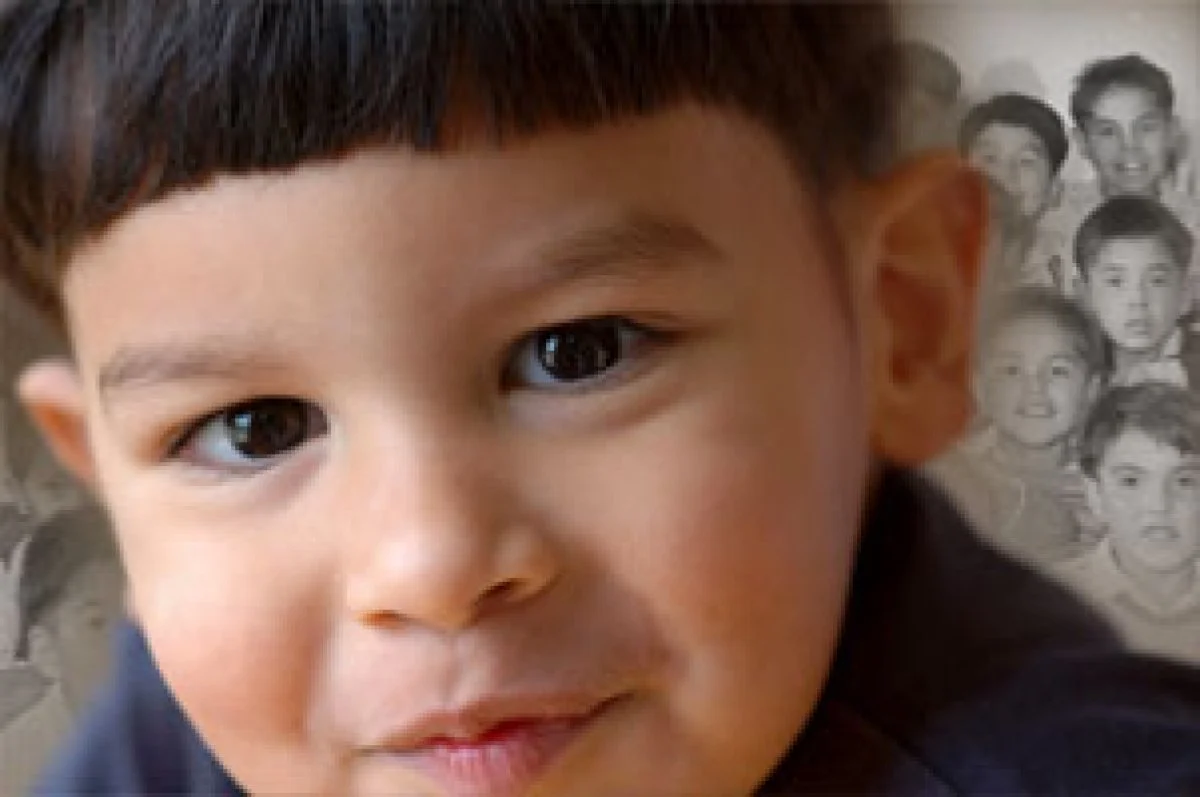
It all began in the middle of the night, sometime in December. The previous day I had email to say that very senior aboriginal and church leaders were going to cross the country together to promote the work of the Indian Residential Schools Truth and Reconciliation Commission. This was exciting. The TRC struck me as a courageous way to help heal this wound in our national soul.
My heart sank, however, when I read the proposed itinerary. No mention of Saskatchewan. “How typical”, I thought, the chip on my prairie-girl shoulder well in place. I thought: it doesn’t matter to those people ‘down east’ that Saskatchewan has a very large native population, that many residential schools were located here. With a fatalistic sigh, I went to bed.
And woke up in the middle of the night. There was no question: I had to write to the organizers and urge them to come to Saskatchewan. A few minutes on the internet brought up the email address. I wrote at once, urging our case and offering the Prairie Centre for Ecumenism as the local partner.
How could I make such a commitment in the middle of the night, with no hesitation and no consultation? It was simple: the amazing PCE network. 24 years of building inter-church partnerships paid off. The PCE’s Restorative Justice Committee usually just do one workshop in November, but 2007 was different. Our focus was the continuing racial divide in our region. The question we asked was how can we, as native and non-native people, walk together to heal our communities? It was clear that this would not be a one-off event, but a process. We began to seek aboriginal partners and found them. There was a growing sense that God was taking us somewhere, well out of our comfort zones. The stage was set.
On January 11 we got word that the national tour, impressed by the strength of our invitation, was coming to Saskatoon on March 9. Hastily the Restorative Justice committee assembled, and others were invited on board — including Ethel Ahenakew of the Saskatoon Native Ministry, Alan Jacques, who ministers on the Dakota Whitecap First Nation, Mary Ann Assailly, of the Anglican diocesan outreach network.
We were excited. Someone asked how many people will come. I said I wasn’t sure, but we should prepare for up to 400. There was incredulous laughter. (We are used to disappointment.) But we persuaded ourselves to think big, and got to work — especially Carol Zubiak our chair, and Carol Penner, our office manager. We were delighted when FaithLife Financial stepped up to the plate and gave us $1,000 to help.
Four churches ran residential schools on behalf of the federal government — Anglican, Presbyterian, Roman Catholic and United. Their local church leaders were enthusiastic about the March 9 visit, and promoted the event among their people. Chief Lawrence Joseph, head of the Federation of Saskatchewan Indian Nations, flew to Ottawa to check out the national launch of the tour. That convinced him that the churches were sincere. He agreed to speak in Saskatoon, and promoted the event with Saskatchewan native leaders.
Invitations went out far and wide — oh the wonders of email. The press releases went out. We held our breath.
Then the phone began to ring. The computer went crazy. Media said they were coming. By the week of the tour, we were arranging overflow seating and urging the Western Development Museum to squeeze in more seats and stand by with extra food.
On the day we counted 471 going past the registration desk. People were streaming in, white and native, old and young. There was a line-up of those wanting to smudge. The perfume of sweetgrass filled the air. People sat at round and long, tables, filling the hall. Expectant and a little nervous.
On stage the national tour’s display featured a young native boy’s face, with a very institutional haircut. His face appeared on the podium as well. When Ted Quewezance, residential school survivor and head of the survivor’s society, stood at the podium and told his story. I felt I was time travelling, for Ted — a man in his fifties or sixties — bore an uncanny resemblance to that little boy.
Each church leader spoke well, with words of clear apology for a very serious wrong. Chief Joseph had called it a ‘holocaust’. The uncomfortable truth, new to me, was that many children never came home from those residential schools. Many died or disappeared. We must remember. There is so much that most non-native people don’t know.
The program ran long, but the audience stayed with it. There were tissues placed on each table. They were needed. Many were touched — the audience, the museum serving staff, the media people, the local sound technician. A young Métis prison worked shared her sense of delight about the event. A school survivor in her sixties told me about the great sense of lightness and peace that had come upon her as the afternoon unfolded.
We finished with a meal and a round dance. When I went to the microphone and asked “Who’s ready for some singing and dancing?” there were whoops and shouts and applause. As ‘Young Thunder’ drummed and sang, a circle of people formed, holding hands, dancing around the edge of the hall. Native and white together, moving to the drum, a ring reaching not just once around the hall, but in places two lines thick. A moment of declaration. A moment of hope.
People asked me, “Are you coming back next year?” The question was about whether the Truth and Reconciliation Commission, when it shapes its itinerary for the major city events, will remember to come to Saskatchewan. We need them to come.
At the PCE, we’ll be standing by for the phone call.
—
• For background on the Truth & Reconciliation Commission go to www.residentialschoolssettlement.ca
• The tour website is www.rememberingthechildren.ca
• A Most Holy Day – The Most Rev. Fred Hiltz, Primate of the Anglican Church of Canada, reflects on the Saskatoon stop of the tour.
… Read more » … lire la suite »
Posted: Mar. 13, 2008 • Permanent link: ecumenism.net/?p=436
Categories: News • In this article: Canada, healing, Indigenous peoples, Truth and Reconciliation Commission
Transmis : 13 mars 2008 • Lien permanente : ecumenism.net/?p=436
Catégorie : News • Dans cet article : Canada, healing, Indigenous peoples, Truth and Reconciliation Commission
CECC : une lettre pastorale sur l’environnement
(CECC – Ottawa) – Dans le cadre de l’Année de la planète terre, telle que proclamée par les Nations Unies, la Conférence des évêques catholiques du Canada (CECC) vient de publier une lettre pastorale dans laquelle elle en appelle à la conscience collective face aux graves problèmes environnementaux qui frappent la planète.
Produite par la Commission épiscopale des affaires sociales, la lettre pastorale a comme titre : « Notre rapport à l’environnement : le besoin d’une conversion ».
Les auteurs de la lettre ne manquent de souligner qu’en dépit des importants engagements pris lors des rencontres de Rio, Kyoto, Johannesburg et Bali, le Canada représente un « cas extrême » de non-respect de ses engagements.
« Après avoir signé le protocole de Kyoto [en 1997], dans lequel nous nous engagions à diminuer nos émissions de gaz à effet de serre à 6 pour cent de moins que celles de 1990, nous les avons plutôt augmentées d’environ 25 pour cent », peut-on lire dans la lettre.
Les évêques notent que la société canadienne n’est pas suffisamment consciente de l’héritage appauvri qu’elle léguera aux générations à venir. Ils souhaitent donc que des ajustements soient apportés dès maintenant afin d’améliorer la situation actuelle, pour le mieux-être des prochaines générations et des populations de l’hémisphère sud.
En vue de rétablir les liens avec la nature, la lettre pastorale identifie un certain nombre d’actions qui pourraient être entreprises afin d’atténuer les effets de cette crise écologique, y compris :
• retrouver le sens de la limite et ajuster notre mode de vie aux ressources planétaires disponibles;
• se libérer de l’obsession de posséder et de consommer et opter plutôt pour « une austérité joyeuse » ou une simplicité volontaire; et
• consentir des efforts personnels en faveur de l’environnement.
Au dire des évêques, il incombe à chaque personne de rétablir les liens qui ont été détériorés avec la nature, de revoir sa conception de la possession et du confort personnels. C’est donc à une solidarité accrue et à de nouvelles formes de partage que sont invités tous les citoyens du Canada.
Déjà, en octobre 2003, la CECC avait publié une première lettre sur l’environnement intitulée : « L’impératif écologique chrétien ». Ce texte, de même que celui qui vient d’être publié, est disponible sur le site Web de la CECC. Des copies imprimées peuvent également être obtenues en s’adressant à mchabot@cecc.ca.
… Read more » … lire la suite »
Posted: Mar. 12, 2008 • Permanent link: ecumenism.net/?p=435
Categories: Documents, News • In this article: Canada, Catholic, CCCB, environment
Transmis : 12 mars 2008 • Lien permanente : ecumenism.net/?p=435
Catégorie : Documents, News • Dans cet article : Canada, Catholic, CCCB, environment
Canadian Catholic Bishops pastoral letter on environment
(CCCB – Ottawa) – As part of the United Nations’ International Year of Planet Earth, the Canadian Conference of Catholic Bishops (CCCB) has published a pastoral letter which calls for a collective consciousness to face critical environmental problems affecting the earth.
Produced by the Episcopal Commission for Social Affairs, the pastoral letter is titled “Our Relationship with the Environment: The Need for Conversion.”
The Commission asserts that despite important commitments at summits held in Rio, Kyoto, Johannesburg and Bali, Canada represents “an extreme case” of non-compliance.
“After signing the Kyoto Protocol [in 1997], in which we agreed to decrease our greenhouse gases to six per cent less than those of 1990, we have instead increased them by approximately 25 per cent,” the letter explains.
The Bishops state that Canadians are not sufficiently conscious of the impoverished inheritance they are leaving for the generations to come. As a result, the Commission for Social Affairs calls for immediate adjustments to improve the current situation, particularly for the well-being of future generations and the Global South.
In order to restore humanity’s bonds with nature and lessen the effects of ecological breakdown, the pastoral letter proposes several ways Canadians can change, including:
• Regaining a sense of limit and adjusting our way of life to the planet’s available resources
• Freeing ourselves of an “obsession to possess and consume” and instead choosing “joyful austerity” or voluntary simplicity
• Making personal efforts in favour of the environment
The Bishops insist that responsibility for restoring a healthy relationship with nature falls on each individual, who must re-examine his or her perceptions about possessions and personal comfort. This will demand greater solidarity and new forms of sharing among all Canadians, they said.
In October 2003, the CCCB Social Affairs Commission published an earlier letter on the environment entitled “The Christian Ecological Imperative.” This text, as well as the recent pastoral letter which has just been published, is available on the CCCB website www.cccb.ca/. Printed copies may be ordered from mchabot@cecc.ca.
… Read more » … lire la suite »
Posted: Mar. 12, 2008 • Permanent link: ecumenism.net/?p=434
Categories: News • In this article: Canada, Catholic, CCCB, environment
Transmis : 12 mars 2008 • Lien permanente : ecumenism.net/?p=434
Catégorie : News • Dans cet article : Canada, Catholic, CCCB, environment
from the Saskatoon Star Phoenix Aboriginal and church leaders are joining together on a cross-country tour aimed at helping the healing process related to residential schools. The event, Remembering the Children, will make a stop in Saskatoon Sunday. The city is one of four being visited, along with Ottawa, Vancouver and Winnipeg. The purpose of
… Read more » … lire la suite »
Posted: Mar. 7, 2008 • Permanent link: ecumenism.net/?p=6078
Categories: News • In this article: Indigenous peoples, Residential Schools, Truth and Reconciliation Commission
Transmis : 7 mars 2008 • Lien permanente : ecumenism.net/?p=6078
Catégorie : News • Dans cet article : Indigenous peoples, Residential Schools, Truth and Reconciliation Commission
The Friends of Sophia winter programme continues with a presentation by Dr. Moira Day, Associate Professor, U of S Drama Department. Moira will present a talk entitled “Women, Theatre and Religion in the Western Tradition: From Antiquity to 1700”.
Wed. March 5, 2008 @ 7:30 pm in the Chelsea Commons, rm 231, St Thomas More College.
The Friends of Sophia is an interdenominational group of women, based at the University of Saskatchewan, dedicated to nurturing Christian feminist spirituality through educational opportunities, shared experience and liturgical celebration. For more information see the Friends of Sophia website.
… Read more » … lire la suite »
Posted: Mar. 5, 2008 • Permanent link: ecumenism.net/?p=433
In this article: events, Friends of Sophia, Saskatoon, women
Transmis : 5 mars 2008 • Lien permanente : ecumenism.net/?p=433
Dans cet article : events, Friends of Sophia, Saskatoon, women
Foundations, “Exploring Our Faith Together” is a faith enrichment program for adults offered by the parishes in Saskatoon’s Roman Catholic diocese during the fall and spring of each year. The cost of each course is $5 per person, per two hour session. High school students: no charge. Anyone is welcome to attend sessions — it is not necessary to be member of the parish organizing the event. Pre-registration is required. A minimum of 15 people is required for the course to run. A partial selection of topics is included below. The complete Foundations schedule for Spring 2008 and contact information is available on the RC diocesan website.
“Zombie Jesus or Resurrected Christ” with Blake Sittler
Holy Spirit Parish, Saskatoon, Monday, March 3, 7:30 pm
Every Sunday we proclaim that we believe in the resurrection of the dead but do we really understand what the resurrection is? Blake will investigate the scriptural, theological, historical and practical aspects of our hoped for glorification.
“Theology of Johnny Cash” with Blake Sittler
St. Patrick Parish Centre, Saskatoon, Wednesday, March 5, 7 pm
Visiting different aspects of Catholic theology using the lyrics of Johnny Cash.
“Spirituality & Social Justice” with Gertrude Rompré
Holy Spirit Parish, Saskatoon, Tuesday, March 11, 7:30 pm
How do we develop a balanced spirituality that includes a commitment to justice? How do we create a balanced activism that remains gospel-centered? This session explores these questions and how we can develop a “faith that does justice”.
“A Funny Thing Happened on my Way Through the Bible” with Blake Sittler
Assumption of Our Lady Parish, Kerrobert, Wednesday, March 12, 7:30 pm
A search for the use of humour in the Old and New Testament and a discussion about the importance of making the Word relevant to people today.
“Interchurch Families” with Shirley & Bernie Karstad
St. Anne Parish, Saskatoon, Wednesday, April 16, 7:30
Interchurch marriages are a particular life situation for many Christians that require special pastoral sensitivity. We will explore the realities of these families which share a baptismal and marital oneness.
… Read more » … lire la suite »
Posted: Mar. 3, 2008 • Permanent link: ecumenism.net/?p=432
In this article: education, events, Saskatoon
Transmis : 3 mars 2008 • Lien permanente : ecumenism.net/?p=432
Dans cet article : education, events, Saskatoon