- Français
- |
- Booklist
- |
- Week of Prayer
- |
- Links
- Areopagus - a forum for dialogue
- Academic journals
- Acronyms
- Bible tools
- Bibliographies
- Booksellers and publishers
- Churches
- Canadian church headquarters
- Directory of Saskatchewan churches
- Retreat centres
- Saskatchewan church and non-profit agencies
- Ecumenism.net Denominational links
- Anabaptist & Mennonite
- Anglican
- Baptist
- Evangelical
- Independent episcopal
- Lutheran
- Methodist, Wesleyan, and Holiness
- Miscellaneous
- Mormon
- Orthodox (Eastern & Oriental)
- Para-church ministries
- Pentecostal / charismatic
- Presbyterian & Reformed
- Quaker (Society of Friends)
- Roman & Eastern Catholic
- United and uniting
- Documents of Ecumenical Interest
- Ecumenical agencies
- Ecumenical Booklist
- Ecumenical Dialogues
- Glossary
- Human rights
- Inter-religious links
- Justice & peace
- Lectionaries
- Religious news services
- Resource pages
- Search Ecumenism.Net
- |
- Documents
- Ancient & Medieval texts
- Ecumenical Dialogues
- Interreligious
- Anabaptist & Mennonite
- Anglican
- Evangelical
- Lutheran
- Orthodox
- Reformed & Presbyterian
- Roman & Eastern Catholic
- United & Uniting
- Miscellaneous churches
- Canadian Council of Churches (CCC)
- Conference of European Churches (CEC)
- Interchurch Families International Network (IFIN)
- National Council of Churches in Australia (NCCA)
- Lausanne Committee for World Evangelism (LCWE)
- World Council of Churches (WCC)
- Other ecumenical documents
Church traditions
Documents from ecumenical agencies
- |
- Dialogues
- Adventist-Reformed
- African Instituted Churches-Reformed
- Anglican-Lutheran
- Anglican-Orthodox
- Anglican-Reformed
- Anglican-Roman Catholic
- Anglican-United/Uniting
- Baptist-Reformed
- Disciples of Christ-Reformed
- Disciples of Christ-Roman Catholic
- Evangelical-Roman Catholic
- Lutheran-Mennonite
- Lutheran-Mennonite-Roman Catholic
- Lutheran-Reformed
- Lutheran-Roman Catholic
- Mennonite-Reformed
- Mennonite-Roman Catholic
- Methodist-Reformed
- Methodist-Roman Catholic
- Oriental Orthodox-Reformed
- Orthodox-Reformed
- Orthodox-Roman Catholic
- Pentecostal-Reformed
- Prague Consultations
- REC-WARC Consultations
- Roman Catholic-Lutheran-Reformed
- Roman Catholic-Reformed
- Roman Catholic-United Church of Canada
- |
- Quick links
- Canadian Centre for Ecumenism
- Canadian Council of Churches
- Ecumenical Shared Ministries
- Ecumenism in Canada
- Interchurch Families International Network
- International Anglican-Roman Catholic Commission for Unity and Mission
- Kairos: Canadian Ecumenical Justice Initiatives
- North American Academy of Ecumenists
- Prairie Centre for Ecumenism
- Réseau œcuménique justice et paix
- Week of Prayer for Christian Unity
- Women's Interchurch Council of Canada
- World Council of Churches
- |
- Archives
- |
- About us

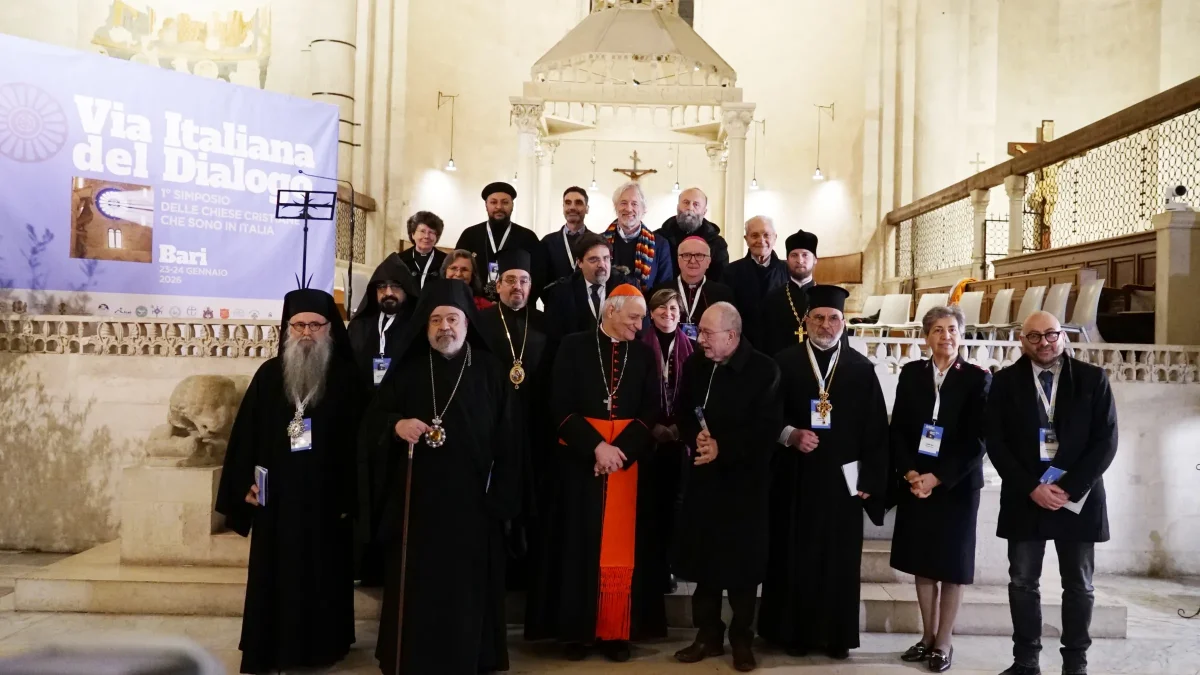
Church leaders from all the Christian communities in Italy gather for worship in Bari Cathedral during a two-day ecumenical symposium titled ‘The Italian way of dialogue’. Photo: Francesco Frascella. (24 Jan. 2026)
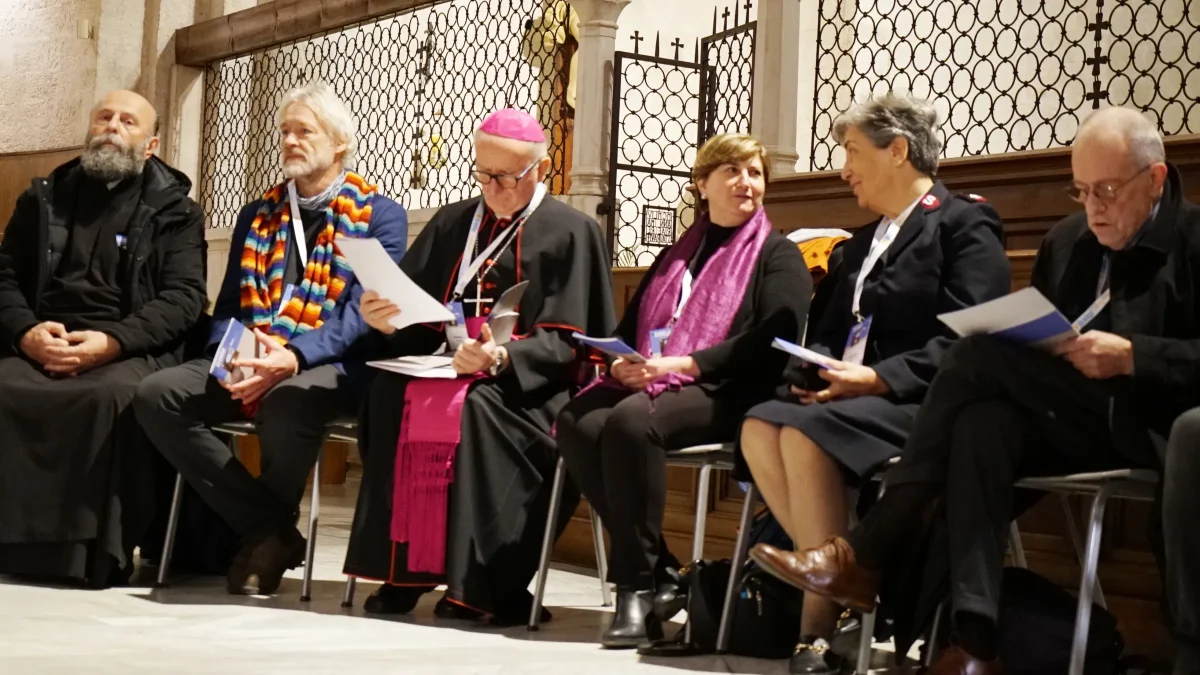
Church leaders from all the Christian communities in Italy gather for worship in Bari Cathedral during a two-day ecumenical symposium titled ‘The Italian way of dialogue’. Photo: Francesco Frascella. (24 Jan. 2026)
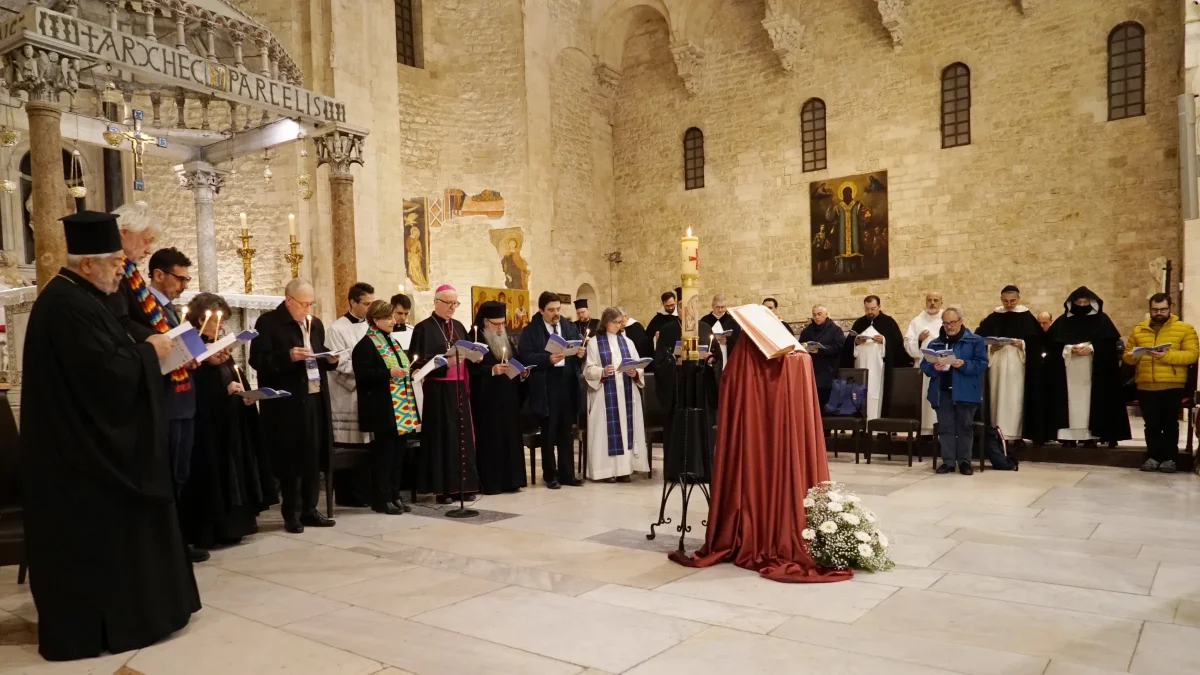
Church leaders from all the Christian communities in Italy gather for worship in Bari Cathedral during a two-day ecumenical symposium titled ‘The Italian way of dialogue’. Photo: Francesco Frascella. (24 Jan. 2026)


Italy’s Christian churches sign first ecumenical pact
— Feb. 5, 20265 févr. 2026Lutherans are among representatives of eighteen Christian communities in Italy pledging to pursue theological dialogue, joint witness and closer cooperation for the common good.
Strengthening relations among different Christian churches in Italy, while promoting authentic Christian values within an increasingly secular society. Those were the twin goals of a recent symposium, during which representatives of eighteen churches and Christian communities signed an ecumenical pact pledging to pursue dialogue, joint witness and closer cooperation for the common good.
As dean of the Evangelical Lutheran Church in Italy, Rev. Carsten Gerdes took part in the two-day symposium, held in the southern port city of Bari. The gathering included the signing of a bold new agreement between Catholic, Orthodox, Anglican, Protestant, Pentecostal and Free churches present around the Italian peninsula.
Pastor Gerdes, who serves the Ispra-Varese community close to the Swiss border, noted that the 23 to 24 January symposium, entitled ‘The Italian way of dialogue’, brought together around a hundred participants from leadership to local congregational level. “At the conclusion of this meeting, I felt a strong ecumenical impulse among participants, and I hope we can keep this alive, transmitting it to the grassroots,” he said.
In the pact, signed during the opening ceremony in Bari’s ancient cathedral, church leaders pledge to work together for justice, peace and solidarity, focusing especially on protecting human dignity, promoting dialogue between cultures and religions, welcoming migrants and marginalised people, protecting God’s creation and combatting antisemitism, Islamophobia or any other forms of religious discrimination.
“Of course, you haven’t achieved anything by simply signing a piece of paper and putting it in the archives,” Gerdes observed. “But in the pact we also commit ourselves to keeping this dialogue alive, pursuing closer relations, discussing theological questions and overcoming the obstacles that divide us. This is a promise we make not only to ourselves, but also to all our churches, and we hope to follow up with a second symposium in a couple of years’ time.”
During the Bari meeting, delegates participated in working groups dedicated to exploring themes of peacemaking, spirituality, engagement in the public space, interchurch marriages and the sharing of Holy Communion. “I took part in that last group,” Gerdes said, “and clearly this has been a question for the past 500 years, so we weren’t hoping to solve it in our four hours together. But we were able to think about the path ahead and where the problems lie, what our shared baptism means for us being able to share at the Lord’s table.”
We know this is the right path to follow, and [….] we see a lack of authentic Christian values in public life today. — Rev. Carsten Gerdes, Dean of the Evangelical Lutheran Church in Italy
Like many European nations, Italy has seen a significant decline in participation within all the traditional mainline churches. “The only exception we notice is in the Pentecostal and charismatic communities, who have seen their congregations getting larger and younger,” Gerdes said. “But our joint efforts are not about trying to attract more people into our churches. Rather, it is because we know this is the right path to follow and because we see a lack of authentic Christian values in public life today.”
Just like in his home country, Germany, Gerdes noted that there are “groups talking about the importance of Christianity, but we need to be careful because they may be more interested in getting political votes than in authentic religious values.” The pact, signed at the symposium, underlines the importance of religious freedom and respect for the freedom of conscience of every individual.
While it does not contain concrete proposals for the next steps on this ecumenical journey, the pact does commit each church to “promoting initiatives that favour [greater] knowledge and reciprocal esteem between believers of the different Christian confessions.” Gerdes said he was “delighted to see such a strong impulse from Catholic leaders, who remain the majority church in Italy.” He concluded: “Not only the church leaders, but all participants in this symposium should now take steps forward to continue with this momentum.”
 Posted: Feb. 5, 2026 •
  Permanent link: ecumenism.net/?p=14794
Categories: Lutheran World Information • In this article: covenant, Italy
Transmis : 5 févr. 2026 • Lien permanente : ecumenism.net/?p=14794
Catégorie : Lutheran World Information • Dans cet article : covenant, Italy