- Français
- |
- Booklist
- |
- Week of Prayer
- |
- Links
- Areopagus - a forum for dialogue
- Academic journals
- Acronyms
- Bible tools
- Bibliographies
- Booksellers and publishers
- Churches
- Canadian church headquarters
- Directory of Saskatchewan churches
- Retreat centres
- Saskatchewan church and non-profit agencies
- Ecumenism.net Denominational links
- Anabaptist & Mennonite
- Anglican
- Baptist
- Evangelical
- Independent episcopal
- Lutheran
- Methodist, Wesleyan, and Holiness
- Miscellaneous
- Mormon
- Orthodox (Eastern & Oriental)
- Para-church ministries
- Pentecostal / charismatic
- Presbyterian & Reformed
- Quaker (Society of Friends)
- Roman & Eastern Catholic
- United and uniting
- Documents of Ecumenical Interest
- Ecumenical agencies
- Ecumenical Booklist
- Ecumenical Dialogues
- Glossary
- Human rights
- Inter-religious links
- Justice & peace
- Lectionaries
- Religious news services
- Resource pages
- Search Ecumenism.Net
- |
- Documents
- Ancient & Medieval texts
- Ecumenical Dialogues
- Interreligious
- Anabaptist & Mennonite
- Anglican
- Evangelical
- Lutheran
- Orthodox
- Reformed & Presbyterian
- Roman & Eastern Catholic
- United & Uniting
- Miscellaneous churches
- Canadian Council of Churches (CCC)
- Conference of European Churches (CEC)
- Interchurch Families International Network (IFIN)
- National Council of Churches in Australia (NCCA)
- Lausanne Committee for World Evangelism (LCWE)
- World Council of Churches (WCC)
- Other ecumenical documents
Church traditions
Documents from ecumenical agencies
- |
- Dialogues
- Adventist-Reformed
- African Instituted Churches-Reformed
- Anglican-Lutheran
- Anglican-Orthodox
- Anglican-Reformed
- Anglican-Roman Catholic
- Anglican-United/Uniting
- Baptist-Reformed
- Disciples of Christ-Reformed
- Disciples of Christ-Roman Catholic
- Evangelical-Roman Catholic
- Lutheran-Mennonite
- Lutheran-Mennonite-Roman Catholic
- Lutheran-Reformed
- Lutheran-Roman Catholic
- Mennonite-Reformed
- Mennonite-Roman Catholic
- Methodist-Reformed
- Methodist-Roman Catholic
- Oriental Orthodox-Reformed
- Orthodox-Reformed
- Orthodox-Roman Catholic
- Pentecostal-Reformed
- Prague Consultations
- REC-WARC Consultations
- Roman Catholic-Lutheran-Reformed
- Roman Catholic-Reformed
- Roman Catholic-United Church of Canada
- |
- Quick links
- Canadian Centre for Ecumenism
- Canadian Council of Churches
- Ecumenical Shared Ministries
- Ecumenism in Canada
- Interchurch Families International Network
- International Anglican-Roman Catholic Commission for Unity and Mission
- Kairos: Canadian Ecumenical Justice Initiatives
- North American Academy of Ecumenists
- Prairie Centre for Ecumenism
- Réseau œcuménique justice et paix
- Week of Prayer for Christian Unity
- Women's Interchurch Council of Canada
- World Council of Churches
- |
- Archives
- |
- About us


Archive for category: News
Archive pour catégorie : News
 RSS feed for News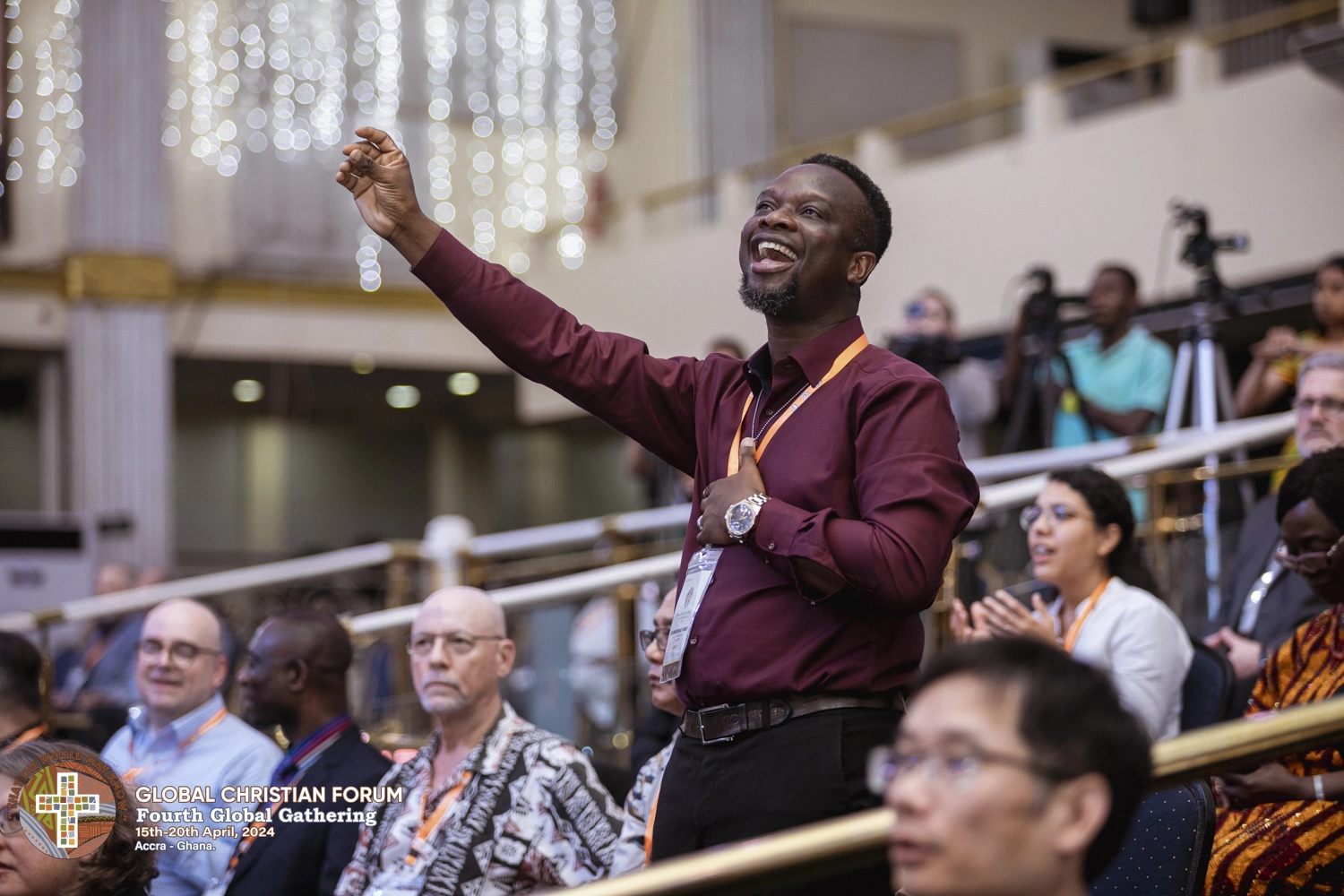
The rain came with a cool breeze, driving away the humid heat through the open windows of the church. An auspicious blessing from God! So began the collective story of the 4th Global Gathering of the Global Christian Forum in Ghana, a country where Christianity is vibrant and thriving. An outpouring of hospitality and generosity characterised our time together from 16-19 April, 2024.
The very first youth gathering in GCF’s history preceded the main Forum from 13-15 April. The diversity and vision of the young adults gave energy to their own conversations about justice, hope, and reconciliation.
This is the 25th Anniversary of the Global Christian Forum, something we celebrated joyfully. Throughout its existence, the GCF has been a unique space for all major streams of Christianity to be together for encounter and prayer. It is the broadest expression of Christian faith and one that reflects the movement of the majority of churches from the global north to the global south.
… Read more » … lire la suite »
 Posted: Apr. 20, 2024 •
  Permanent link: ecumenism.net/?p=14292
Categories: Communiqué, News • In this article: Global Christian Forum
Transmis : 20 avril 2024 • Lien permanente : ecumenism.net/?p=14292
Catégorie : Communiqué, News • Dans cet article : Global Christian Forum
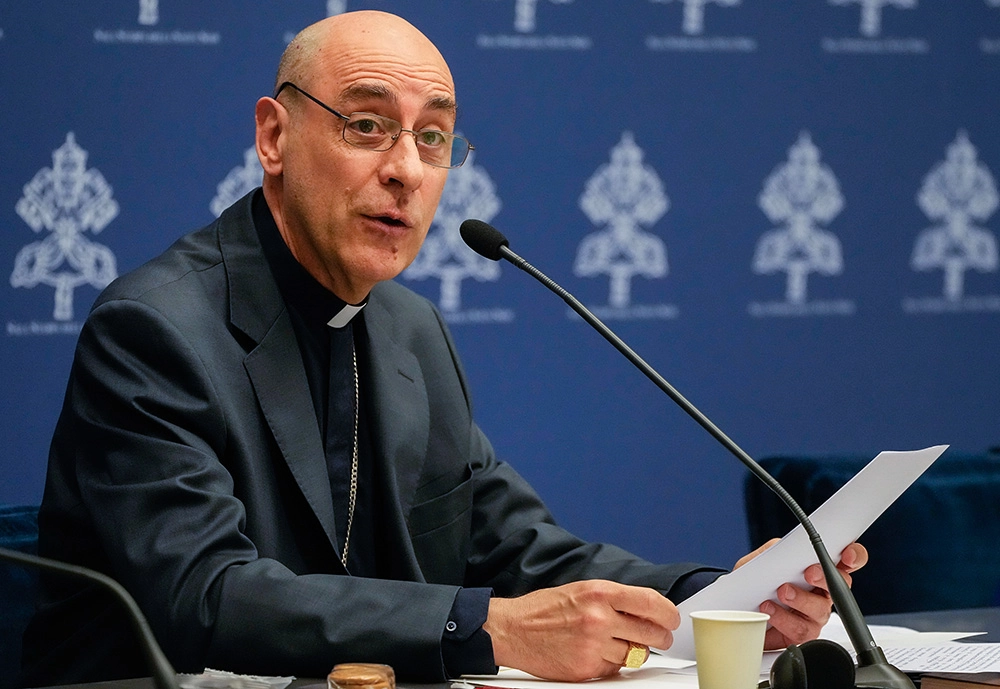
Two things struck me while reading Dignitas Infinita or “Infinite Dignity,” the new declaration on surrogacy, gender and life from the Vatican released April 8 by the Dicastery for the Doctrine of the Faith.
For one, the document sets a new standard for transparency about how it was written, and, second, it goes to lengths to impress on its readers how long the church has taught on these topics.
The document, which applies church teaching to current threats to human dignity, makes clear that human dignity does not depend on wealth, intelligence, social status or abilities, but on the intrinsic worth of every human being.
… Read more » … lire la suite »
Posted: Apr. 11, 2024 • Permanent link: ecumenism.net/?p=14280
Categories: NCR • In this article: Catholic, Dicastery for the Doctrine of the Faith, human dignity, Victor Manuel Fernández
Transmis : 11 avril 2024 • Lien permanente : ecumenism.net/?p=14280
Catégorie : NCR • Dans cet article : Catholic, Dicastery for the Doctrine of the Faith, human dignity, Victor Manuel Fernández
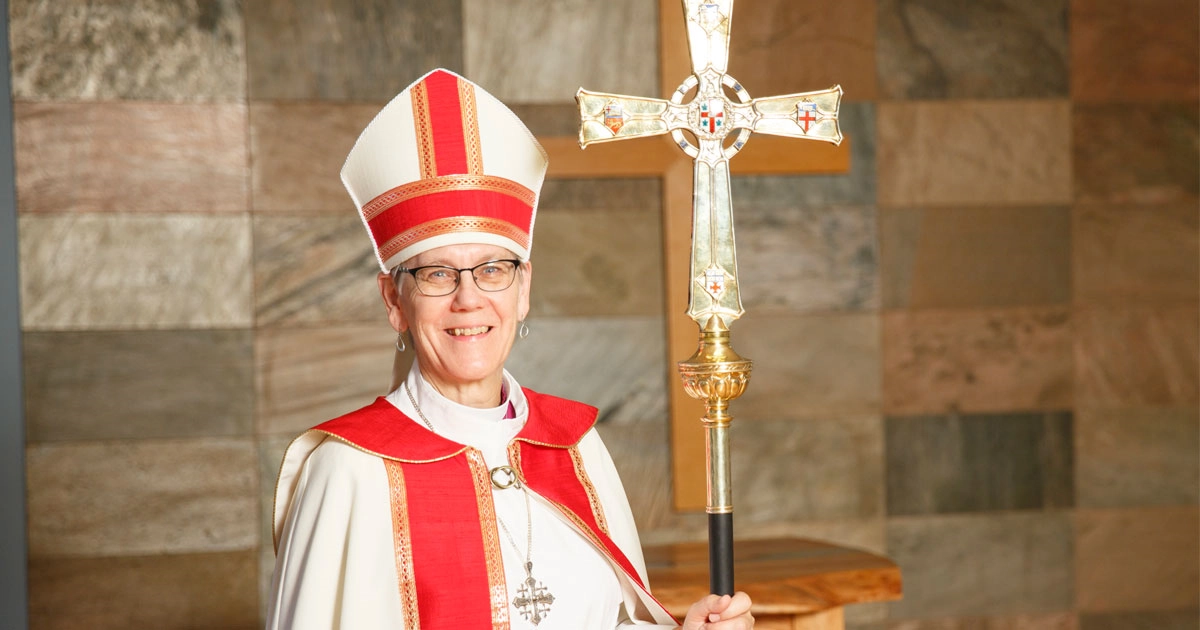
Archbishop Linda Nicholls, Primate of the Anglican Church of Canada, has announced that she will step down from her role on September 15, 2024.
The canons of the Anglican Church of Canada require primates to retire upon reaching their 70th birthday. Archbishop Nicholls will reach mandatory retirement age in October.
Archbishop Nicholls was elected as the 14th Primate of the Anglican Church of Canada on July 13, 2019. She was the first woman to hold the office in Canada and only the second in the Anglican Communion.
Prior to her election, she served as Bishop of Huron (2016-2019) and Area Bishop of Trent-Durham in the Diocese of Toronto (2008-2016). She was also Coordinator for Dialogue for Ethics, Interfaith Relations and Congregational Development at the Anglican Church of Canada’s national office. She spent almost twenty years as a parish priest in the Diocese of Toronto.
… Read more » … lire la suite »
Posted: Apr. 9, 2024 • Permanent link: ecumenism.net/?p=14278
Categories: News • In this article: Anglican Church of Canada, Linda Nicholls
Transmis : 9 avril 2024 • Lien permanente : ecumenism.net/?p=14278
Catégorie : News • Dans cet article : Anglican Church of Canada, Linda Nicholls
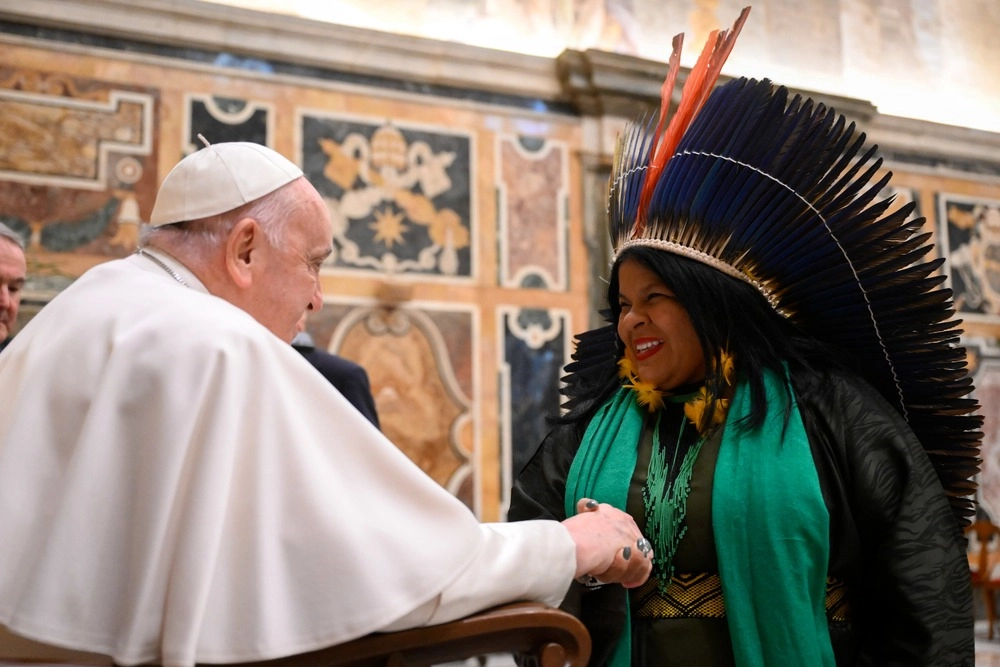
The world’s cultures, traditions, spiritualities and languages must be acknowledged, respected and protected, especially those of Indigenous peoples, Pope Francis said.
The entire patrimony of human knowledge “should be employed as a means of overcoming conflicts in a nonviolent manner and combating poverty and the new forms of slavery,” he said in remarks read by an aide March 14 to participants attending a workshop at the Vatican.
The Pontifical Academies of Sciences and of Social Sciences jointly sponsored a workshop March 14-15 on the knowledge of Indigenous peoples and the work and research being carried out in the sciences.
… Read more » … lire la suite »
Posted: Mar. 14, 2024 • Permanent link: ecumenism.net/?p=14089
Categories: CNS • In this article: Indigenous spirituality, Pope Francis, science
Transmis : 14 mars 2024 • Lien permanente : ecumenism.net/?p=14089
Catégorie : CNS • Dans cet article : Indigenous spirituality, Pope Francis, science
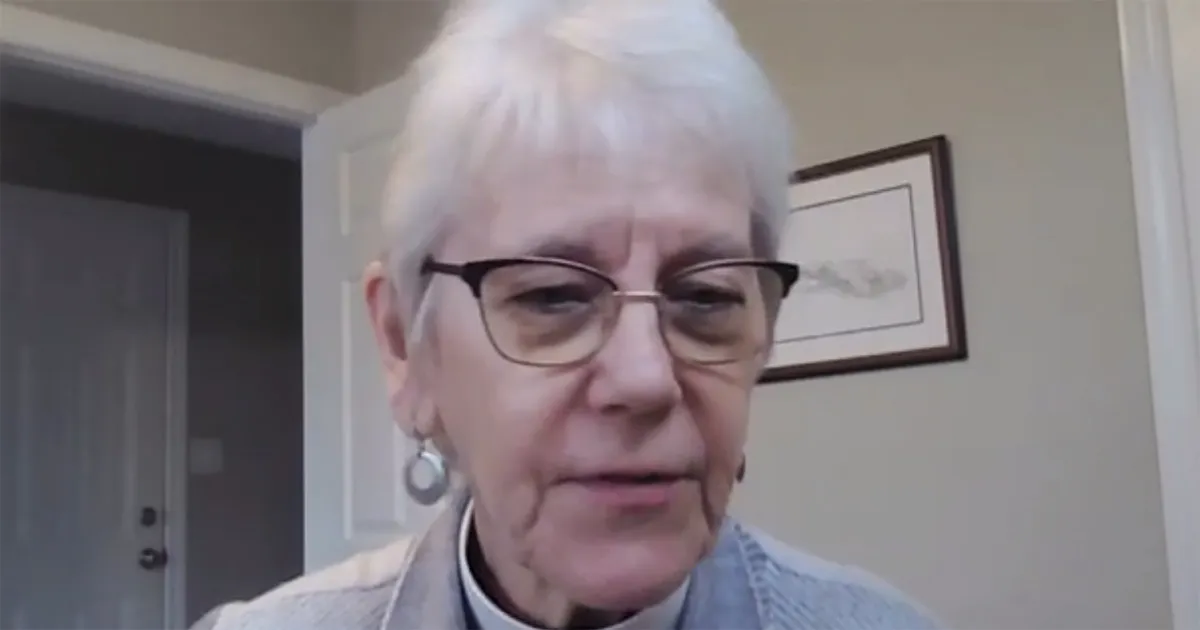
The Anglican Church of Canada’s Council of General Synod (CoGS) has passed resolutions on the need for further discussion and education around medical assistance in dying (MAID), the formation of a discipleship and evangelism task force, and a review of the process by which ecclesiastical provinces elect CoGS representatives. General Synod last year referred all three resolutions to CoGS, which passed them at a March 9 online meeting held over Zoom.
Resolution C003, on MAID, reaffirmed “the teaching of Scripture that life is a divine gift, the call of the Baptismal Covenant to ‘respect the dignity of every human being,’ and the teaching of Jesus Christ that he has come so that people may have ‘abundant life’ (John 10:10).” It requested that Archbishop Linda Nicholls, primate of the Anglican Church of Canada, write to Canada’s minister of health expressing concerns about the expansion of the MAID program as well as the church’s support for a robust palliative care system.
… Read more » … lire la suite »
Posted: Mar. 13, 2024 • Permanent link: ecumenism.net/?p=14238
Categories: Anglican Journal • In this article: physician assisted suicide
Transmis : 13 mars 2024 • Lien permanente : ecumenism.net/?p=14238
Catégorie : Anglican Journal • Dans cet article : physician assisted suicide
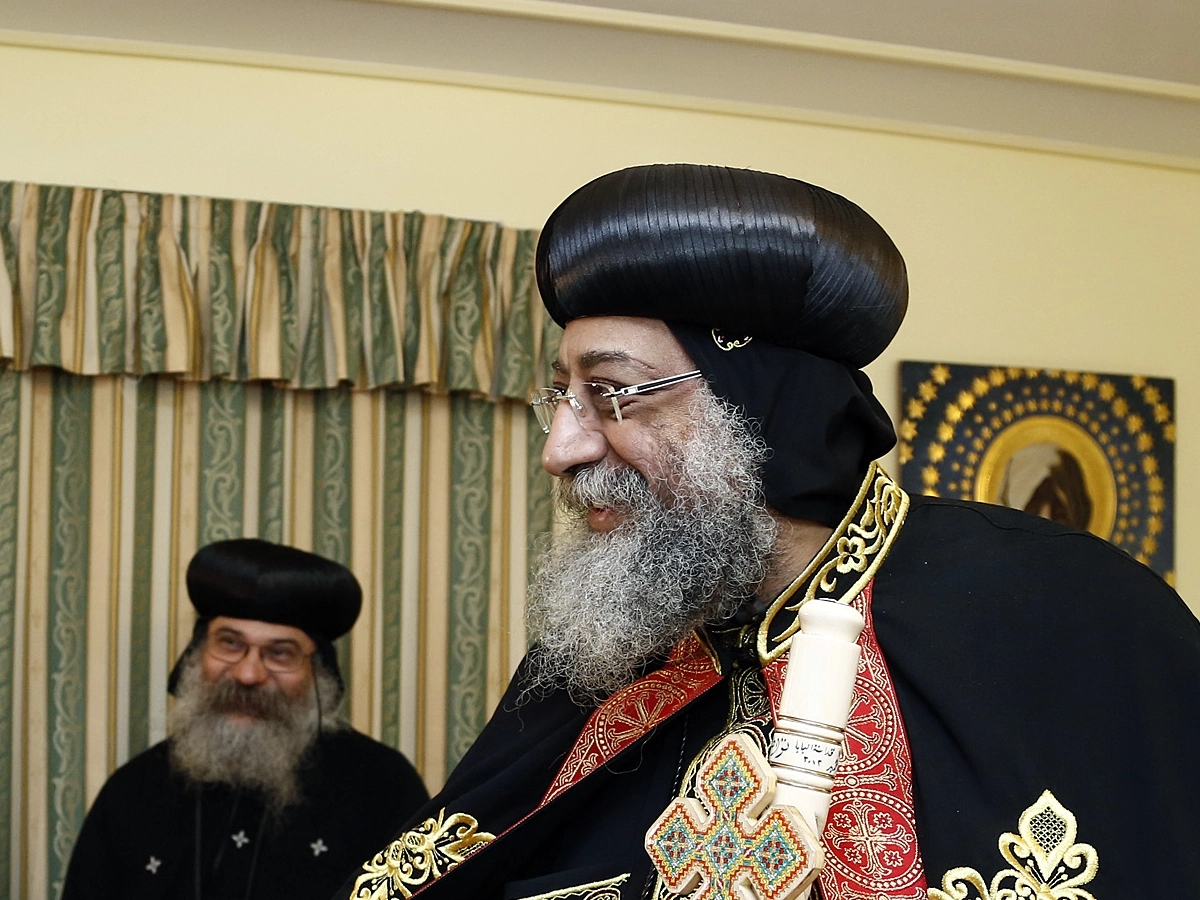
The Coptic Orthodox Church halts its theological dialogue with the Roman Catholic Church because of Vatican’s publication of “Fiducia supplicans”
The Coptic Orthodox Patriarchate of Alexandria has made the momentous decision to suspend its two-decades-long doctrinal dialogue with the Roman Catholic Church after the Vatican recently approved blessings for same-sex couples, something Coptic officials have called a “heresy”.
The Holy Synod of the ancient, Egypt-based Church announced on March 7 that it had decided “to suspend the theological dialogue with the Catholic Church, re-evaluate the results that the dialogue has achieved since its beginning twenty years ago, and establish new standards and mechanisms for the dialogue to proceed.” The catalyst for the decision, however, was the Dicastery for the Doctrine of the Faith’s publication last December of Fiducia supplicans, the document on blessings for couples “in irregular situations” — including those of the same sex.
… Read more » … lire la suite »
Posted: Mar. 12, 2024 • Permanent link: ecumenism.net/?p=14093
Categories: La Croix • In this article: Catholic, Coptic, dialogue, Fiducia Supplicans, Oriental Orthodox, same-sex blessing, Tawadros II
Transmis : 12 mars 2024 • Lien permanente : ecumenism.net/?p=14093
Catégorie : La Croix • Dans cet article : Catholic, Coptic, dialogue, Fiducia Supplicans, Oriental Orthodox, same-sex blessing, Tawadros II
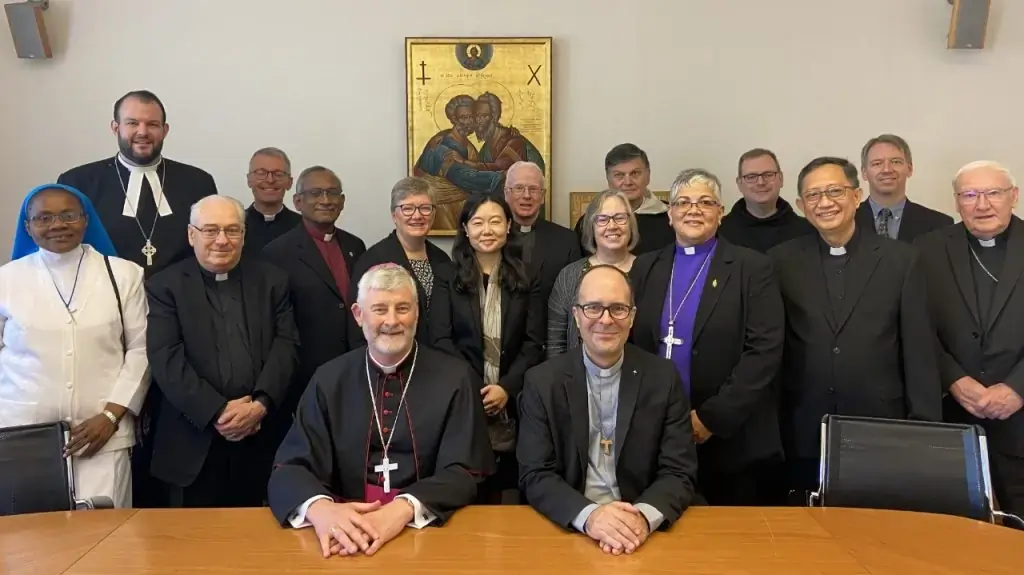
Original English text. A translation was published in the Italian edition of L’Osservatore Romano, 23 January 2023.
Like many ecumenical partners, Methodists and Anglicans walked very closely with the Catholic Church throughout many significant events in 2023. This common journeying has taken various forms, including sympathy and prayerful solidarity on the occasion of the funeral of Pope Benedict XVI at the very beginning of the year, to participation in the Ordinary General Assembly of the Synod of Bishops in the later part of the year, with many other events and encounters in between.
… Read more » … lire la suite »
Posted: Feb. 29, 2024 • Permanent link: ecumenism.net/?p=14080
Categories: News • In this article: Anglican, Martin Browne, Methodist
Transmis : 29 févr. 2024 • Lien permanente : ecumenism.net/?p=14080
Catégorie : News • Dans cet article : Anglican, Martin Browne, Methodist

The Canadian Council of Churches is pleased to announce the launch of a new archive website: justiceandpeace.ca!
This digital library contains over 25 years of theological resources, position statements, advocacy letters, briefing notes, and other materials. They can be used as a starting point for thought, conversation, advocacy, and ecumenical participation. These resources arose through ecumenical dialogue, communal prayer, bible study, and advocacy efforts amongst members of the CCC‘s Commission on Justice and Peace. Statements and letters from the Canadian Council of Churches, Canadian churches, and religious leaders are also included in the archives.
… Read more » … lire la suite »
Posted: Feb. 28, 2024 • Permanent link: ecumenism.net/?p=14078
Categories: News, Resources • In this article: Canadian Council of Churches, justice, peace
Transmis : 28 févr. 2024 • Lien permanente : ecumenism.net/?p=14078
Catégorie : News, Resources • Dans cet article : Canadian Council of Churches, justice, peace
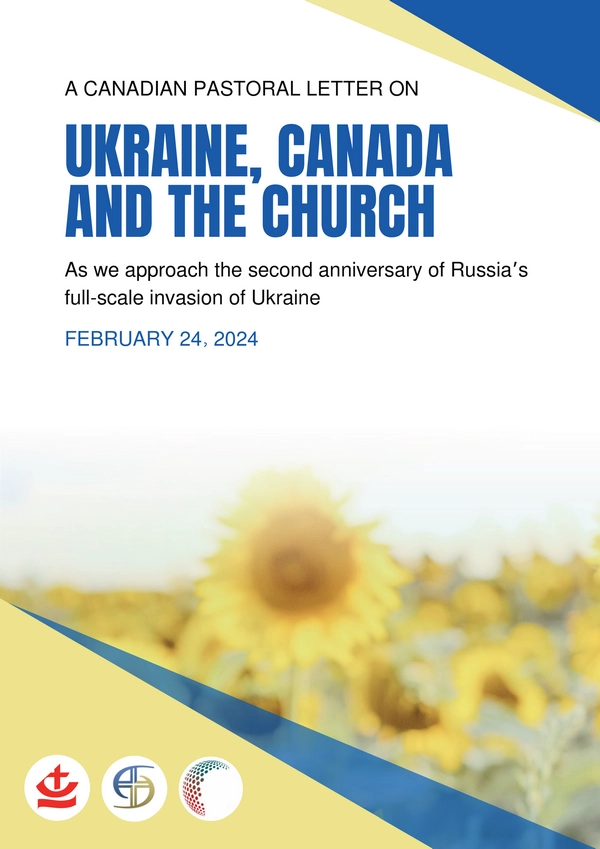
As the second anniversary of Russia’s full-scale invasion of Ukraine approaches on February 24, Christian leaders of Orthodox, Catholic, Evangelical, and other faith traditions in Canada, together with the World Evangelical Alliance’s Peace & Reconciliation Network, the Evangelical Fellowship of Canada, and the Canadian Council of Churches invite all Christians and people of goodwill to join in united prayer and action for peace.
This call to prayer and action—signed by 45 Canadian Church leaders—also acknowledges ongoing conflict elsewhere in the world:
“Without in any way minimizing or ignoring the suffering and sorrow caused by war and violence in other areas of the world, we stand together in inviting Christians and all people of goodwill to prayerfully consider how we are all called, and might contribute to, the achievement of peace in and for Ukraine.”
… Read more » … lire la suite »
Posted: Feb. 16, 2024 • Permanent link: ecumenism.net/?p=14069
Categories: News, Pastoral letter, Resources • In this article: Canada, Canadian Council of Churches, Evangelical Fellowship of Canada, pastoral letters, peace, Ukraine
Transmis : 16 févr. 2024 • Lien permanente : ecumenism.net/?p=14069
Catégorie : News, Pastoral letter, Resources • Dans cet article : Canada, Canadian Council of Churches, Evangelical Fellowship of Canada, pastoral letters, peace, Ukraine
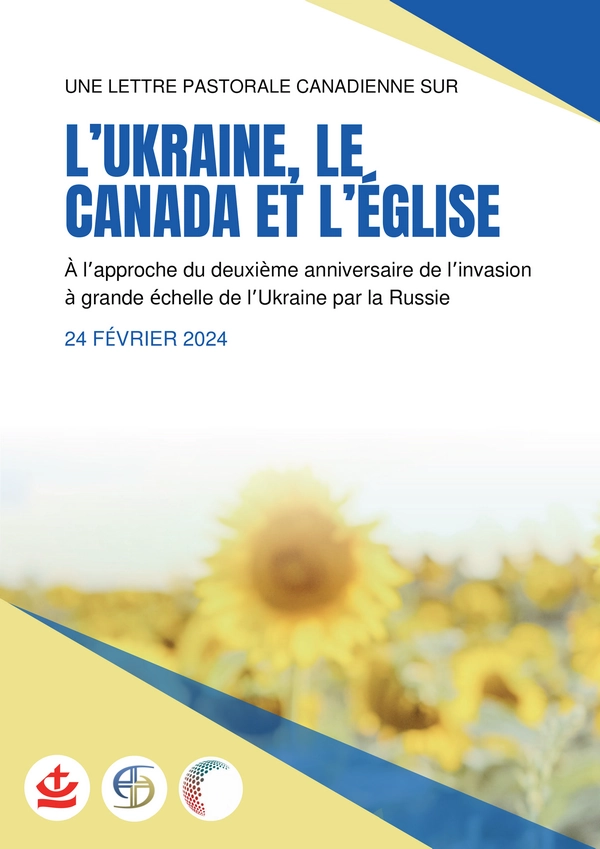
À l’approche du deuxième anniversaire de l’invasion à grande échelle de la Russie en Ukraine le 24 février, les chefs chrétiens des traditions orthodoxe, catholique, évangélique et d’autres confessions au Canada, en collaboration avec le Réseau de paix et de réconciliation de l’Alliance évangélique mondiale, l’Alliance évangélique du Canada et le Conseil canadien des Églises invitent toutes les chrétiens et les personnes de bonne volonté à se joindre à une prière et à une action unies pour la paix
Cet appel à la prière et à l’action—signé par 45 chefs d’églises canadiens—reconnaît également les conflits en cours ailleurs dans le monde :
« Sans minimiser ou ignorer de quelque manière que ce soit la souffrance et le chagrin causés par la guerre et la violence dans d’autres régions du monde, nous nous tenons ensemble pour inviter les chrétiens et toutes les personnes de bonne volonté à réfléchir avec prière à la manière dont nous sommes tous appelés, et pourraient contribuer à la réalisation de la paix en et pour l’Ukraine. »
… Read more » … lire la suite »
Posted: Feb. 16, 2024 • Permanent link: ecumenism.net/?p=14071
Categories: News, Pastoral letter, Resources • In this article: Canada, Canadian Council of Churches, Evangelical Fellowship of Canada, pastoral letters, peace, Ukraine
Transmis : 16 févr. 2024 • Lien permanente : ecumenism.net/?p=14071
Catégorie : News, Pastoral letter, Resources • Dans cet article : Canada, Canadian Council of Churches, Evangelical Fellowship of Canada, pastoral letters, peace, Ukraine
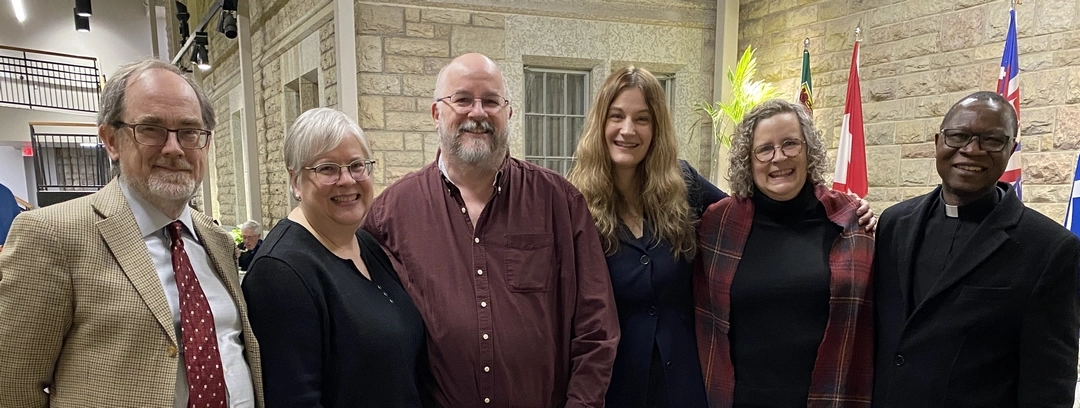
A series of lectures and workshops given by Rev Dr Karen Petersen Finch were held January 24-27, 2024 in Saskatoon and Regina. The first lecture, held at Campion College at the University of Regina, was titled “Re-imagining Lay People as Stewards of Doctrine” and the second lecture, titled, “Doctrine as the Fuel for Renewal”, was held January 25th in Saskatoon at St. Thomas More College at the University of Saskatchewan. A workshop titled, “The Eucharist: Where is Jesus?” was held at Holy Spirit Parish in Saskatoon on Friday, January 26 and at Christ the King Parish in Regina on Saturday, January 27.
… Read more » … lire la suite »
Posted: Feb. 13, 2024 • Permanent link: ecumenism.net/?p=14073
Categories: News • In this article: De Margerie Series, ecumenism, lectures, Saskatchewan, workshop
Transmis : 13 févr. 2024 • Lien permanente : ecumenism.net/?p=14073
Catégorie : News • Dans cet article : De Margerie Series, ecumenism, lectures, Saskatchewan, workshop
Commemorating the 1700th anniversary in 2025 of the Council of Nicaea is an inspiration to Christians today to work for the unity of the church, according to Rev. Prof. Dr Jerry Pillay, general secretary of the World Council of Churches (WCC).
At the Council of Nicaea, bishops representing the whole of Christendom gathered together for the first time to discuss the faith and witness of the church.
“Recalling the significance of the Council of Nicaea renews our call for full visible unity, the cornerstone of the ecumenical movement,” Pillay said in a greeting to an 8 February webinar, “From Nicaea, Walking Together to Unity: The Beginning of a New Beginning.”
… Read more » … lire la suite »
Posted: Feb. 9, 2024 • Permanent link: ecumenism.net/?p=14059
Categories: WCC News • In this article: Nicaea 2025, WCC Commission on Faith and Order
Transmis : 9 févr. 2024 • Lien permanente : ecumenism.net/?p=14059
Catégorie : WCC News • Dans cet article : Nicaea 2025, WCC Commission on Faith and Order
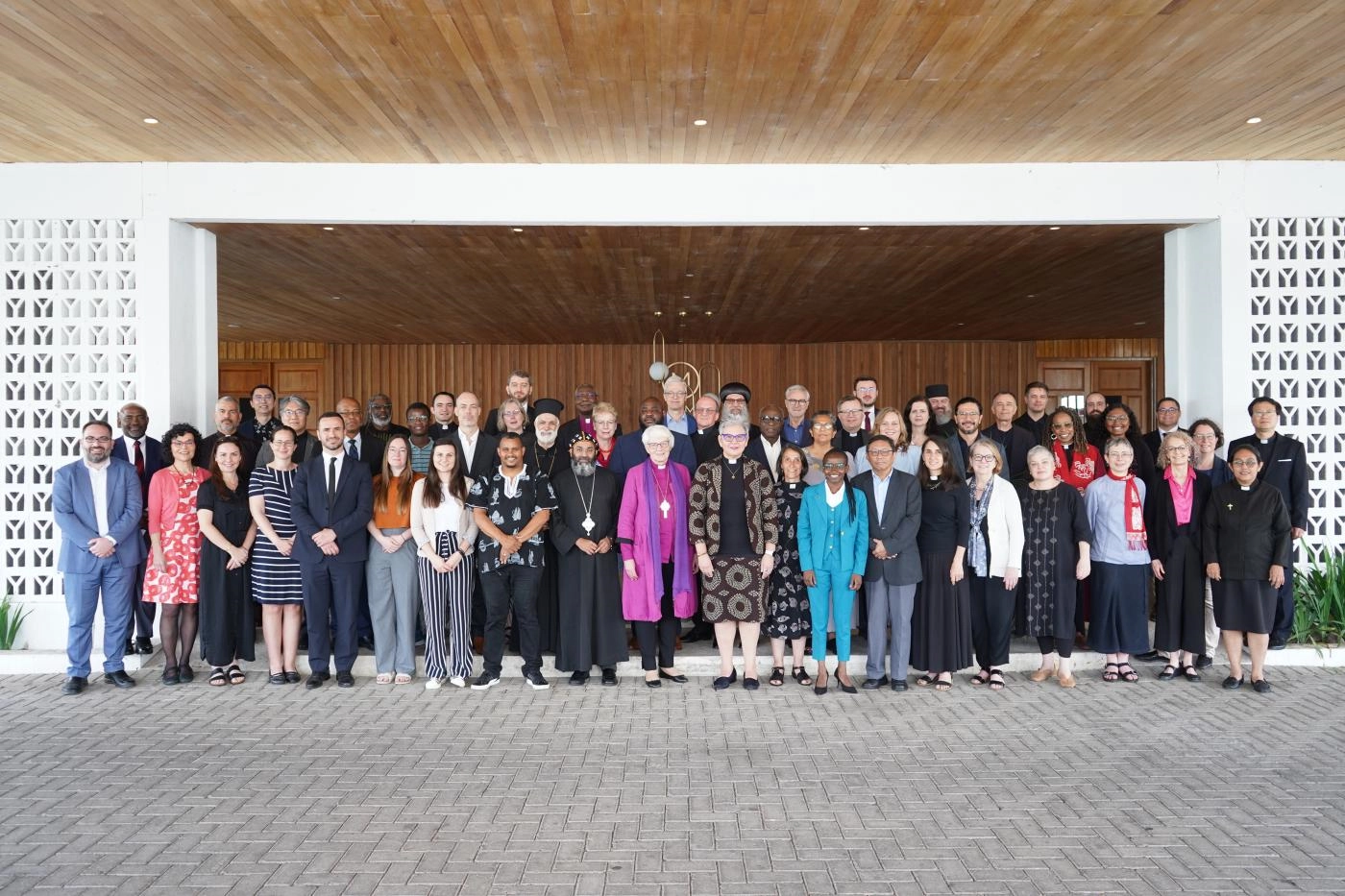
The newly-appointed WCC Faith and Order Commission met face-to-face for the first time to plan its next eight years of work. Theologians from all continents gathered in Tondano, North Sulawesi, Indonesia, hosted by the Indonesian Communion of Churches.
The Faith and Order Commission is a unique body, bringing together theologians and church leaders from Orthodox, Roman Catholic, and Protestant traditions – women and men, lay and ordained – with several places reserved for younger theologians.
In this its first meeting, the commission considered plans for the 2025 world conference commemorating the 1700th anniversary of the Council of Nicaea. The Council of Nicaea shaped the creed that is still used by most Christian churches today, and the Faith and Order conference in 2025 will ask “Where now for visible unity?” The commission heard research on Nicaea and its continuing influence, and considered how to use the conference and the anniversary to bring Faith and Order work to a wider audience.
… Read more » … lire la suite »
Posted: Feb. 8, 2024 • Permanent link: ecumenism.net/?p=14057
Categories: WCC News • In this article: WCC Commission on Faith and Order
Transmis : 8 févr. 2024 • Lien permanente : ecumenism.net/?p=14057
Catégorie : WCC News • Dans cet article : WCC Commission on Faith and Order
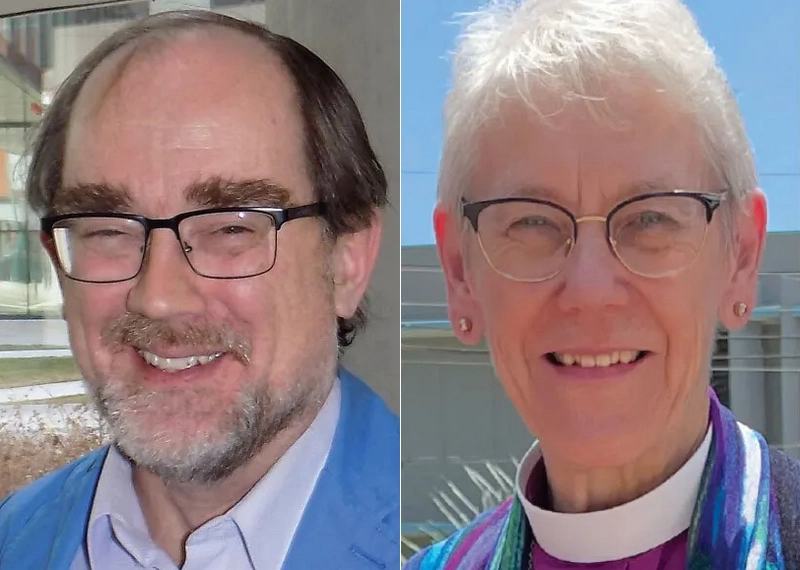
A document released by the Roman Catholic Church reconsidering its policy on blessings—including those to people in same-sex relationships—offers Anglicans a new way to think about divisions within their own communion, says the Rev. Iain Luke, principal of the Saskatoon-based College of Emmanuel and St. Chad and a member of the Anglican-Roman Catholic Dialogue in Canada.
The declaration Fiducia Supplicans, endorsed by Pope Francis on Dec. 18, lays out a shift in the Roman Catholic Church’s approach to blessings. It encourages clergy to offer blessings from the church to any who ask without first scrutinizing whether they are in compliance with the church’s doctrines or meet some moral standard.
… Read more » … lire la suite »
Posted: Feb. 7, 2024 • Permanent link: ecumenism.net/?p=14026
Categories: Anglican Journal • In this article: Anglican Church of Canada, Catholic, Dicastery for the Doctrine of the Faith, same-sex blessing
Transmis : 7 févr. 2024 • Lien permanente : ecumenism.net/?p=14026
Catégorie : Anglican Journal • Dans cet article : Anglican Church of Canada, Catholic, Dicastery for the Doctrine of the Faith, same-sex blessing

In what could prove to be a landmark case for religious and conscience rights in Canada, Montréal’s Archbishop Christian Lépine has taken on the Attorney General of Québec.
In an appeal for judicial review submitted to the Québec Superior Court on Feb. 5, Lépine asked for an immediate stay of the application of an amendment to the Act respecting End-of-Life Care that requires palliative care hospices to offer Medical Aid in Dying (MAID).
The June 2023 amendment specifies that “no palliative care hospice may exclude medical aid in dying from the care they offer.”
The palliative care centre that Lépine hopes to shield is the St. Raphael Palliative Care Home and Day Centre in Montréal, but the appeal raises larger questions of the future of the collaborative charitable work of faith communities unable to act according to their conscience.
… Read more » … lire la suite »
Posted: Feb. 6, 2024 • Permanent link: ecumenism.net/?p=14051
Categories: Catholic Register • In this article: palliative care, physician assisted suicide
Transmis : 6 févr. 2024 • Lien permanente : ecumenism.net/?p=14051
Catégorie : Catholic Register • Dans cet article : palliative care, physician assisted suicide
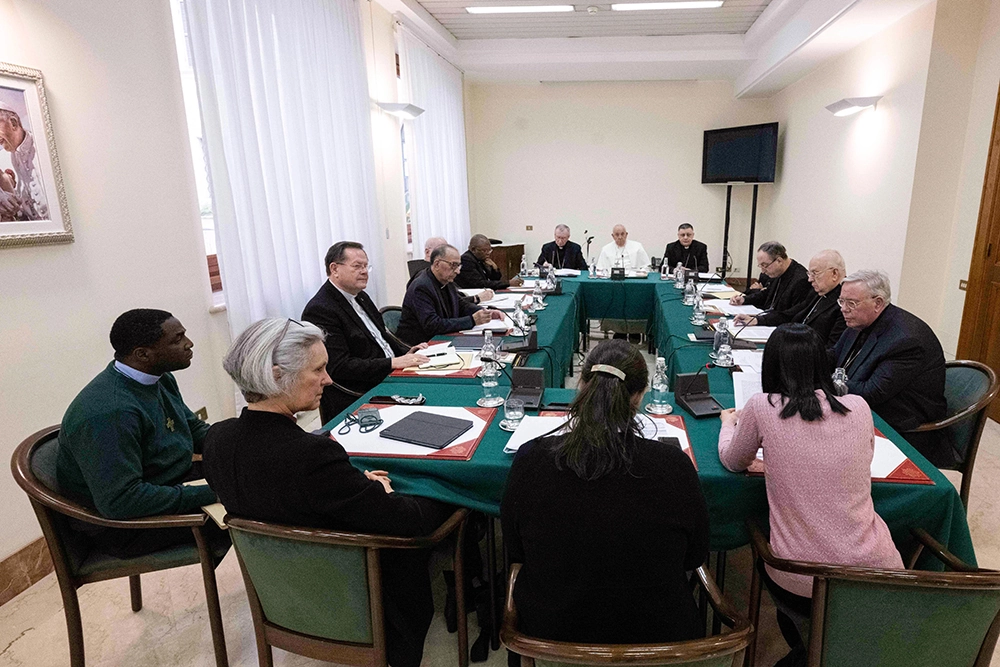
With the help of a woman Anglican bishop, a Salesian sister and a consecrated virgin, Pope Francis and his international Council of Cardinals devoted the first morning of their February meeting “to deepening their reflection, begun last December, on the role of women in the church,” the Vatican press office said.
Matteo Bruni, director of the Vatican press office, said Feb. 5 the pope and cardinals heard from Bishop Jo Bailey Wells, deputy secretary-general of the Anglican Communion; Salesian Sr. Linda Pocher, a professor of Christology and Mariology at Rome’s Pontifical Faculty of Educational Sciences “Auxilium,” and Giuliva Di Berardino, a consecrated virgin and liturgist from the Diocese of Verona, Italy.
… Read more » … lire la suite »
Posted: Feb. 6, 2024 • Permanent link: ecumenism.net/?p=14024
Categories: CNS • In this article: Pope Francis, women
Transmis : 6 févr. 2024 • Lien permanente : ecumenism.net/?p=14024
Catégorie : CNS • Dans cet article : Pope Francis, women
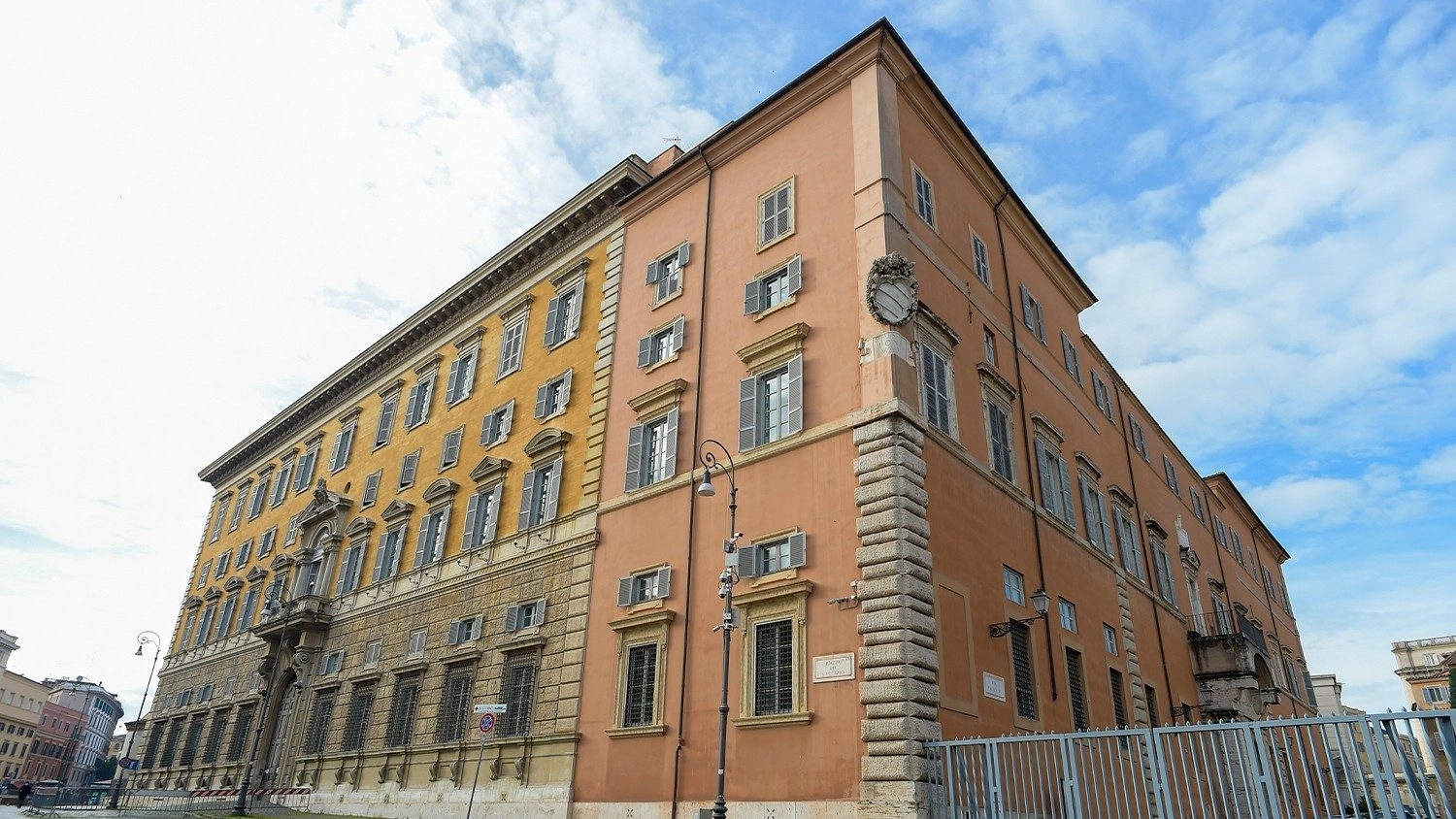
In the face of continued liturgical abuses, the Dicastery for the Doctrine of the Faith releases a doctrinal Note entitled “Gestis verbisque,” reiterating that the words and elements established in the essential rite of each Sacrament cannot be changed because such changes render the Sacrament invalid.
The Note from the Dicastery for the Doctrine of the Faith, entitled “Gestis verbisque,” was published on Saturday, February 3.
The Note was discussed and approved unanimously by the Cardinals and Bishops who are Members of the Dicastery and were present at the recent Plenary Assembly. Pope Francis then approved the text of the Note.
It reaffirms that the formulas and material elements established in the essential rite of each Sacrament cannot be changed at will in the name of creativity.
Doing so, in fact, renders the Sacrament itself invalid; therefore, it never existed and no Sacramental grace was conferred.
… Read more » … lire la suite »
Posted: Feb. 3, 2024 • Permanent link: ecumenism.net/?p=14020
Categories: Vatican News • In this article: Catholic, liturgy, sacraments, validity
Transmis : 3 févr. 2024 • Lien permanente : ecumenism.net/?p=14020
Catégorie : Vatican News • Dans cet article : Catholic, liturgy, sacraments, validity
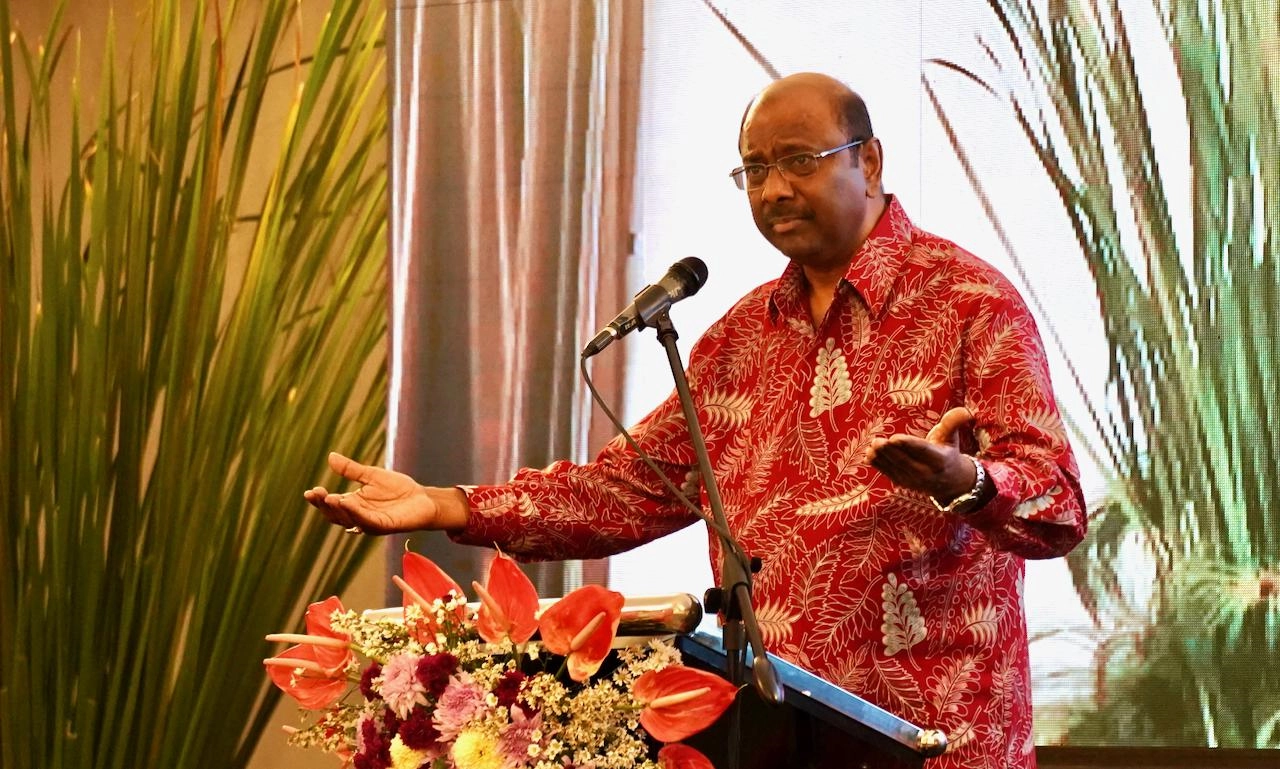
Speaking to the World Council of Churches (WCC) Commission on Faith and Order during the commission’s historic meeting in Indonesia, WCC general secretary Rev. Prof. Dr Jerry Pillay expressed gratitude for the commission’s work, and hope for the ecumenical journey in 2025.
“This marks a significant milestone in our journey, and I am filled with gratitude for the commitment and dedication each of you brings to the ecumenical table,” said Pillay. “The online interactions in the last months of last year, including the Faith and Order Commission and the Nicaea 2025 Steering Group Meetings, served as a testament to your resilience and adaptability.”
… Read more » … lire la suite »
Posted: Feb. 2, 2024 • Permanent link: ecumenism.net/?p=14061
Categories: WCC News • In this article: Jerry Pillay, Nicaea 2025, WCC Commission on Faith and Order
Transmis : 2 févr. 2024 • Lien permanente : ecumenism.net/?p=14061
Catégorie : WCC News • Dans cet article : Jerry Pillay, Nicaea 2025, WCC Commission on Faith and Order
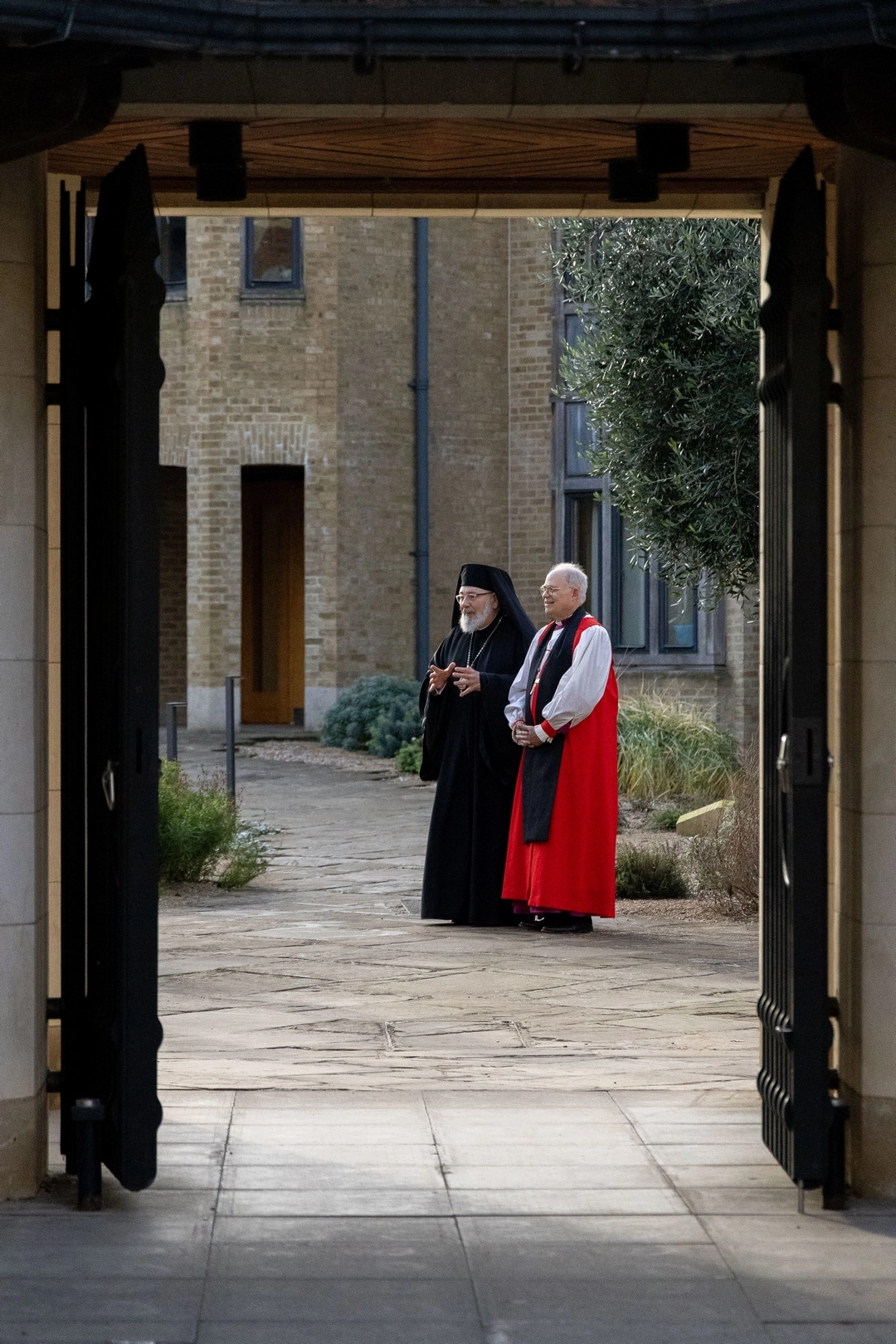
The Roman Catholic-Anglican dialogue is advancing on the path of reconciliation after four centuries of conflict and separation. This decades-long effort is now moving beyond theological dialogue at the international level to building a movement whose guiding principle is: “The Christian churches should do all things together except where deep differences require that we act separately.”
Canada’s Catholic archbishop of Regina, Don Bolen, and the Canadian British-born Anglican suffragan bishop in Europe, David Hamid, explained this to America at the Basilica of St. Bartholomew the Apostle, on Tiber Island in Rome, on Jan. 25.
The two bishops are the co-chairmen of the International Anglican-Roman Catholic Commission for Unity and Mission, which goes by the acronym IARCCUM. Composed entirely of bishops from both churches, the commission came into existence in 2001 and held a two-part summit in Rome and Canterbury during this year’s Week of Prayer for Christian Unity, Jan. 18-25. The summit brought together pairs of bishops from 27 countries, one from each Anglican province and one from the Catholic bishops’ conference in the same region.
… Read more » … lire la suite »
Posted: Feb. 2, 2024 • Permanent link: ecumenism.net/?p=14017
Categories: America Magazine • In this article: Anglican, Catholic, IARCCUM
Transmis : 2 févr. 2024 • Lien permanente : ecumenism.net/?p=14017
Catégorie : America Magazine • Dans cet article : Anglican, Catholic, IARCCUM
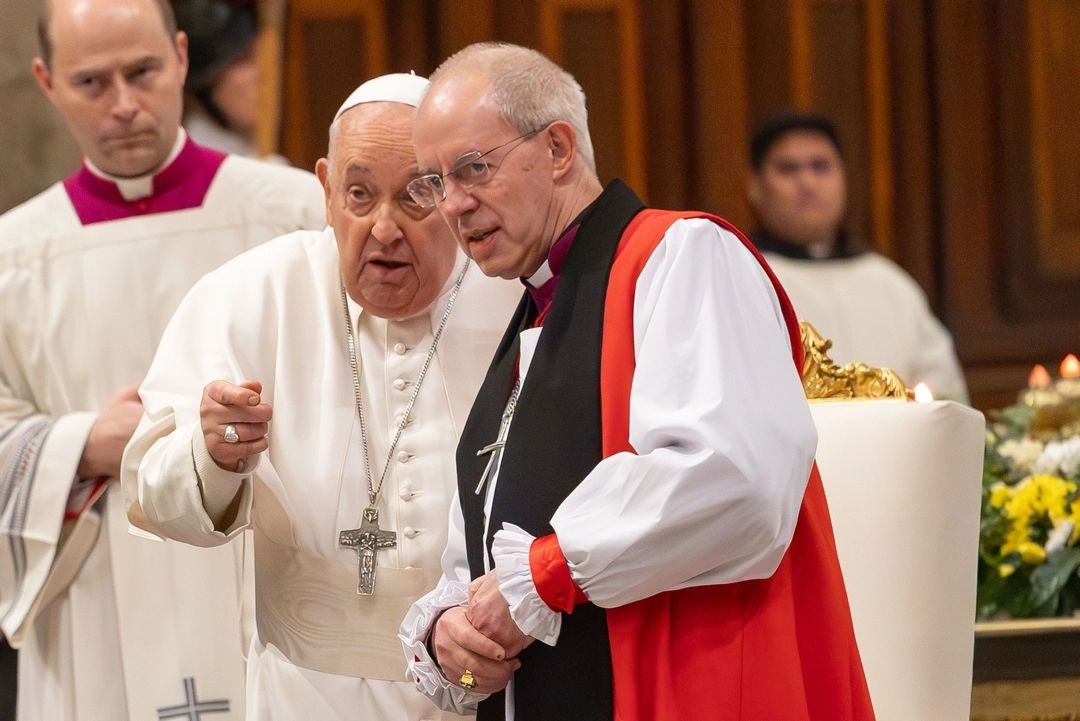
As Catholics and Anglicans pray and work for the day when they can celebrate the Eucharist together, they are called to support one another in situations of suffering, apologize together for times when they have sinned and work together to share the good news of God’s love, said bishops from both communities.
Pairs of Catholic and Anglican bishops from 27 nations traveled to Rome Jan. 22-25 and to Canterbury, England, Jan. 26-29 for prayer, discussion and a commissioning by Pope Francis and Anglican Archbishop Justin Welby of Canterbury.
The pilgrimage was organized by the International Anglican-Roman Catholic Commission for Unity and Mission, a body established in 2001 to promote common prayer and joint projects to demonstrate concretely how the theological agreements the churches have made also have practical implications in witnessing together to the Christian faith.
A final statement drafted by participants was posted Feb. 1 [at IARCCUM.org] and on the websites of the Anglican Communion and the Vatican Dicastery for Promoting Christian Unity.
… Read more » … lire la suite »
Posted: Feb. 2, 2024 • Permanent link: ecumenism.net/?p=14047
Categories: CNS • In this article: Anglican, bishops, Catholic, dialogue, IARCCUM, WPCU
Transmis : 2 févr. 2024 • Lien permanente : ecumenism.net/?p=14047
Catégorie : CNS • Dans cet article : Anglican, bishops, Catholic, dialogue, IARCCUM, WPCU
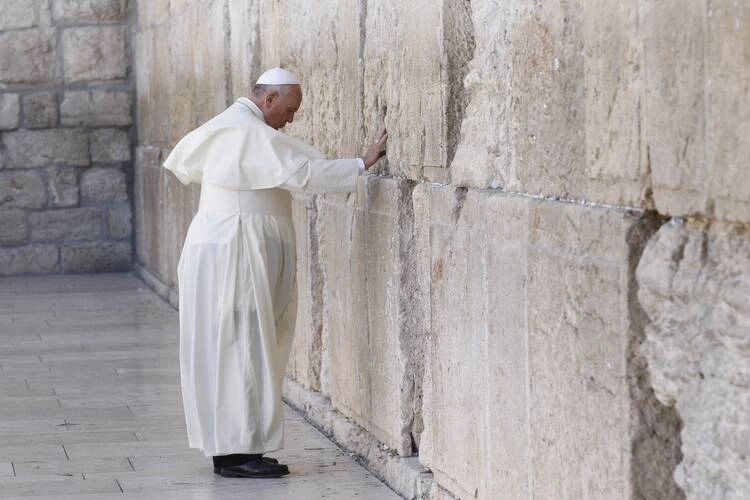
This letter was sent by Pope Francis on Feb. 2 to Karma Ben Johanan, who teaches at the department of comparative religion at the Hebrew University of Jerusalem. Dr. Ben Johanan was the coordinator of the open letter to the pope from more than 400 Jewish rabbis and scholars last November.
Dear brothers and sisters,
We are experiencing a moment of great travail. Wars and divisions are increasing all over the world. We are truly, as I said some time ago, in the midst of a sort of “piecemeal world war”, with serious consequences on the lives of many populations.
Unfortunately, even the Holy Land has not been spared this pain, and since October 7 it too has been cast into a spiral of unprecedented violence. My heart is torn at the sight of what is happening in the Holy Land, by the power of so much division and so much hatred.
… Read more » … lire la suite »
Posted: Feb. 2, 2024 • Permanent link: ecumenism.net/?p=14032
Categories: Documents, News • In this article: Holy Land, Israel, Judaism, Palestine, Pope Francis
Transmis : 2 févr. 2024 • Lien permanente : ecumenism.net/?p=14032
Catégorie : Documents, News • Dans cet article : Holy Land, Israel, Judaism, Palestine, Pope Francis
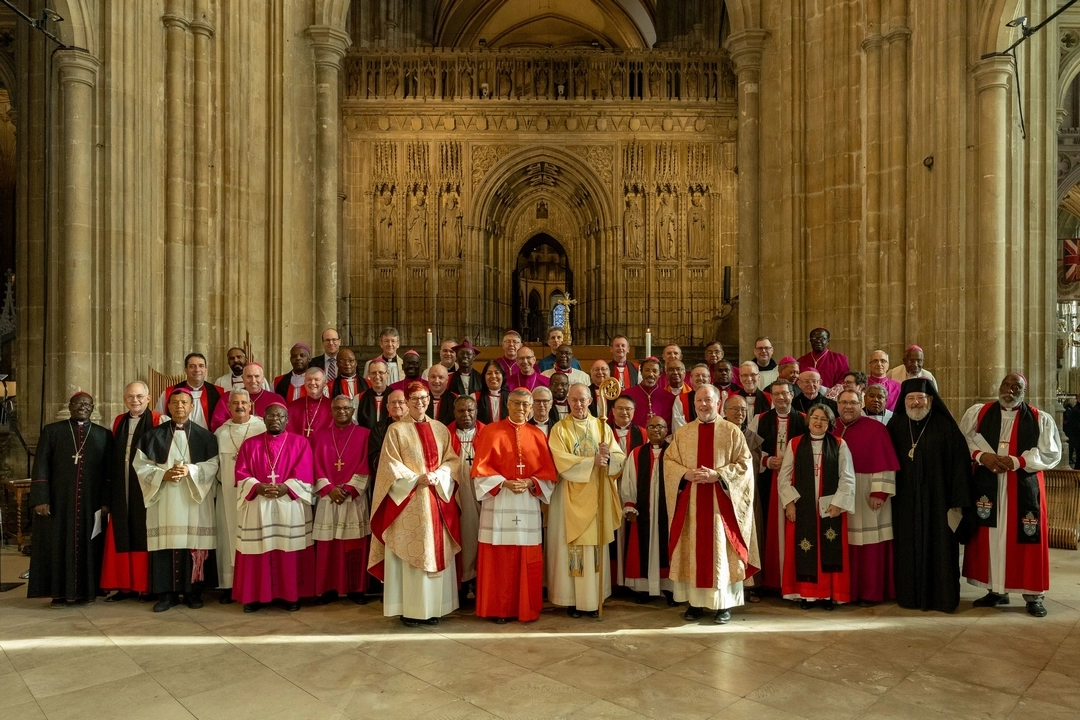
The bishops of the ‘Growing Together’ ecumenical summit have travelled from Rome to Canterbury for the second phase of their programme. The summit coincided with the Week of Prayer for Christian Unity and run from January 22-29.
Meeting in Anglican and Catholic bishop pairs, it has been a week seasoned with themes of friendship, conversation and journeying together.
The bishops have explored the importance of listening and learning from one another, celebrating what they have in common and how faith traditions can work together as partners in the gospel.
This sense of partnership was celebrated most significantly on January 25, when Pope Francis and the Archbishop of Canterbury commissioned the bishops in joint mission, during Vespers, at the conclusion of the Week of Prayer for Christian Unity, the church of Saint Paul Outside The Walls.
… Read more » … lire la suite »
Posted: Jan. 29, 2024 • Permanent link: ecumenism.net/?p=14014
Categories: ACNS • In this article: Anglican, Catholic, IARCCUM, WPCU
Transmis : 29 janv. 2024 • Lien permanente : ecumenism.net/?p=14014
Catégorie : ACNS • Dans cet article : Anglican, Catholic, IARCCUM, WPCU
Divided Christians will draw closer to one another only by loving God and loving their neighbours, serving one another and not pointing fingers in blame for past faults, Pope Francis said.
Closing the Week of Prayer for Christian Unity with an evening prayer service Jan. 25 at Rome’s Basilica of St. Paul Outside the Walls, Francis was joined by Anglican Archbishop Justin Welby of Canterbury and, at the end of the service, the two commissioned pairs of Anglican and Catholic bishops from 27 countries to “bear witness together to the hope that does not deceive and to the unity for which our Savior prayed.”
Members of the Joint International Commission for Theological Dialogue between the Catholic Church and the Oriental Orthodox Churches, who were meeting in Rome, also participated along with representatives of Orthodox, Protestant and Anglican communities in Italy.
In his homily, Francis reflected on the theme for the 2024 celebration of the week of prayer: “You shall love the Lord your God … and your neighbour as yourself” from Luke 10:27.
The passage comes from a Gospel story in which a scholar of the law asks Jesus what he must do to inherit eternal life. After Jesus affirms the need to love God and one’s neighbour, the scholar asks, “And who is my neighbour?”
… Read more » … lire la suite »
Posted: Jan. 26, 2024 • Permanent link: ecumenism.net/?p=14012
Categories: CNS • In this article: Justin Welby, Pope Francis, WPCU
Transmis : 26 janv. 2024 • Lien permanente : ecumenism.net/?p=14012
Catégorie : CNS • Dans cet article : Justin Welby, Pope Francis, WPCU
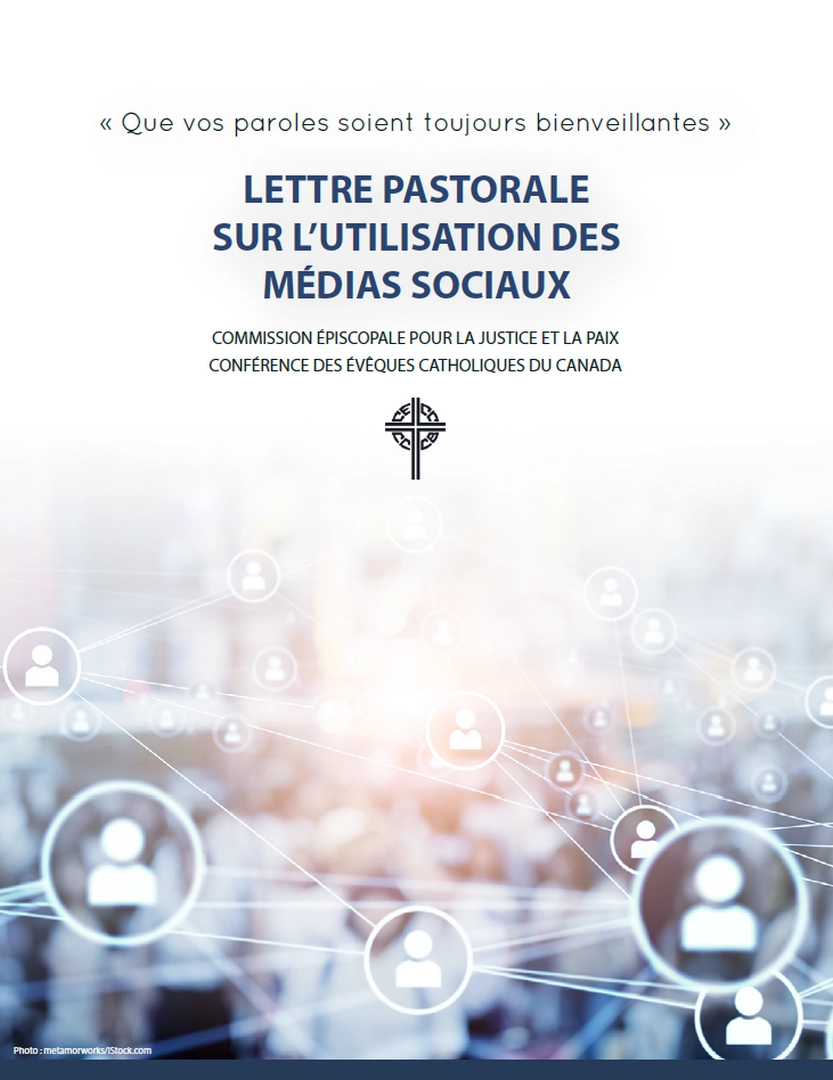
Aujourd’hui, en la mémoire liturgique de saint François de Sales, et avec l’approbation du Conseil permanent, la Commission épiscopale pour la justice et la paix de la Conférence des évêques catholiques du Canada (CECC) publie une lettre pastorale sur l’utilisation des médias sociaux intitulée : « Que vos paroles soient toujours bienveillantes ».
Reconnaissant le rôle prépondérant des médias sociaux au niveau individuel et sociétal, cette lettre pastorale opportune examine les avantages et les dangers des médias sociaux dans la perspective de l’enseignement social de l’Église catholique. Elle fournit des outils de réflexion morale et d’auto-examen, et propose sept engagements qui doivent guider une utilisation plus éthique des médias sociaux.
… Read more » … lire la suite »
Posted: Jan. 24, 2024 • Permanent link: ecumenism.net/?p=14066
Categories: News • In this article: CCCB, pastoral letters, social media
Transmis : 24 janv. 2024 • Lien permanente : ecumenism.net/?p=14066
Catégorie : News • Dans cet article : CCCB, pastoral letters, social media
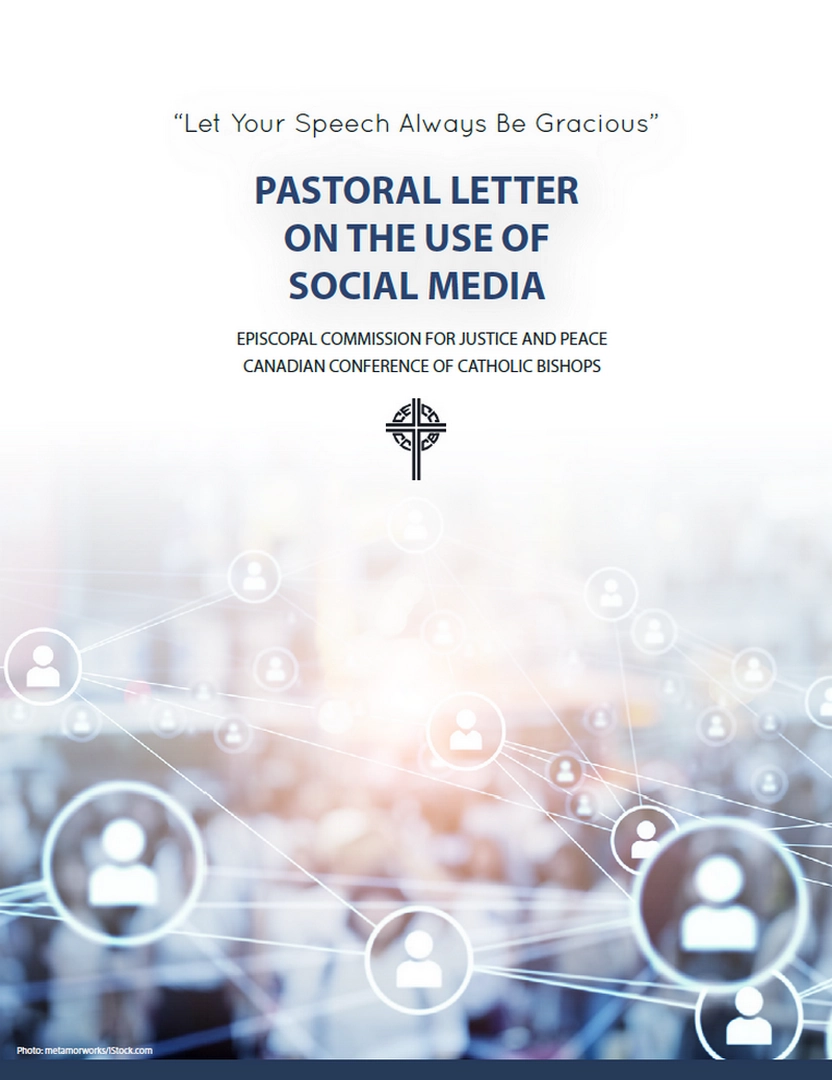
Today, on the liturgical memorial of Saint Francis de Sales, and with the approval of the Permanent Council, the Episcopal Commission for Justice and Peace of the Canadian Conference of Catholic Bishops (CCCB) releases its Pastoral Letter on the use of social media titled: “Let Your Speech Always Be Gracious.”
Acknowledging the prominent role social media has come to play at an individual and societal level, this timely Pastoral Letter considers the benefits and dangers of social media from the perspective of Catholic Social Teaching. It provides tools for moral reflection and self-examination, and suggests seven commitments by which to be guided for a more ethical use of social media.
… Read more » … lire la suite »
Posted: Jan. 24, 2024 • Permanent link: ecumenism.net/?p=14064
Categories: News • In this article: CCCB, pastoral letters, social media
Transmis : 24 janv. 2024 • Lien permanente : ecumenism.net/?p=14064
Catégorie : News • Dans cet article : CCCB, pastoral letters, social media
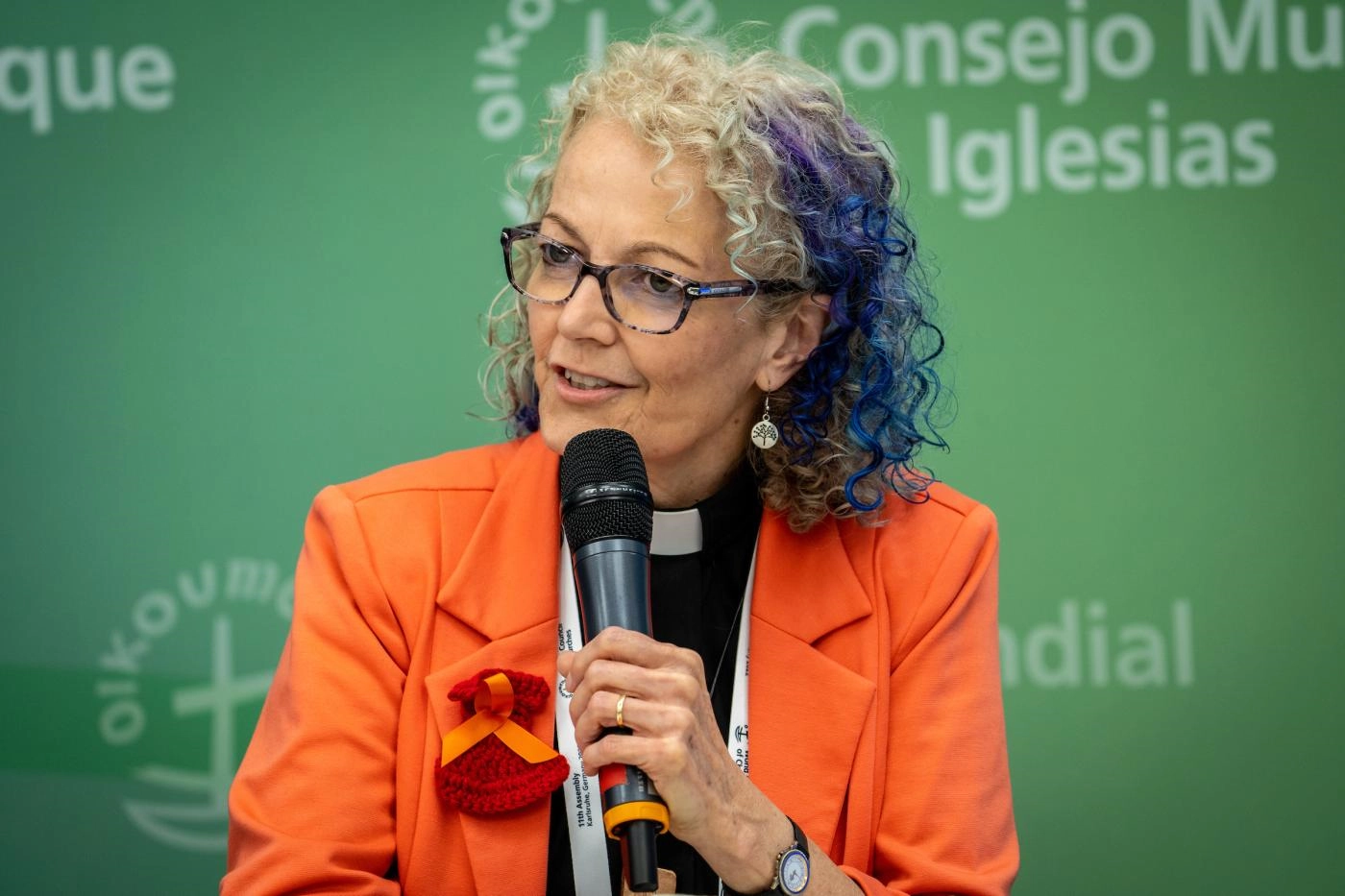
A World Council of Churches (WCC) conference in 2025 in Egypt is to gather major Christian traditions to explore how churches can call each other to visible unity, inspired by the experiences of the early church, according to one of the key planners of the event.
The gathering – the Sixth World Conference on Faith and Order – will mark the anniversary of the world’s first Ecumenical Council, the Council of Nicaea of 325, a key moment in the history of Christian faith.
In a WCC video interview, the Rev. Prof. Dr Sandra Beardsall, moderator of the Nicaea 2025 steering group of the WCC’s Commission on Faith and Order, reflects on the significance of the Council of Nicaea and the inspiration it provides for the World Conference.
“Nicaea was the very first Council that brought together Christians from all around the world to meet together, to make decisions,” says Beardsall in the interview with Dr Stephen Brown, editor of the WCC’s journal, The Ecumenical Review.
… Read more » … lire la suite »
Posted: Jan. 18, 2024 • Permanent link: ecumenism.net/?p=14054
Categories: WCC News • In this article: Nicaea 2025, WCC Commission on Faith and Order
Transmis : 18 janv. 2024 • Lien permanente : ecumenism.net/?p=14054
Catégorie : WCC News • Dans cet article : Nicaea 2025, WCC Commission on Faith and Order
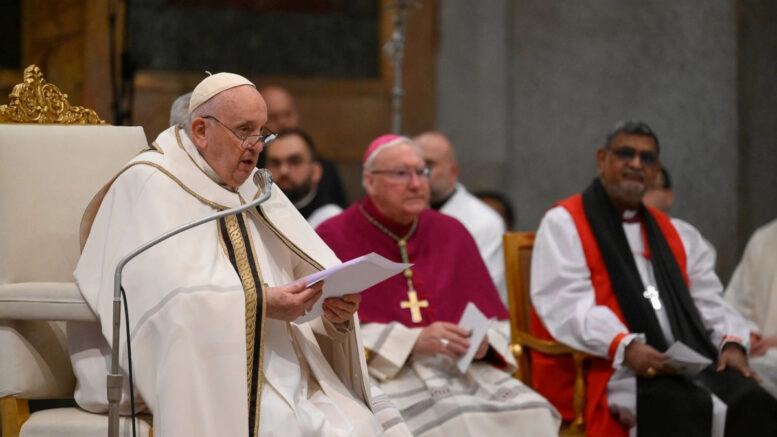
A major leap forward in Christian unity began with an embrace, as Pope Francis recalled.
St. Paul VI and Orthodox Ecumenical Patriarch Athenagoras I of Constantinople met, and embraced, in Jerusalem in January 1964 and the following year they lifted the mutual excommunications their churches had issued in 1054.
Pope Francis marked the anniversary during his Angelus address Jan. 6, 2024 telling a crowd in St. Peter’s Square that the two leaders had broken down “a wall of incommunicability that had kept Catholics and Orthodox apart for centuries. Let us learn from the embrace of those two great men of the church on the path to Christian unity: praying together, walking together, working together.”
The praying, walking and working will be highlighted Jan. 18-25 as Christians around the world celebrate the Week of Prayer for Christian Unity.
… Read more » … lire la suite »
Posted: Jan. 10, 2024 • Permanent link: ecumenism.net/?p=14009
Categories: CNS • In this article: Christian unity, Pope Francis, WPCU
Transmis : 10 janv. 2024 • Lien permanente : ecumenism.net/?p=14009
Catégorie : CNS • Dans cet article : Christian unity, Pope Francis, WPCU
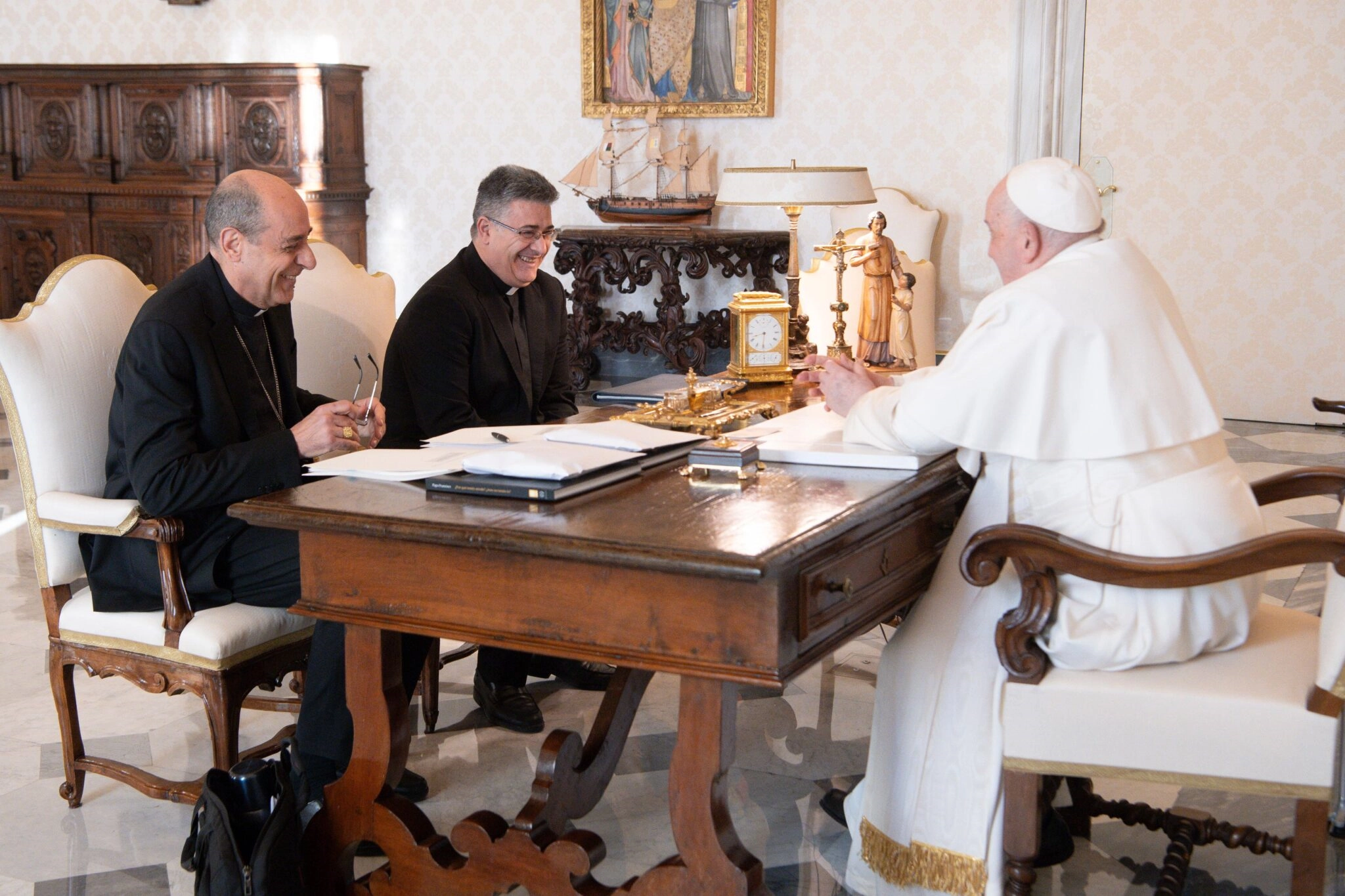
The Dicastery for the Doctrine of the Faith’s declaration on informally blessing same-sex couples or other non-married couples is a reminder that the Catholic Church and its pastors never close the door on people seeking God’s help, said a commentary published in Vatican media.
… Read more » … lire la suite »
Posted: Dec. 19, 2023 • Permanent link: ecumenism.net/?p=14005
Categories: CNS • In this article: Dicastery for the Doctrine of the Faith, same-sex blessing, Vatican
Transmis : 19 déc. 2023 • Lien permanente : ecumenism.net/?p=14005
Catégorie : CNS • Dans cet article : Dicastery for the Doctrine of the Faith, same-sex blessing, Vatican
We write as Jewish scholars, religious leaders, and long-time practitioners in Jewish-Christian dialogue, in Israel, America, and Europe, to remind our brothers and sisters in the Catholic Church of “the bond that spiritually ties the people of the New Covenant to Abraham’s stock” (Nostra Aetate #4) in a time of distress and anguish for Jews all over the world.
… Read more » … lire la suite »
Posted: Nov. 12, 2023 • Permanent link: ecumenism.net/?p=14033
Categories: Documents, News • In this article: Holy Land, Israel, Judaism, Palestine, Pope Francis
Transmis : 12 nov. 2023 • Lien permanente : ecumenism.net/?p=14033
Catégorie : Documents, News • Dans cet article : Holy Land, Israel, Judaism, Palestine, Pope Francis
Members of the CWL across the country have identified ecumenical and interfaith cooperation as a priority as we move the League into the future within our church and country. To that end, the Faith Organizations working group was created to identify organizations with whom we can partner. This video highlights some of the reasons why we engage in these activities, which flow from our baptism and our call to be disciples of Jesus, bringing his Good News to our world.
… Read more » … lire la suite »
Posted: Oct. 19, 2023 • Permanent link: ecumenism.net/?p=13988
Categories: News, Resources • In this article: Catholic, ecumenism, women
Transmis : 19 oct. 2023 • Lien permanente : ecumenism.net/?p=13988
Catégorie : News, Resources • Dans cet article : Catholic, ecumenism, women

Pope Francis has published an Apostolic Exhortation building on his 2015 encyclical. We’re not reacting enough, he says, we’re close to breaking point. He criticises climate change deniers, saying that the human origin of global warming is now beyond doubt. And he describes how care for our common home flows from the Christian faith.
“’Praise God’ is the title of this letter. For when human beings claim to take God’s place, they become their own worst enemies.”
That’s how Pope Francis ends his new Apostolic Exhortation, published on the 4th October, the Feast of St Francis of Assisi.
… Read more » … lire la suite »
Posted: Oct. 4, 2023 • Permanent link: ecumenism.net/?p=13927
Categories: Documents, Vatican News • In this article: climate change, creation, ecology, environment, Laudate Deum, Laudato Si', Pope Francis
Transmis : 4 oct. 2023 • Lien permanente : ecumenism.net/?p=13927
Catégorie : Documents, Vatican News • Dans cet article : climate change, creation, ecology, environment, Laudate Deum, Laudato Si', Pope Francis
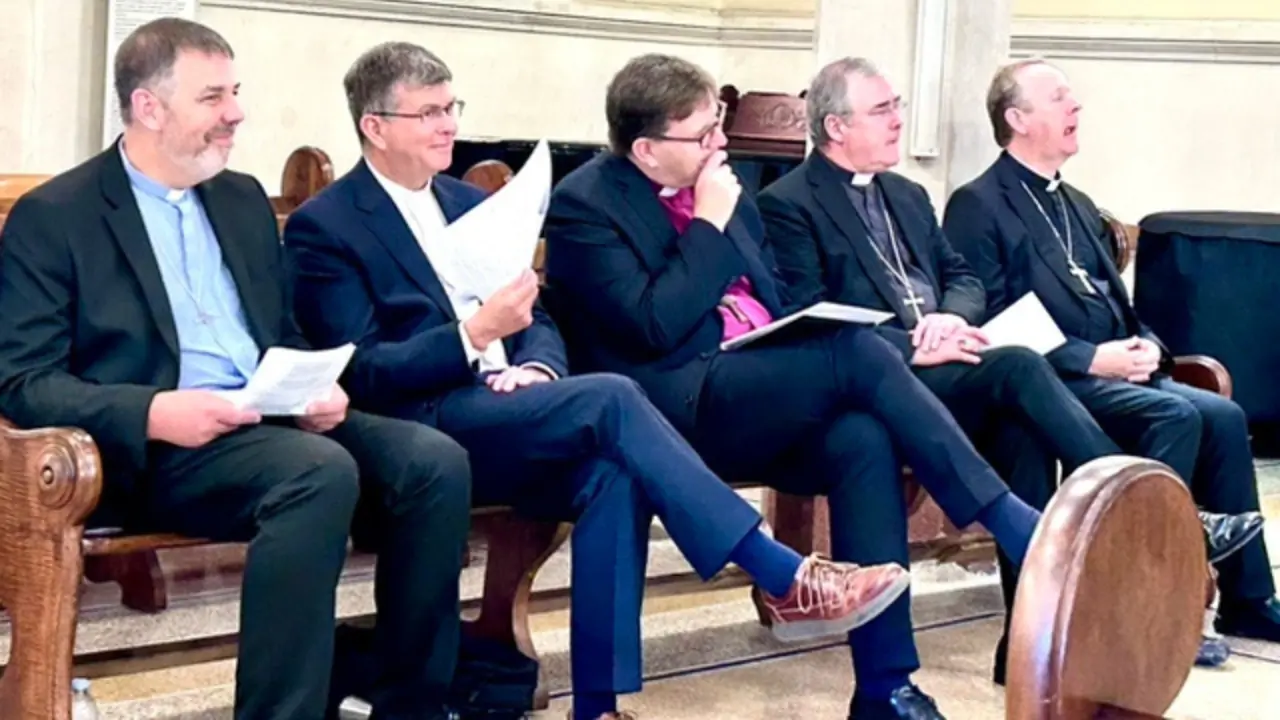
Church leaders from Ireland have gathered in Rome to mark the 25th anniversary of the Good Friday Agreement.
In a joint statement, the Irish and British Ambassadors to the Holy See, Frances Collins and Chris Tott, said that they were delighted to welcome the leaders from several denominations.
“For decades, the Churches have played an important role in supporting peace and reconciliation,” they said, expressing hope that visit would “serve to inspire other church and faith-based leaders as they work to support peace and reconciliation around the world.”
… Read more » … lire la suite »
Posted: Sept. 29, 2023 • Permanent link: ecumenism.net/?p=13978
Categories: News • In this article: Northern Ireland, peace
Transmis : 29 sept. 2023 • Lien permanente : ecumenism.net/?p=13978
Catégorie : News • Dans cet article : Northern Ireland, peace
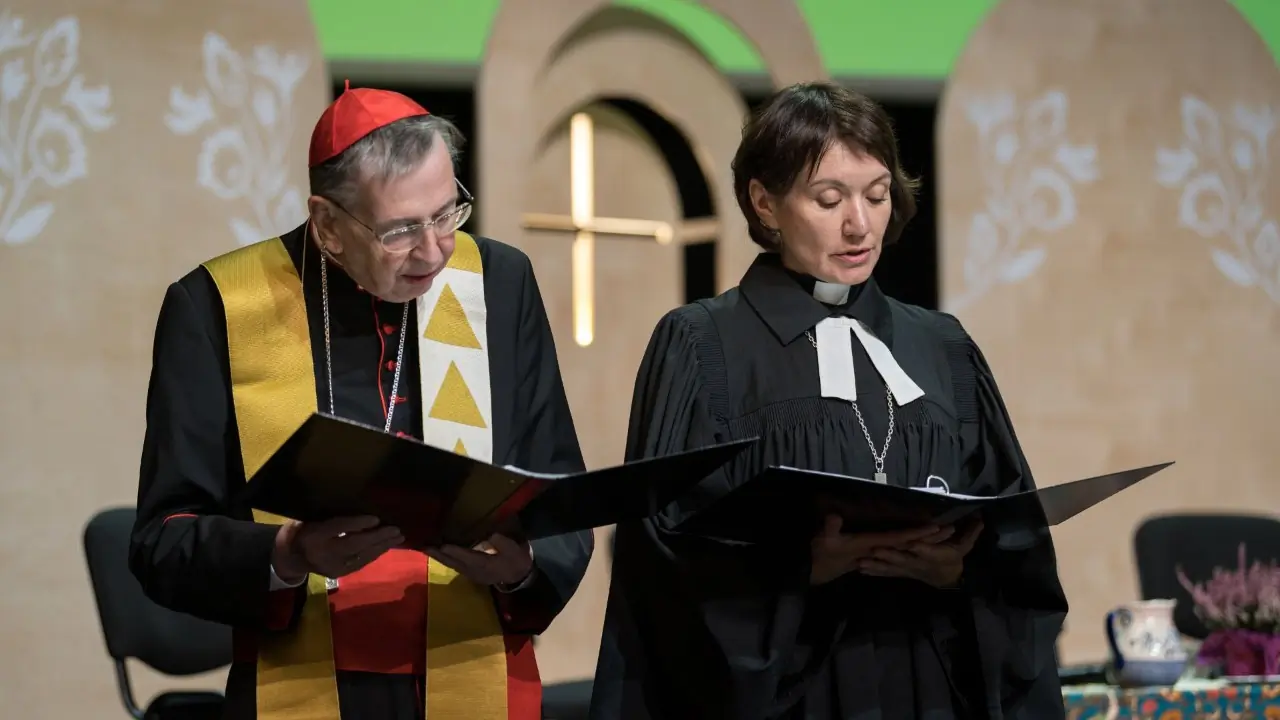
On 19 September 2023, the last day of the Thirteenth Assembly of the Lutheran World Federation (LWF) in Krakow, Poland, Cardinal Kurt Koch, Prefect of the Dicastery for Promoting Christian Unity (DPCU), and Revd Dr Anne Burghardt, General Secretary of the LWF, presented a “Common Word” [English and German] during an ecumenical prayer and baptismal commemoration.
… Read more » … lire la suite »
Posted: Sept. 21, 2023 • Permanent link: ecumenism.net/?p=13999
Categories: Documents, News • In this article: Anne Burghardt, dialogue, Dicastery for Promoting Christian Unity, document, ecumenism, Kurt Koch, Lutheran World Federation
Transmis : 21 sept. 2023 • Lien permanente : ecumenism.net/?p=13999
Catégorie : Documents, News • Dans cet article : Anne Burghardt, dialogue, Dicastery for Promoting Christian Unity, document, ecumenism, Kurt Koch, Lutheran World Federation
During an ecumenical prayer service at the assembly of the Lutheran World Federation, the Vatican’s chief ecumenist and the federation’s general secretary formally called for a joint reflection on the Augsburg Confession, a fundamental statement of Lutheran faith.
… Read more » … lire la suite »
Posted: Sept. 20, 2023 • Permanent link: ecumenism.net/?p=13976
Categories: CNS, Dialogue, Documents • In this article: Augsburg Confession, Dicastery for Promoting Christian Unity, Lutheran World Federation
Transmis : 20 sept. 2023 • Lien permanente : ecumenism.net/?p=13976
Catégorie : CNS, Dialogue, Documents • Dans cet article : Augsburg Confession, Dicastery for Promoting Christian Unity, Lutheran World Federation
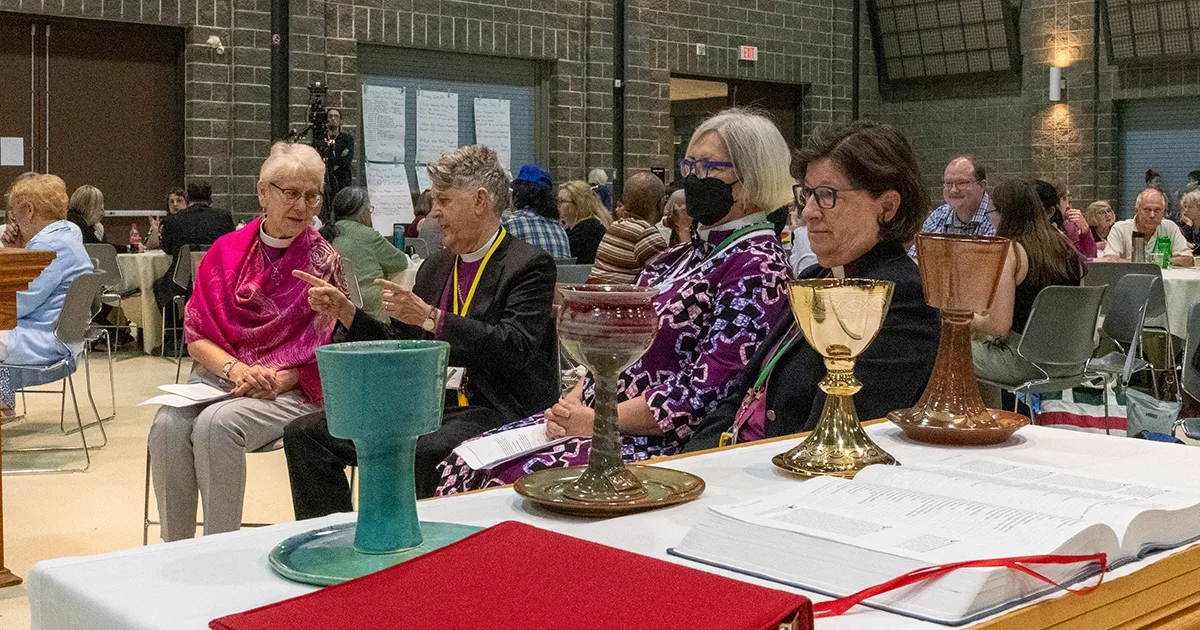
Ecumenism and the search for Christian unity are no mere niche interest, the Anglican Church of Canada’s lead animator for ecumenical and interfaith relations Canon Scott Sharman says, but rather “an essential part of being a disciple of Jesus today”—and ecumenical agreements between churches in countries like Canada may soon become more common.
… Read more » … lire la suite »
Posted: Aug. 31, 2023 • Permanent link: ecumenism.net/?p=13982
Categories: Anglican Journal • In this article: Anglican, ecumenism
Transmis : 31 aoüt 2023 • Lien permanente : ecumenism.net/?p=13982
Catégorie : Anglican Journal • Dans cet article : Anglican, ecumenism
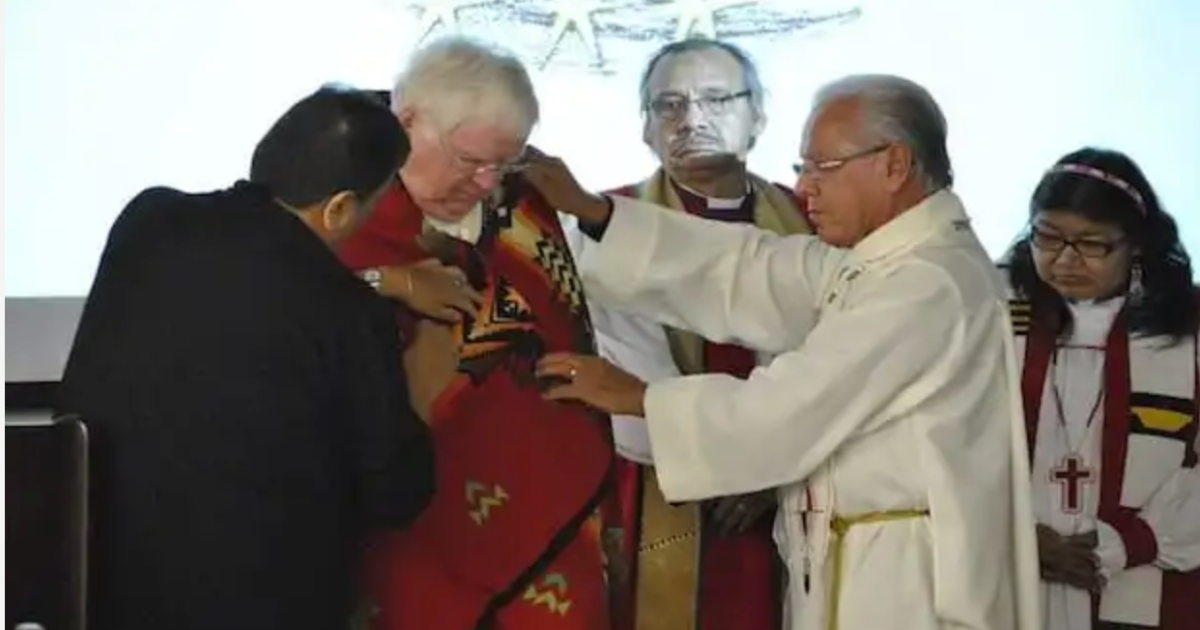
On Sunday, August 6, we in the Anglican Church of Canada will pause to acknowledge the 30th anniversary of the Apology offered by Archbishop and Primate Michael Geoffrey Peers. This moment is more pronounced, in light of his death on July 27.
I humbly ask that the moments we take on Sunday and throughout the week should also reflect a thanksgiving for the ministry of Archbishop Peers. He prayerfully stepped into that historic moment and stood before the people, apologizing for a wrong done and for trauma committed by our church. The willingness of the church to participate in the residential school experience has resulted in a legacy of trauma that’s been handed down and is lived daily by Indigenous survivors and their families.
… Read more » … lire la suite »
Posted: Aug. 2, 2023 • Permanent link: ecumenism.net/?p=13920
Categories: News, Opinion • In this article: Anglican Church of Canada, apologies, Chris Harper, Indigenous peoples, Reconciliation
Transmis : 2 aoüt 2023 • Lien permanente : ecumenism.net/?p=13920
Catégorie : News, Opinion • Dans cet article : Anglican Church of Canada, apologies, Chris Harper, Indigenous peoples, Reconciliation
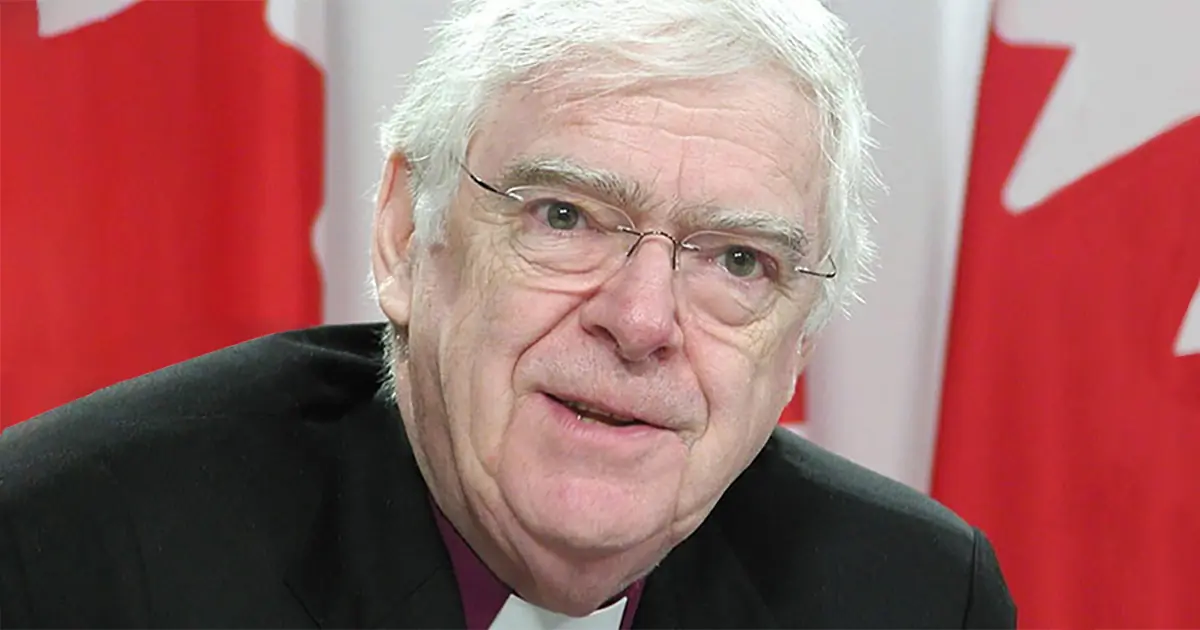
Late last week we learned of the death of Archbishop Michael Peers, Primate of the Anglican Church of Canada from 1986 to 2004. Our deepest condolences are extended to his wife, Dorothy, and his extended family.
Although +Michael retired as primate nearly twenty years ago, the legacy of his leadership continues in so many aspects of our life as a church. He often told the story of how he came to be a member of the church as a non-church attending young adult through the simple invitation of someone else. ‘Come and see’ was the invitation that brought him into the doors where he found, in faith, what he was seeking. He reminded us not to underestimate the power of invitation!
… Read more » … lire la suite »
Posted: Aug. 1, 2023 • Permanent link: ecumenism.net/?p=13922
Categories: Memorials, News • In this article: Anglican Church of Canada, Linda Nicholls, Michael Peers
Transmis : 1 aoüt 2023 • Lien permanente : ecumenism.net/?p=13922
Catégorie : Memorials, News • Dans cet article : Anglican Church of Canada, Linda Nicholls, Michael Peers

After nearly two years of parish listening sessions and consultations at the regional, national and continental levels, theologian Catherine Clifford said she thinks Catholics the world over are beginning to understand synodality.
“This is like a long kind of apprenticeship,” said Clifford, who teaches systematic and historical theology at St. Paul University in Ottawa, Canada.
Clifford is one of 10 non-bishop delegates from North America who will participate as members at the Oct. 4-29 Synod of Bishops on synodality in Rome. On July 7, the Vatican announced the full list of synod participants.
… Read more » … lire la suite »
Posted: July 13, 2023 • Permanent link: ecumenism.net/?p=13918
Categories: NCR • In this article: Catherine Clifford, lay ministry, lay participation, synodality
Transmis : 13 juil. 2023 • Lien permanente : ecumenism.net/?p=13918
Catégorie : NCR • Dans cet article : Catherine Clifford, lay ministry, lay participation, synodality
The Canadian Conference of Catholic Bishops (CCCB) and the U.S. Conference of Catholic Bishops (USCCB) welcomed the news from the Holy See’s General Secretariat of the Synod of the delegates appointed for the XVI Ordinary General Assembly of the Synod of Bishops to be held this October. The two episcopal conferences serve as the coordinating entities for the North American region for the Synod, which is themed, For a Synodal Church: Communion, Participation, and Mission. The first session of the Synod will be held at the Vatican on 4-29 October 2023, and the second session is scheduled to be held in October 2024.
… Read more » … lire la suite »
Posted: July 7, 2023 • Permanent link: ecumenism.net/?p=13911
Categories: News • In this article: CCCB, synodality, USCCB
Transmis : 7 juil. 2023 • Lien permanente : ecumenism.net/?p=13911
Catégorie : News • Dans cet article : CCCB, synodality, USCCB
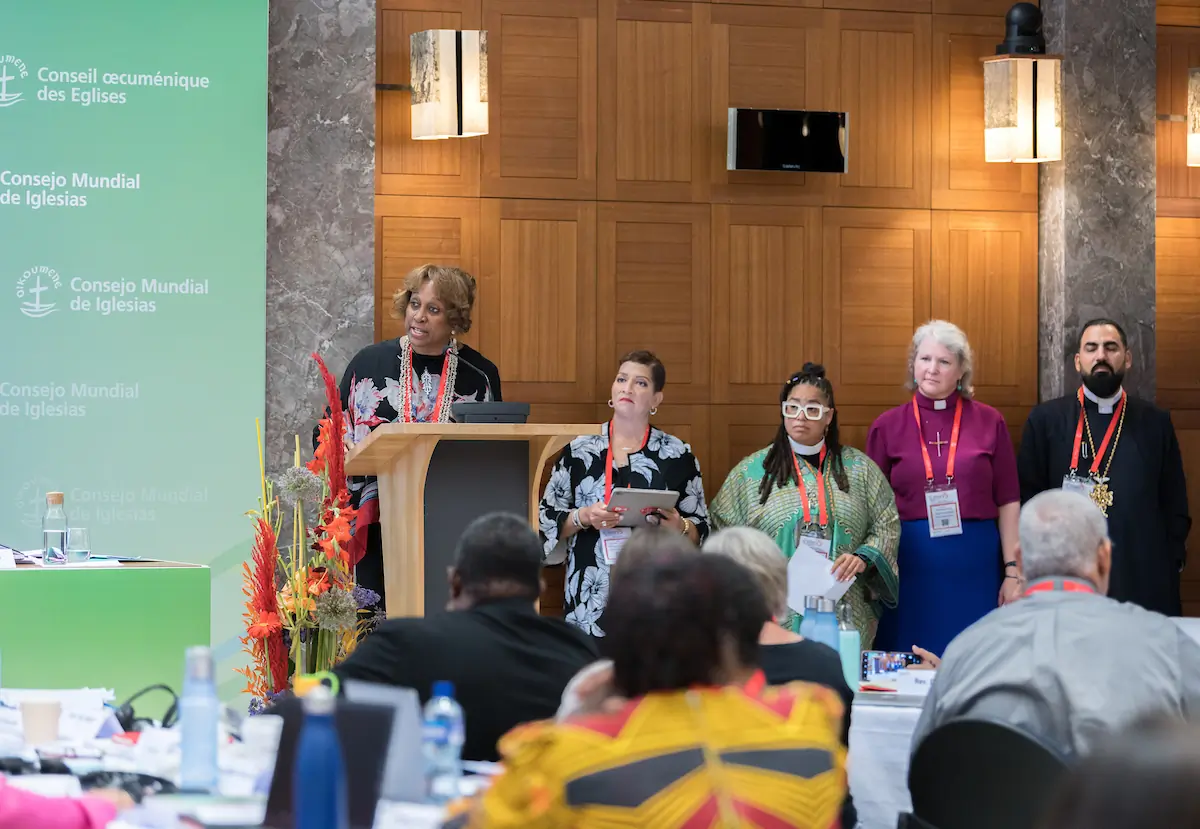
Racism has been identified as one of the most significant challenges facing the North American region in the United States and Canada, a World Council of Churches (WCC) meeting has heard. Members of the North American region of the WCC’s Central Committee, its highest governing body between Assemblies, met during its 21-27 June meeting in Geneva.
“North America or Turtle Island, which is the Indigenous name for North America, is one of three continents that make up ‘The New World.’ The continent was new to 15th-century European explorers but old to the Indigenous peoples already living there,” said Rev. Dr Angelique Walker-Smith, WCC president from North America.
… Read more » … lire la suite »
Posted: July 6, 2023 • Permanent link: ecumenism.net/?p=13909
Categories: WCC News • In this article: Indigenous peoples, racism, WCC Central Committee
Transmis : 6 juil. 2023 • Lien permanente : ecumenism.net/?p=13909
Catégorie : WCC News • Dans cet article : Indigenous peoples, racism, WCC Central Committee
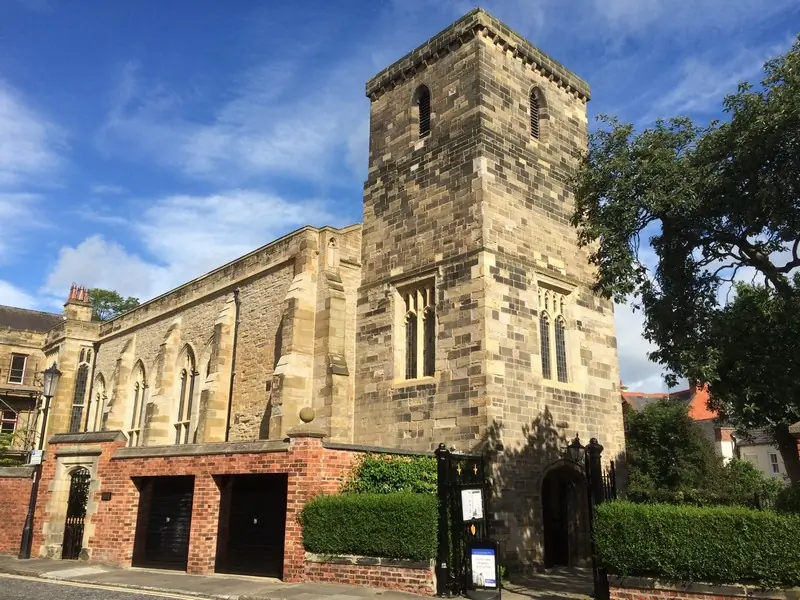
In recent years, the movement towards Christian unity, which had quickened after the Second Vatican Council, seemed to have become mired in a quagmire of insurmountable difficulties. The synodal process launched by Pope Francis has changed all that. The extraordinary synodal journey is not one that the Catholic Church is embarking on alone. The recently published Instrumentum Laboris – working document – for the forthcoming October assembly in Rome devotes a whole section to Christian unity and how the Catholic Church can learn from other traditions. This was the theme of a recent meeting that brought Church leaders and theologians from the Catholic Church and six other Christian denominations to Durham, in the northeast of England.
… Read more » … lire la suite »
Posted: July 6, 2023 • Permanent link: ecumenism.net/?p=13732
Categories: Tablet • In this article: receptive ecumenism, synodality
Transmis : 6 juil. 2023 • Lien permanente : ecumenism.net/?p=13732
Catégorie : Tablet • Dans cet article : receptive ecumenism, synodality
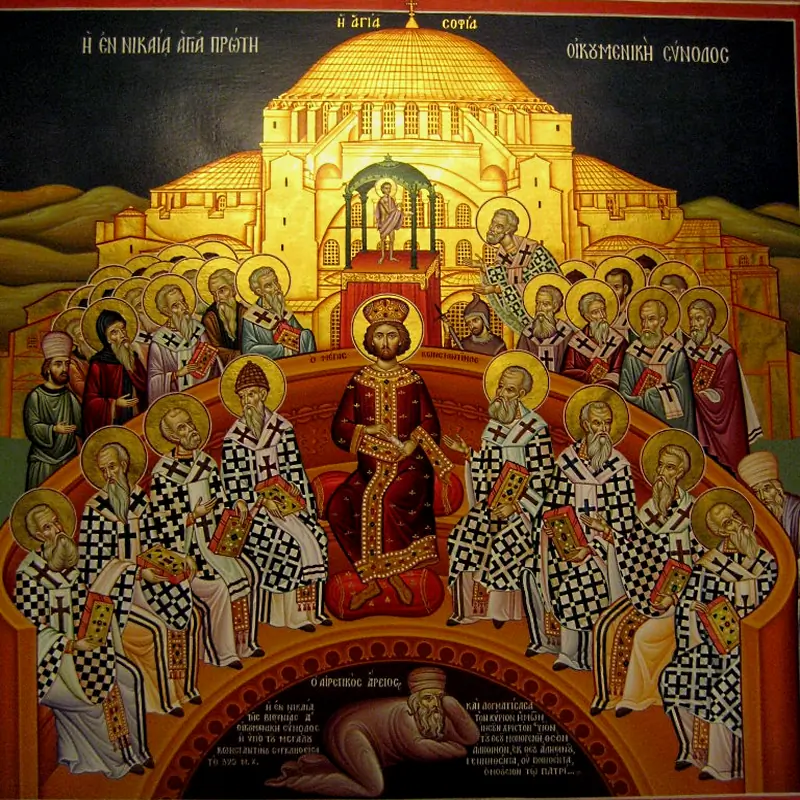
The World Council of Churches (WCC) is planning a year of activities in 2025 to mark the 1,700th anniversary of the first Ecumenical Council at Nicaea in 325, a key moment in the history of Christian faith and for the ecumenical journey today.
“The anniversary offers an opportunity to celebrate and reflect on the outpouring mission of God’s triune love and the implications this has for the common witness and service of the churches, it gives us the opportunity to ask afresh with others what Nicaea means for us today.” said WCC general secretary Rev. Prof. Dr Jerry Pillay.
The first Ecumenical Council was a gathering of Christian bishops in Nicaea, now İznik in present-day Türkiye, as the first attempt to reach consensus in the church through an assembly representing all of Christendom.
“Then, as now, the call to unity was heard within the context of a troubled, unequal, and divided world,” recalled Pillay.
… Read more » … lire la suite »
Posted: July 6, 2023 • Permanent link: ecumenism.net/?p=13737
Categories: WCC News • In this article: 1700th anniversary, Nicaea, WCC, WCC Commission on Faith and Order
Transmis : 6 juil. 2023 • Lien permanente : ecumenism.net/?p=13737
Catégorie : WCC News • Dans cet article : 1700th anniversary, Nicaea, WCC, WCC Commission on Faith and Order
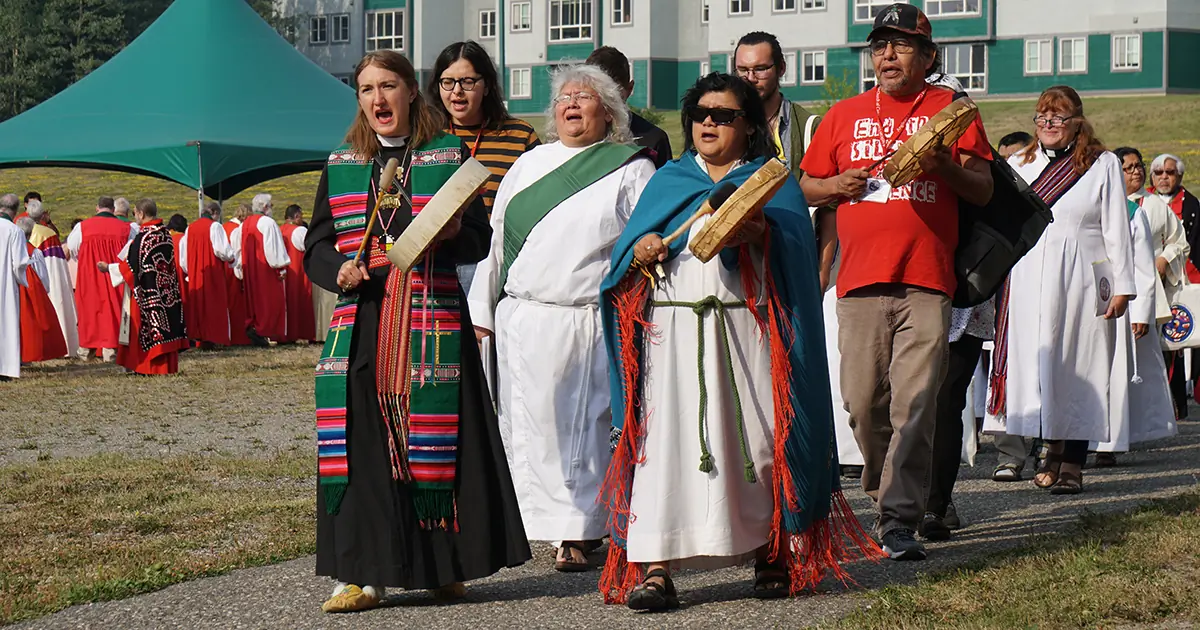
The Sacred Circle is a gathering of Indigenous Anglicans in Canada. This year, it took place between May 29th and June 2nd, and its journey of understanding and reconciliation has much to teach the Church’s understanding of God, spirituality, and the relationships between Indigenous and non-Indigenous communities. The gathering took place around a fire.
… Read more » … lire la suite »
Posted: July 4, 2023 • Permanent link: ecumenism.net/?p=13925
Categories: News, Opinion • In this article: Anglican Church of Canada, Anglican Communion, Indigenous church, Sacred Circle
Transmis : 4 juil. 2023 • Lien permanente : ecumenism.net/?p=13925
Catégorie : News, Opinion • Dans cet article : Anglican Church of Canada, Anglican Communion, Indigenous church, Sacred Circle
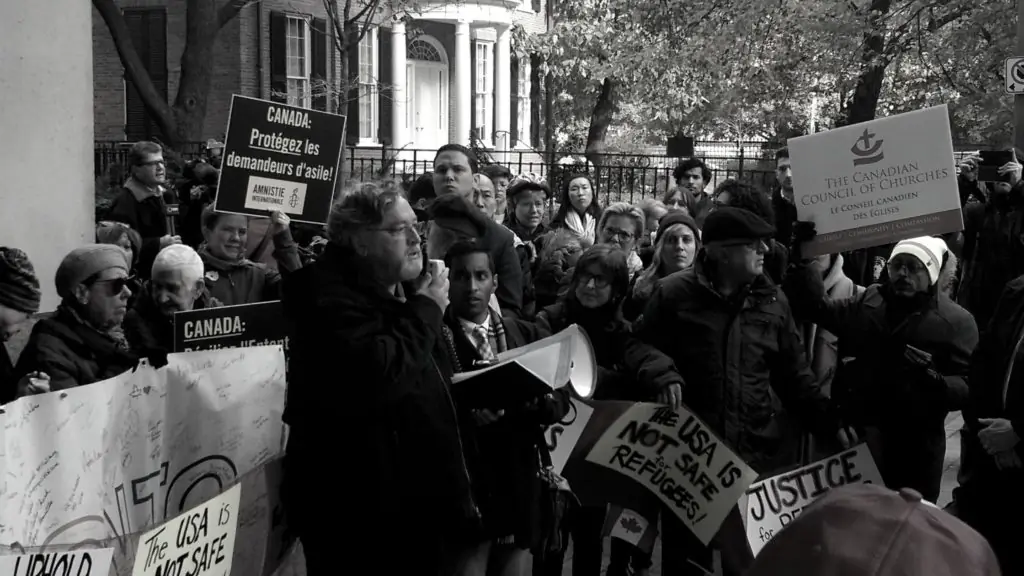
The Supreme Court of Canada’s decision today on the Safe Third Country Agreement (STCA) is a complex result that ultimately fails refugees. The Supreme Court has allowed the appeal in part, sending the equality rights issue at stake back to the Federal Court, and holding out for the possibility of the agreement being declared unconstitutional. But the Canadian Council for Refugees, Amnesty International Canada, and the Canadian Council of Churches are disappointed that the Supreme Court of Canada failed to decisively rule that the Safe Third Country Agreement violates refugees’ rights, exposing refugee claimants to further harms while awaiting another legal challenge.
… Read more » … lire la suite »
Posted: June 16, 2023 • Permanent link: ecumenism.net/?p=13722
Categories: News • In this article: Canadian Council of Churches, refugees, safe third-country agreement
Transmis : 16 juin 2023 • Lien permanente : ecumenism.net/?p=13722
Catégorie : News • Dans cet article : Canadian Council of Churches, refugees, safe third-country agreement
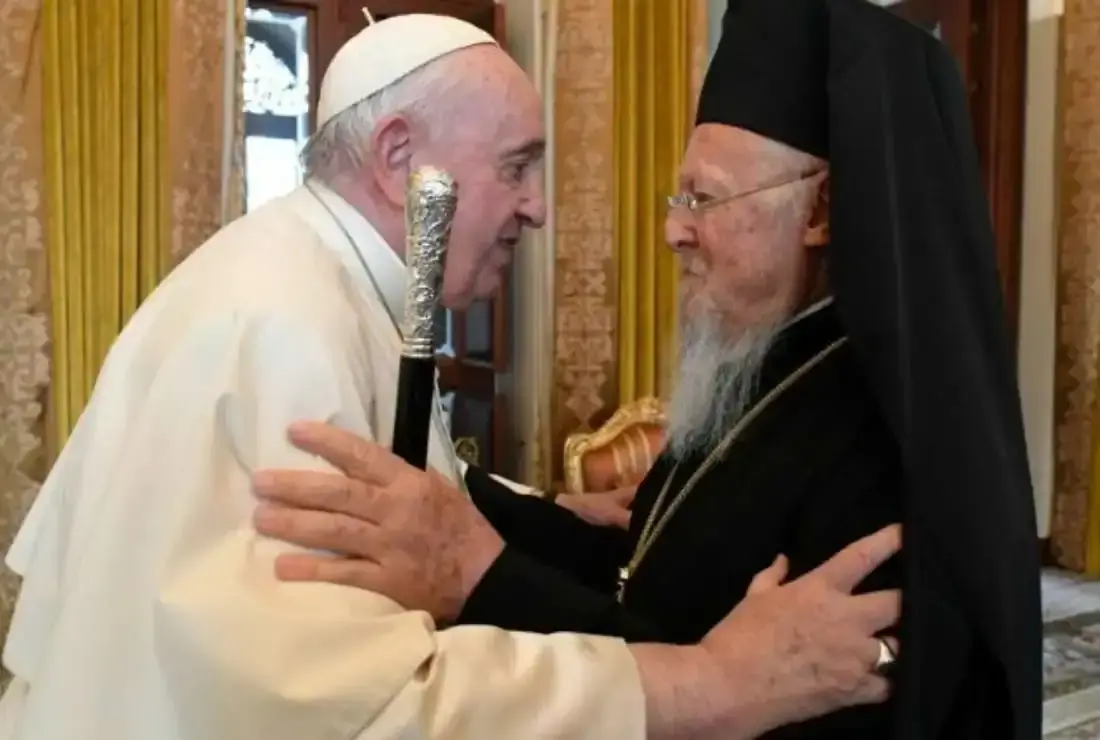
Catholic-Orthodox relations took a step forward this month with the publication of the first joint statement in seven years.
The document said Pope Francis’ hope for a synodal Church promotes “a more effective synodality,” which could eventually bring the Catholic and Orthodox Churches closer together on the issue.
… Read more » … lire la suite »
Posted: June 14, 2023 • Permanent link: ecumenism.net/?p=13719
Categories: CNA • In this article: Catholic, dialogue, Orthodox, synodality
Transmis : 14 juin 2023 • Lien permanente : ecumenism.net/?p=13719
Catégorie : CNA • Dans cet article : Catholic, dialogue, Orthodox, synodality
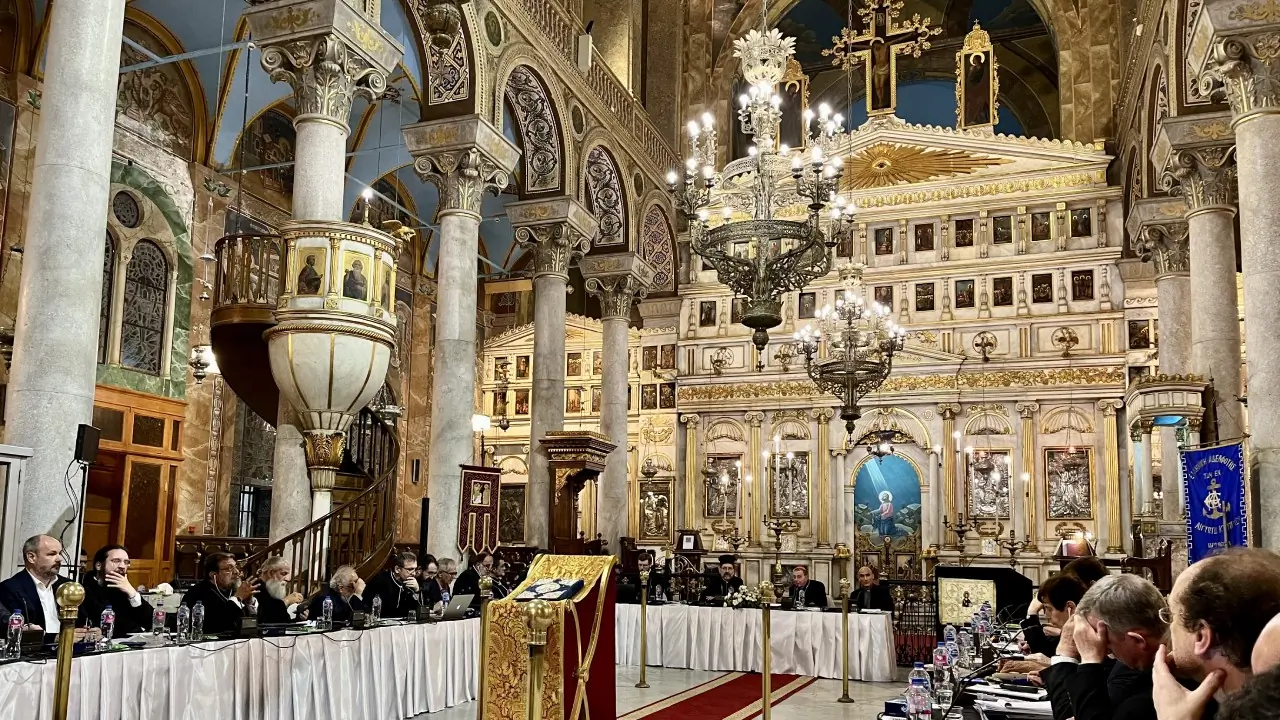
The Joint International Commission for Theological Dialogue between the Roman Catholic Church and the Orthodox Church held its fifteenth plenary session from 1-7 June 2023 in Alexandria, Egypt, hosted by the Greek-Orthodox Patriarchate of Alexandria and All Africa.
… Read more » … lire la suite »
Posted: June 7, 2023 • Permanent link: ecumenism.net/?p=13725
Categories: Communiqué, Dialogue, News • In this article: dialogue, Dicastery for Promoting Christian Unity, Ecumenical Patriarch of Constantinople, Orthodox, primacy, synodality
Transmis : 7 juin 2023 • Lien permanente : ecumenism.net/?p=13725
Catégorie : Communiqué, Dialogue, News • Dans cet article : dialogue, Dicastery for Promoting Christian Unity, Ecumenical Patriarch of Constantinople, Orthodox, primacy, synodality
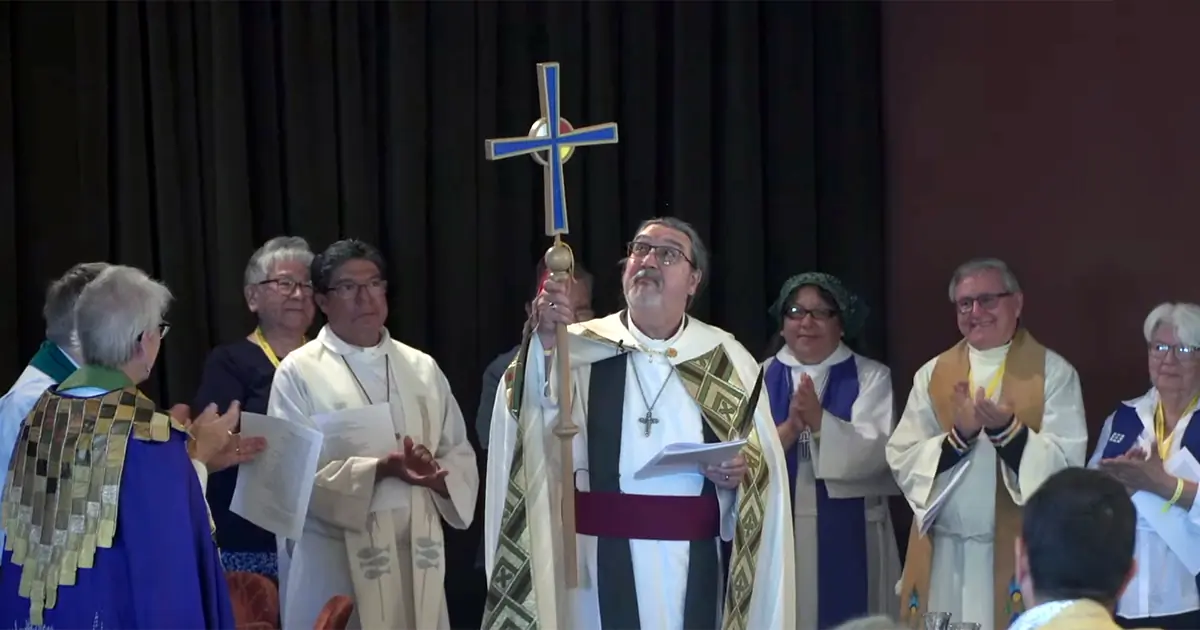
Archbishop Christopher A. Harper was installed today as the National Indigenous Anglican Archbishop and Presiding Elder of Sacred Circle, with pastoral oversight over all Indigenous Anglicans. The installation took place at a meeting of Sacred Circle 11, the national gathering and decision-making body for Indigenous Anglicans in Canada.
The Archbishop previously served as the Diocesan Bishop of Saskatoon.
… Read more » … lire la suite »
Posted: May 29, 2023 • Permanent link: ecumenism.net/?p=13712
Categories: News • In this article: Anglican, Chris Harper, Indigenous church
Transmis : 29 mai 2023 • Lien permanente : ecumenism.net/?p=13712
Catégorie : News • Dans cet article : Anglican, Chris Harper, Indigenous church
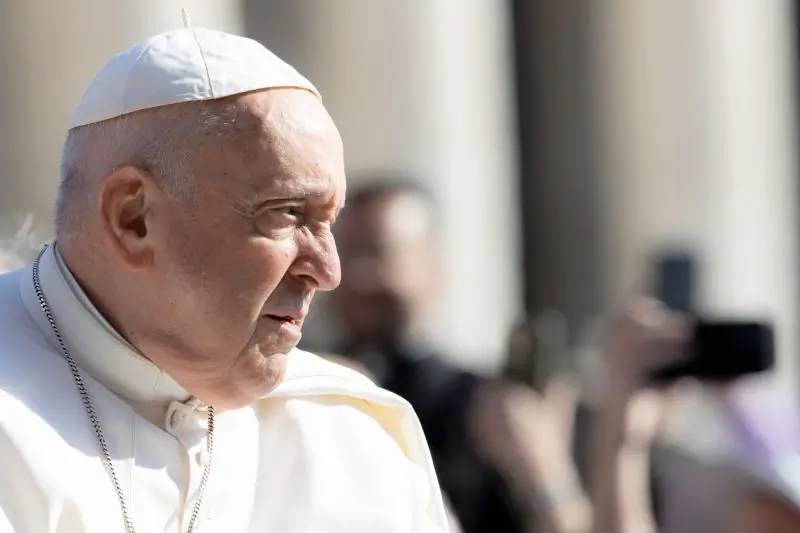
A leading Asian theologian says Pope Francis’ decision to include non-ordained women and men as voting members of October’s synod assembly is a “giant step” that will irreversibly change the Church’s decision-making processes.
Last month, the synod secretariat announced the Pope had authorised a reform to allow at least 70 non-bishops to be members of the 4-29 October synod assembly in the Vatican. This move will see women given a vote in a synod for the first time.
… Read more » … lire la suite »
Posted: May 24, 2023 • Permanent link: ecumenism.net/?p=13894
Categories: Tablet • In this article: Pope Francis, synodality
Transmis : 24 mai 2023 • Lien permanente : ecumenism.net/?p=13894
Catégorie : Tablet • Dans cet article : Pope Francis, synodality
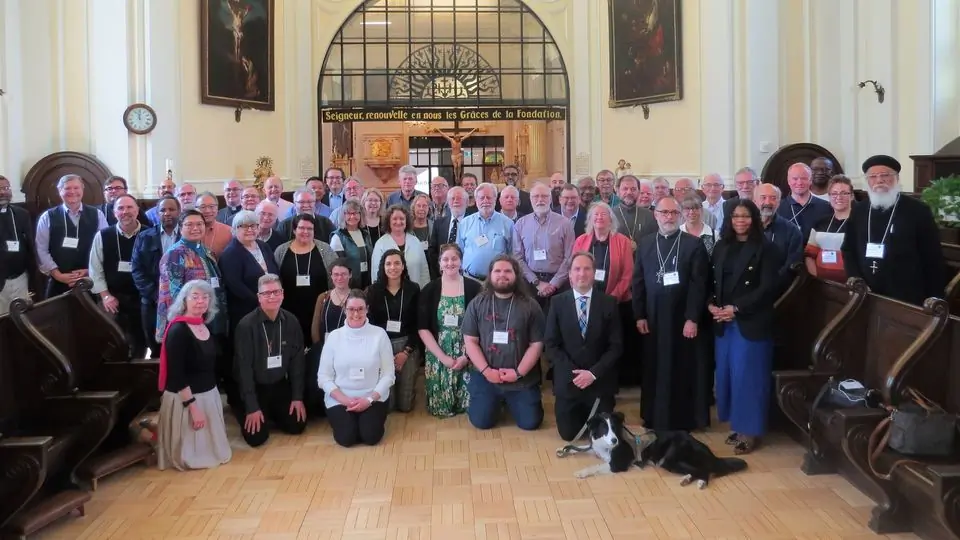
Cette semaine, les membres du Conseil de direction du Conseil Canadien des Églises se réuniront au Monastère des Augustines, à Québec, pour leur réunion du printemps 2023 (du 24 au 26 mai 2023).
La décision de convoquer cette réunion dans une ville francophone a été prise par le Conseil de direction après une saison de discernement sur ce que le Conseil pouvait faire pour mieux comprendre la vie de l’Église et de ses membres au Québec et améliorer ses relations avec elle.
… Read more » … lire la suite »
Posted: May 24, 2023 • Permanent link: ecumenism.net/?p=13693
Categories: News • In this article: Canadian Council of Churches
Transmis : 24 mai 2023 • Lien permanente : ecumenism.net/?p=13693
Catégorie : News • Dans cet article : Canadian Council of Churches
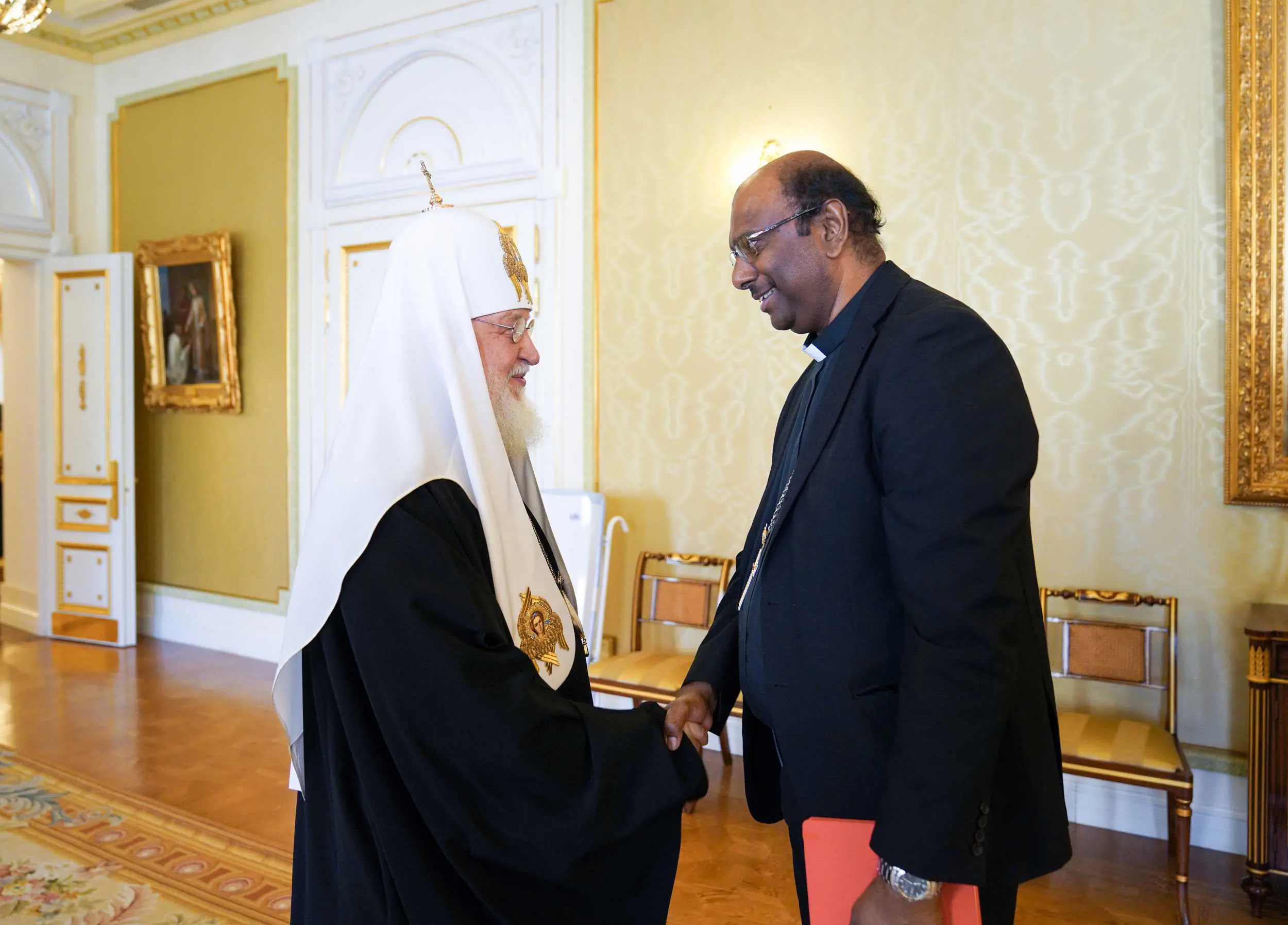
The general secretary of the World Council of Churches (WCC), Rev. Dr. Jerry Pillay, has led a delegation to Moscow to meet with leaders of the Russian Orthodox Church, including Patriarch Kirill. The 24-hour visit, which was taking place on Wednesday and Thursday, followed a similar WCC trip from May 10-13 to the Ukrainian capital Kyiv.
“Consolidation and unity in Ukrainian society, including especially among the majority Christian Orthodox believers, is an obvious necessity in the current circumstances faced by the nation and people of Ukraine” observed Rev. Pillay. “We visited Moscow to discuss engagement also by the Russian Orthodox Church in dialogue on the war and its consequences, including with regard to the deep divisions in the Orthodox family in this context,” Pillay reported, “and I am grateful for HH Patriarch Kirill’s commitment to exploring this possibility.”
… Read more » … lire la suite »
Posted: May 18, 2023 • Permanent link: ecumenism.net/?p=13685
Categories: News • In this article: dialogue, peace, Russian Orthodox, Ukrainian Orthodox, WCC
Transmis : 18 mai 2023 • Lien permanente : ecumenism.net/?p=13685
Catégorie : News • Dans cet article : dialogue, peace, Russian Orthodox, Ukrainian Orthodox, WCC